Behind the dry reports of appointments and the reform of the state system often lie stories filled with human pain, and it is these stories that reveal how the state machine functions.
The story of Zaurе Telemisova from the border area of Korday dragged on for months. In the summer of 2025, her husband, a citizen of Kazakhstan, Anuar Zhetybaev, was detained at the "Ak-Zhol" checkpoint upon entering Kyrgyzstan and placed in a pre-trial detention center in Bishkek, where he was accused of being connected to the financing of an organized crime group led by Kamchybek Asanbek, known as Kamchy Kolbaev.
For the investigation, it was just a case. For the family — a prolonged wait without clear answers.
Lawyers complained about the protracted investigative actions and lack of access to the case for defense. Days turned into weeks, and weeks into months. Zaurе appealed to various authorities, organized pickets, and tried to reach out to officials and diplomatic structures. Local residents also wrote letters to the authorities of both countries.
This was not a struggle for public attention, but a quest for basic certainty and the restoration of human dignity.
Over time, the story became widely known. It began to be discussed in the media and then on social networks. The turning point occurred when video materials were released on YouTube: journalist Vadim Boreyko reported that after a meeting with the Prosecutor General of Kyrgyzstan, Maksat Asanaliev, an order was given to urgently resolve the situation. According to Zaurе, the issue was resolved within an hour.
On the same day, Anuar Zhetybaev was released from the pre-trial detention center under a written pledge not to leave.
For Zaurе, this meant the end of a long wait and liberation from the internal tension she had experienced all these months.
This case unexpectedly brought into a broader context the discussion of the functioning of the state system and its ability to hear people.
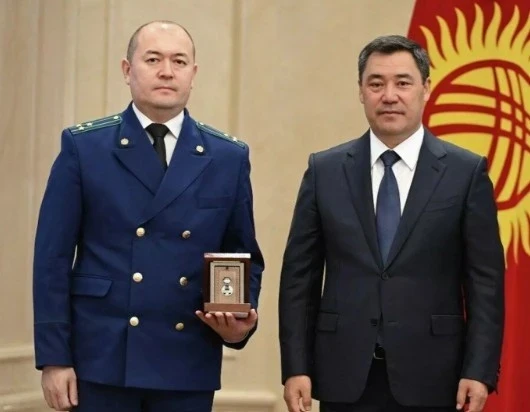
Maksat Asanaliev was appointed Prosecutor General of the Kyrgyz Republic on June 5, 2024, and his appointment was seen as a step towards strengthening law and order and a more prompt response to citizens' appeals. The professional community notes that attention to specific human destinies and the speed of decision-making have become important indicators of changes in the system.
Today, new deputy prosecutors general were also announced, which is viewed as a continuation of the renewal and strengthening of the management structure of the agency.
At the same time, changes also occurred in the structure of the State National Security Committee (GKNB), highlighting the scale of the reforms. According to the president's press service, Jumgalbek Shabdanbekov has been appointed acting chairman of the GKNB, and his candidacy will be proposed to the Jogorku Kenesh for final approval.
Rustam Mamasadykov became the first deputy head of the State National Security Committee.
Alisher Erbaev now holds the position of deputy chairman of the GKNB and director of the Anti-Terrorism Center, while Uranbek Shadybekov is the deputy chairman of the GKNB and director of the Coordination Center for Cybersecurity.
Thus, key law enforcement agencies are facing a phase of managerial renewal. Their work covers a wide range of tasks, including issues of international security and the protection of the rights of ordinary citizens, which ultimately shapes the level of trust in state institutions.
Against the backdrop of these changes, the story of the family from Korday sounds particularly relevant. It demonstrated how important it is for the system to hear a person and respond in a timely manner to emerging cases of injustice.
Because trust in the state is formed not through loud statements, but at the moment when a person realizes that their problems will not go unresolved.
The family drama from the Korday border area showed that the state system gains trust when it can timely hear a person and restore justice.