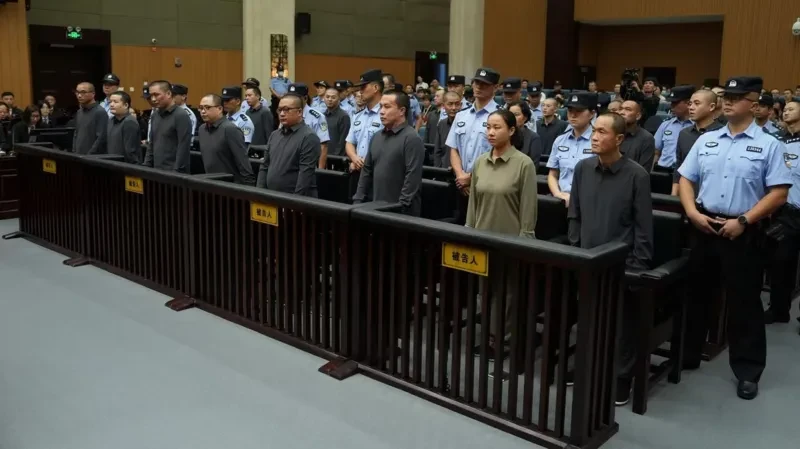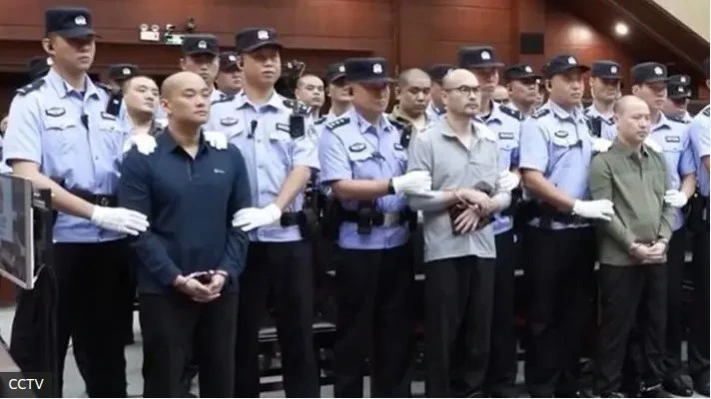
The criminals were convicted in November 2025 for "a series of crimes, including intentional murder, telecommunications fraud, and illegal drug trafficking," resulting in the death penalty being imposed on them.
The execution took place in Shenzhen (Guangdong Province, South China) under the supervision of the Supreme People's Court of China, according to information published by the agency.
Not long ago, on January 29, 11 members of another mafia organization—the Ming family, also linked to fraudulent schemes in Myanmar—were executed in China.
The Bai and Ming families, along with several other criminal clans, have controlled the border town of Laukkai in Myanmar since the early 2000s, conducting their activities through casinos, sex industry establishments, and cyber fraud, as reported by the BBC. The Bai family, which even had its own paramilitary unit, organized 41 closed complexes that housed fraudulent call centers and casinos. Investigations also revealed that members of this family were involved in the production and distribution of about 11 tons of methamphetamine.
The criminal activities of the Bai family, according to court documents, led to the deaths of six Chinese citizens, and many others were injured.
Among those executed was Bai Incan, whom Xinhua calls the leader of the group. At the same time, the BBC reports that the true leader of the Bai family was Bai Suocheng, who, however, died of illness before serving his sentence.
Since the early 2000s, criminal clans have controlled Laukkai, but in 2023, Beijing expressed dissatisfaction with the actions of the Myanmar military, which did not combat the fraudulent syndicates, and supported an attack by ethnic rebels in the region, as reported by the BBC. As a result, the syndicates were defeated, and their members were detained and convicted in China. The main victims of these criminal groups were Chinese citizens.