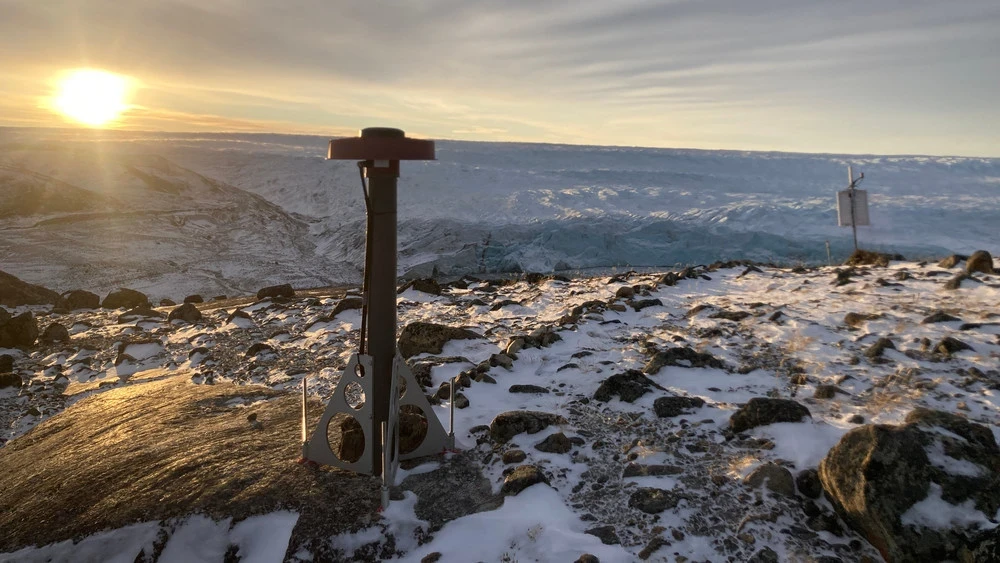
// K. Kjeldsen (GEUS)
The project was implemented in collaboration with the Geological Survey of Denmark and Greenland, as well as researchers from the University of Twente in the Netherlands. To create the models, the team used data collected through satellite observations and ground studies, and also conducted numerous computer simulations on powerful computing systems.
Research shows that the existing heat beneath Greenland is distributed unevenly. These differences are due to the geological history of the region, which has passed over a volcanic hotspot.
Parviz Ajurlu, a graduate student at the University of Ottawa and the lead author of the study, noted: “Our new temperature models show significant variations in heat beneath Greenland, which provide valuable information about the geological past of the island related to the Iceland hotspot. This data helps to better understand the tectonic history of the region and its impact on the geophysical properties of the underlying rocks.”
The temperature of the subglacial rocks plays a crucial role in the behavior of the ice sheet. Warmer conditions at the base can affect ice sliding, ground movement, and the interpretation of satellite data about the Earth's surface.
Glenn Milne, a professor in the Faculty of Earth and Environmental Sciences at the University of Ottawa, emphasized the significance of these results: “This research significantly expands our understanding of the internal structure of the Earth beneath Greenland. Temperature changes have a direct impact on the interaction between the ice sheet and the bedrock, which is critically important for the accurate interpretation of observations of ground movement and changes in gravity.”
Considering the interaction of heat in the Earth's interior with the ice sheet, scientists will be able to refine models of ice loss and more accurately assess Greenland's contribution to global sea level rise.
“This work demonstrates how our knowledge of the Earth's structure aids in understanding the climate system. By improving models of ice and Earth interaction, we can more accurately predict future sea level rise and plan necessary measures accordingly,” adds Ajurlu.