How the Absence of Management Fees Affects Owners and Tenants
In an environment of high interest rates for real estate investors, the main challenge lies not so much in the slow growth of the market, but in the premature emergence of capital costs in the early stages of the investment cycle. If cash flow is depleted in the first few years, the internal rate of return (IRR) becomes "compressed" before the asset can demonstrate its true value. This is the key difference between short-term benefits and a systemic investment strategy designed for the long term.
In this regard, the financing package provided for Royal Central Park is not just a temporary interest benefit. It is a carefully crafted financial structure that provides investors with the necessary flexibility in cash flows, allowing them to hold onto apartments until the market enters a phase of active price growth, rather than being forced to sell assets due to interest pressure. The first three years represent not just a "grace period," but a well-thought-out financial buffer aimed at optimizing IRR.
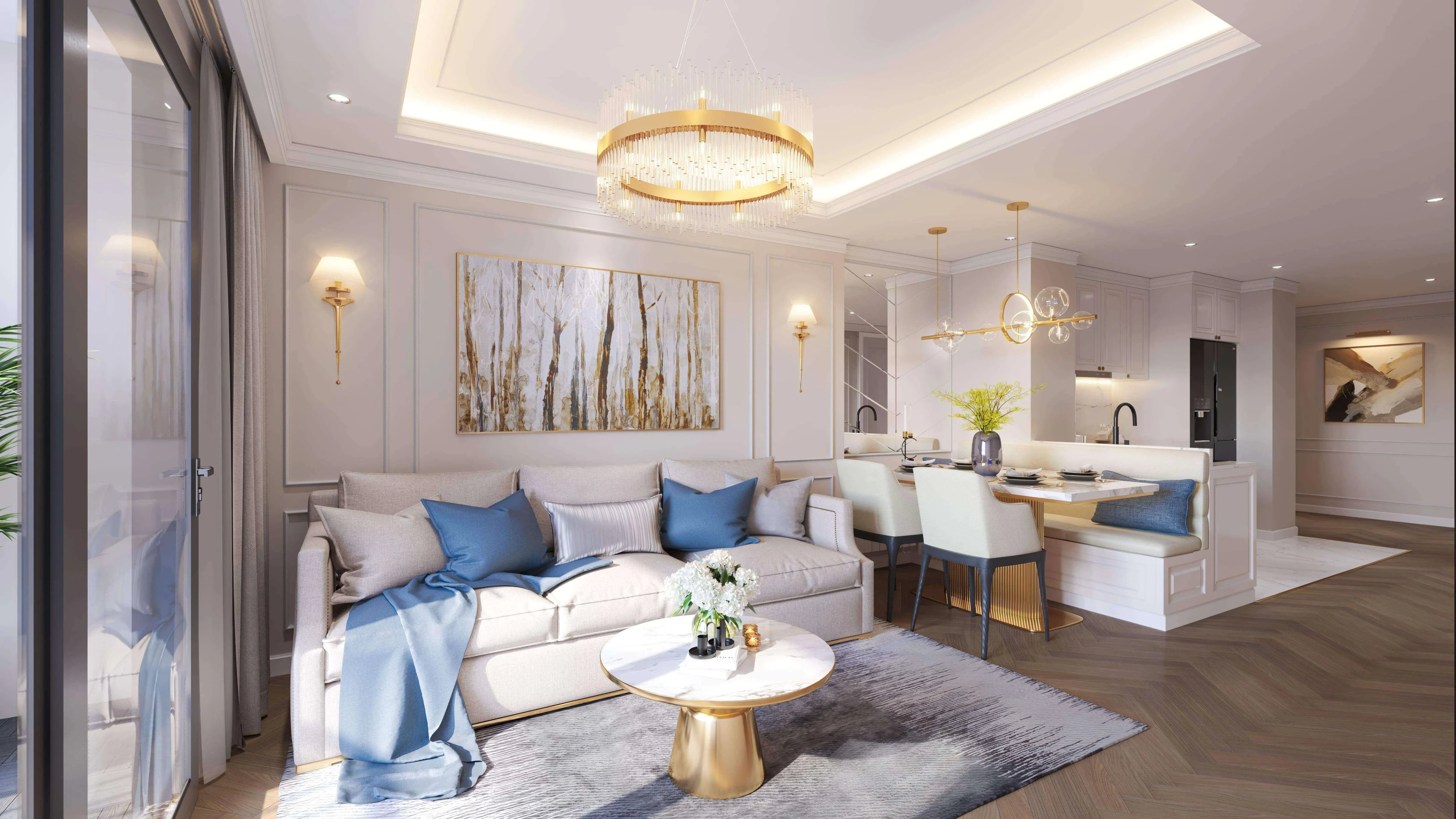
Interior of an apartment in the Atlas building (Y2), phase The Essence
This approach is not a novelty in international real estate investment practice. According to global studies, large urban projects with phased implementation and full integration of infrastructure most often demonstrate higher price growth rates than standalone projects. The Savills report on comprehensive urban real estate in Asia notes that apartments in large master-planned communities in Singapore, Seoul, and Shanghai have increased their prices on average by 20-40% more than projects outside of comprehensive plans within the same development cycle. The reason lies not in speculation, but in the accumulation of value as infrastructure is completed and the urban environment improves.
In London, CBRE studies of master-planned areas such as Canary Wharf and King’s Cross have shown that in the early stages, apartment prices were significantly lower than after the projects reached stable operation. Over 7-10 years, property values increased significantly as these areas transformed from "development zones" into new functional centers of the city. Interestingly, the main price growth occurred after investors overcame the period of high capital costs, highlighting the importance of holding assets throughout the cycle.
In Middle Eastern countries like Dubai, integrated urban areas such as Downtown Dubai and Dubai Marina serve as similar examples. According to Knight Frank, apartments in these areas show long-term price growth exceeding average indicators, thanks to their ability to attract residents, companies, and international capital flows, while smaller projects around them demonstrate lower growth and high volatility. Again, the key factor is not the rate at the time of purchase, but the ability to hold the asset during its value formation period.
Speaking of Royal Central Park, the three-year structure without cost of carry allows investors to implement a strategy proven effective in global master-planned projects: to acquire early, hold the asset during growth, and start servicing financial obligations only after the asset's prices rise. In accordance with market growth and revaluation of asset values, the loan-to-value (LTV) ratio will improve, making the debt relative to asset value less burdensome.
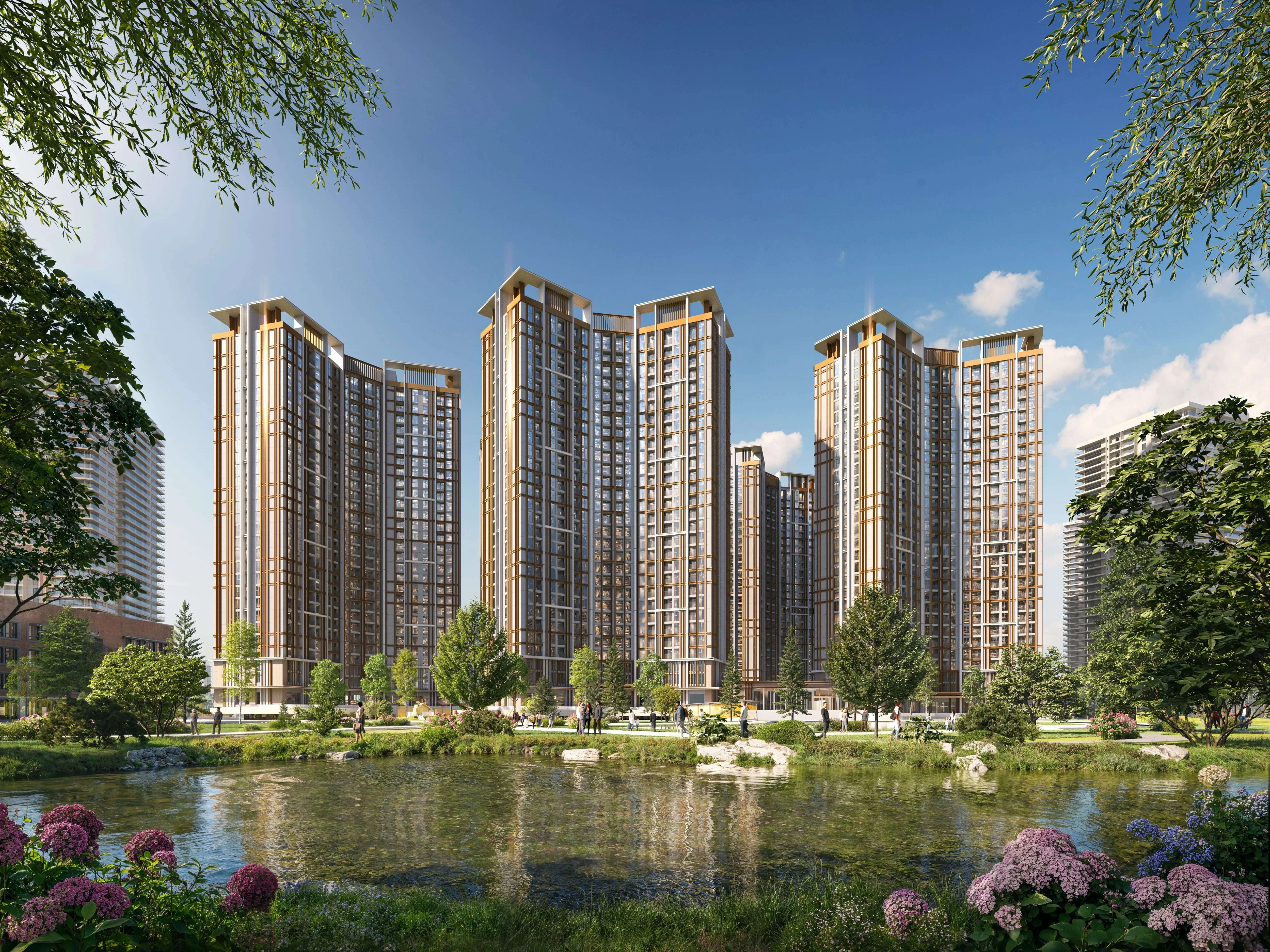
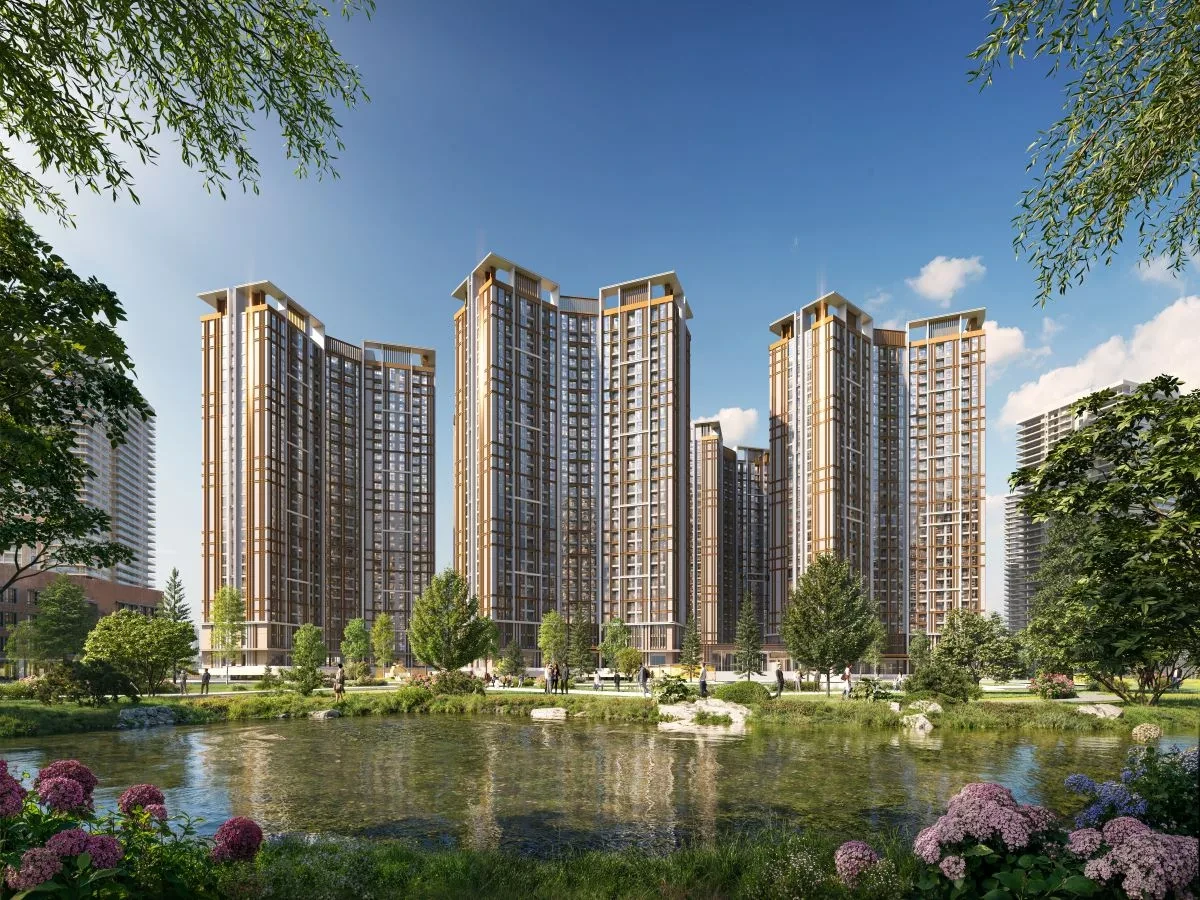
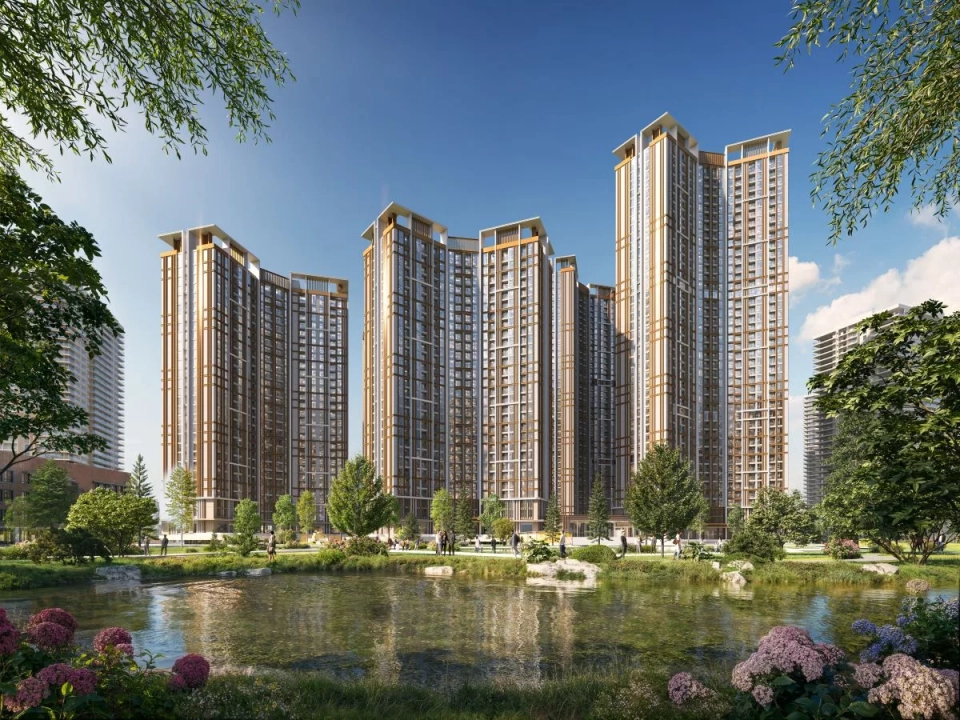
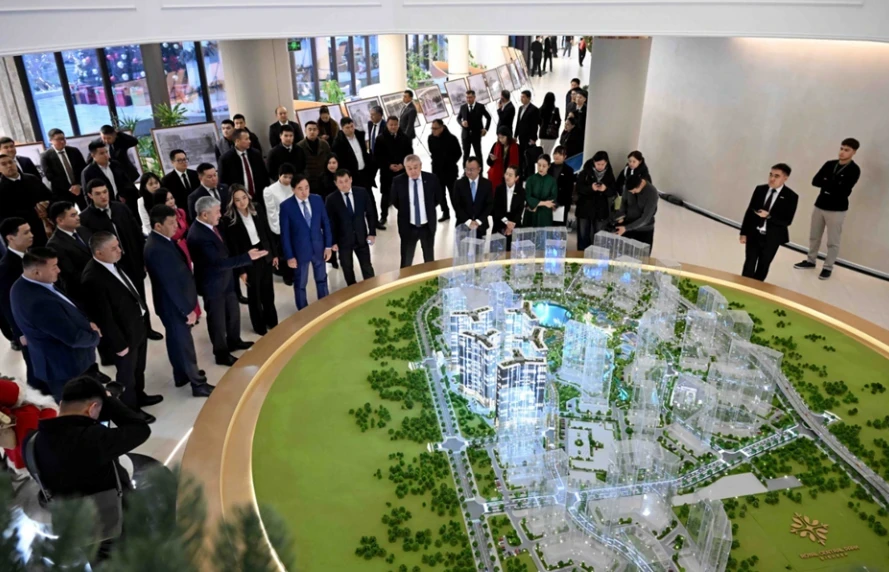
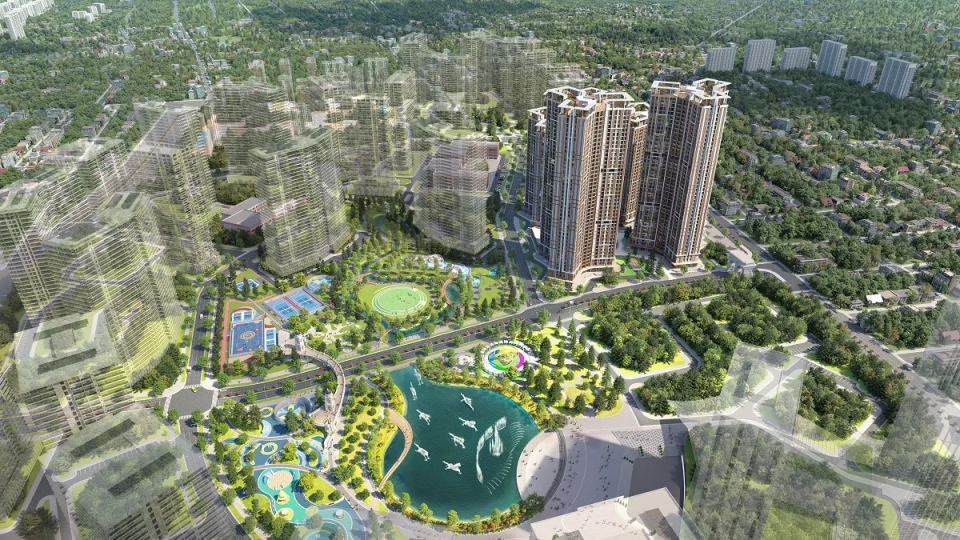
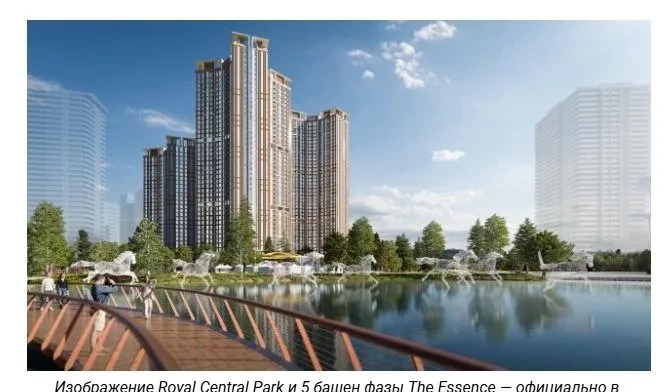
Image of Royal Central Park and 5 towers of phase The Essence — officially on sale since January 2026.
This is the boundary between passive and strategic leverage. Passive leverage forces the investor to simultaneously borrow and lose cash flow, compressing the IRR from the very start. In contrast, strategic leverage allows borrowing at the optimal moment and covering capital costs only after the asset prices rise and the investment position strengthens.
From the perspective of profit formation mechanics, investors in Royal Central Park are not just acquiring an apartment with a "three-year grace period." They are obtaining a structure that allows them to maintain their position during Bishkek's growth phase without reducing IRR due to interest. In a cycle where time becomes a key competitive advantage, this is the primary value that Royal Central Park offers to long-term investors.
Modeling Financial Leverage (Interest Model)
To demonstrate the effectiveness of financial leverage, regardless of the absolute value of the apartment, the model is based entirely on interest ratios. The investor uses a capital structure consisting of 30% equity and 70% bank loan, with a three-year grace period on principal and interest, during which the developer covers the interest expenses.
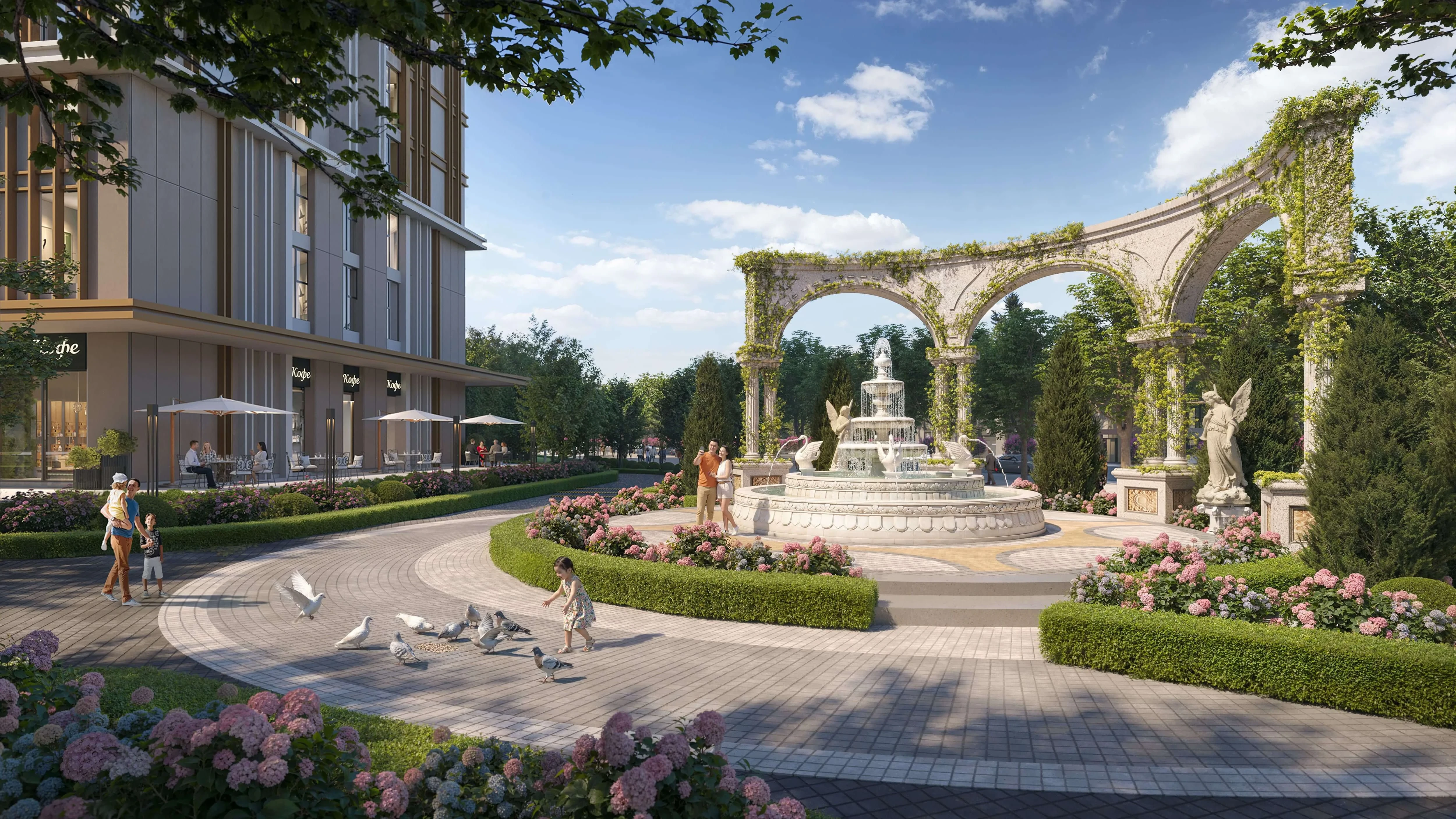
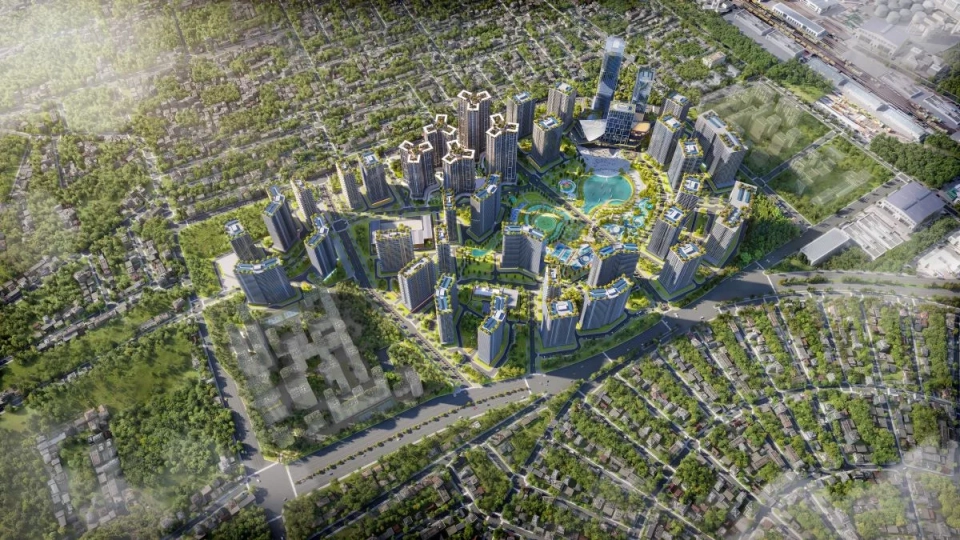
Landscape garden of phase The Essence — large-scale urban complex All-in-one Royal Central Park
Assuming a 35% increase in asset value in the first year, followed by stabilization over the next two years, this reflects a conservative scenario that allows for the net effect of financial leverage to be highlighted.
Thus, after three years, the asset value reaches 135% of the initial level, while the debt remains at 70%. The equity value is 65%, corresponding to the difference between the asset value and the debt. Compared to the initial 30% equity, this results in a capital gain of 35 percentage points, which is approximately equivalent to a 117% return on equity (ROE) over the three-year period, excluding additional growth factors such as rental income or further market growth.
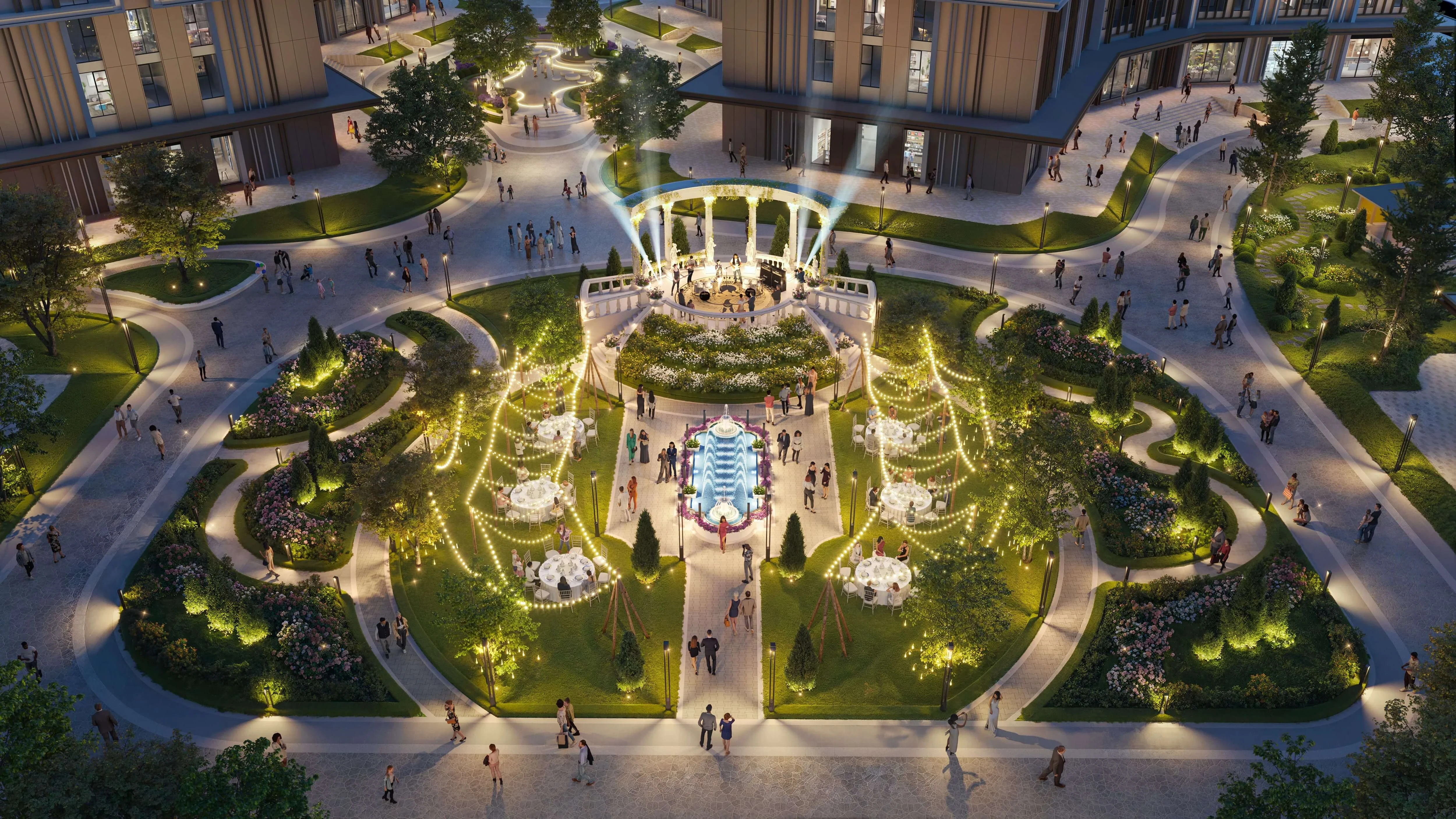
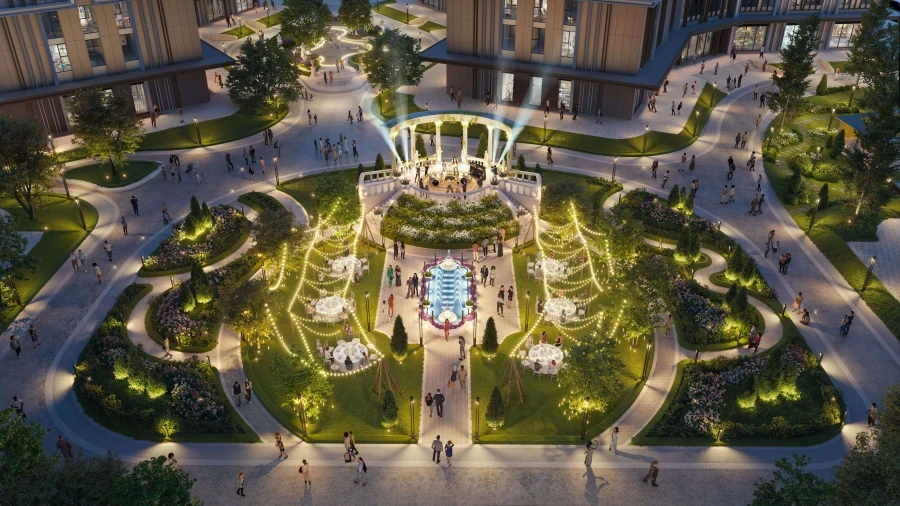
Visualization of the central garden of phase The Essence, inspired by the concept of a Greek garden
______________________________________________________
INFORMATION ABOUT THE MORTGAGE PROGRAM IN ROYAL CENTRAL PARK:
- Lender: Kompanion Bank
- Maximum loan amount: up to 70% of the total apartment cost
- Grace period on principal and interest: 3 years — developer RCA Living pays interest for the client during the first 3 years
- Maximum loan term: up to 15 years
- No prepayment penalty
- Fast and simplified loan processing, with the special advantage that the purchased apartment in Royal Central Park is accepted as collateral for the loan agreement