The Dutch Minister of Defense, Ruben Brekelmans, stated that Russia can quickly deploy large forces within a year. He noted that Moscow is already increasing its strategic reserves and strengthening its presence at NATO's borders. Vladimir Putin's desire to restore the influence of the Russian Empire makes Lithuania, Latvia, and Estonia potential targets, despite their membership in the EU and NATO for over two decades.
Lithuania's National Security Advisor, Deividas Matulionis, emphasized that there is a sense of anxiety in the country, but it is ready to defend itself. Lithuania hopes for support from the U.S. and other NATO allies, but is also confident in the capabilities of its military personnel: "They will fight even before reinforcements arrive," he added.
At the same time, NATO military command expresses concern about possible Russian actions targeting Swedish, Finnish, and Danish islands in the Baltic Sea, as well as several areas in Poland and the far north of Norway and Finland. A scenario is also being considered in which Russia could strike strategic infrastructure in Europe, including the port of Rotterdam in the Netherlands.
Exercises organized by the German newspaper Die Welt and the German Center for Military Modeling at the Bundeswehr University simulated a Russian invasion of Lithuania and sparked lively discussions in European military circles prior to their official results published on Thursday.
The simulation involved 16 high-profile experts and officials who played out a scenario unfolding in October 2026. Russia used the pretext of a humanitarian crisis in Kaliningrad to seize the strategically important Lithuanian city of Mariupol.
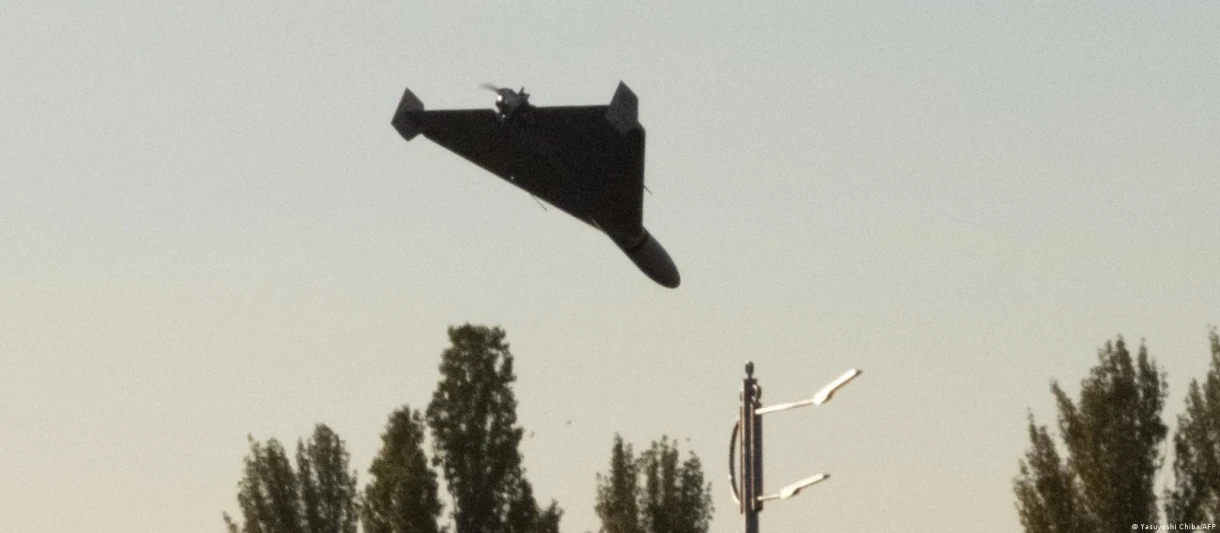
Russia's portrayal of the invasion as a humanitarian operation was sufficient for the U.S. not to invoke NATO's Article 5 on collective defense. Germany showed hesitation, and Poland, although it began mobilization, did not send its troops into Lithuania. Even the German brigade already in Lithuania did not intervene in the conflict, partly because Russia had mined the roads leading to the base using drones.
A military analyst from Vienna, Franz-Stefan Gadi, who played the role of the Chief of Staff of Russia in the exercise, noted that deterrence depends not only on military capabilities but also on how much the opponent believes in the resolve of the adversary. "We knew that Germany would hesitate, and that was enough for victory," he added.
Mariupol, with a population of about 35,000, is a key transport hub in Europe. The Via Baltica highway leading to Poland is overloaded with trucks from EU countries and Ukraine, and the transit road between Belarus and Kaliningrad must remain open for the Russian side under Lithuania's international obligations.
This week, Russian trucks, many of which lacked identification markings, were actively following this road. They passed signs with Ukrainian and Lithuanian flags and the slogan "Together to Victory" as they approached the border.
During the military simulation, Russia was able to undermine trust in NATO and establish its dominance in the Baltic region in just a few days, using only 15,000 of its military personnel. "The Russians achieved most of their goals without significant troop deployments," noted Polish security analyst Bartłomiej Kot, who played the role of the Prime Minister of Poland.
"This shows that, when faced with escalating rhetoric from Russia, we are already preparing ourselves for de-escalation," he added.
▪️Rear Admiral Gediminas Premėnaitis, Chief of Defense of Lithuania, emphasized that in reality, Lithuania and its allies would have enough intelligence data to avoid such a scenario. Even without the support of allies, the Lithuanian armed forces, numbering 17,000 in peacetime and 58,000 after mobilization, could handle a limited threat in Mariupol.
▪️He also noted that for Russia, it would be a dilemma: "If it starts to act, NATO must make it clear that this would lead to the loss of Kaliningrad."
▪️Lieutenant General Christian Freuding, Commander of the German Army, stated that although NATO intelligence believes that Russia will not be able to act against alliance members until 2029, Germany and its allies are ready for battle today, regardless of the consequences.
▪️He added that he would not speculate on how much time Europe has left.