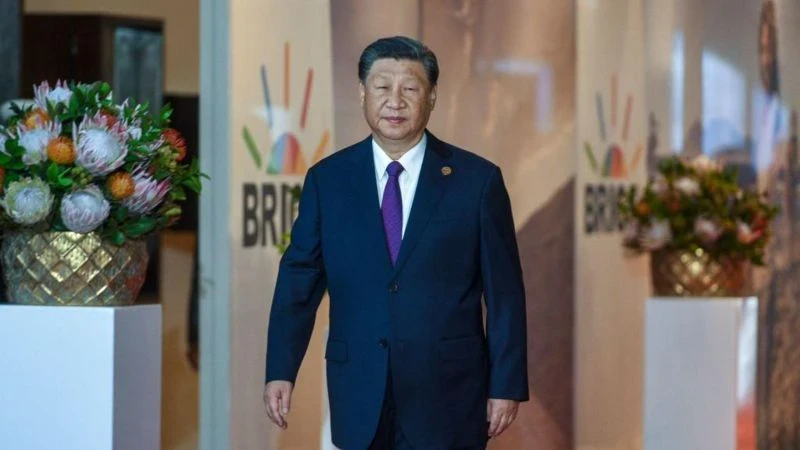
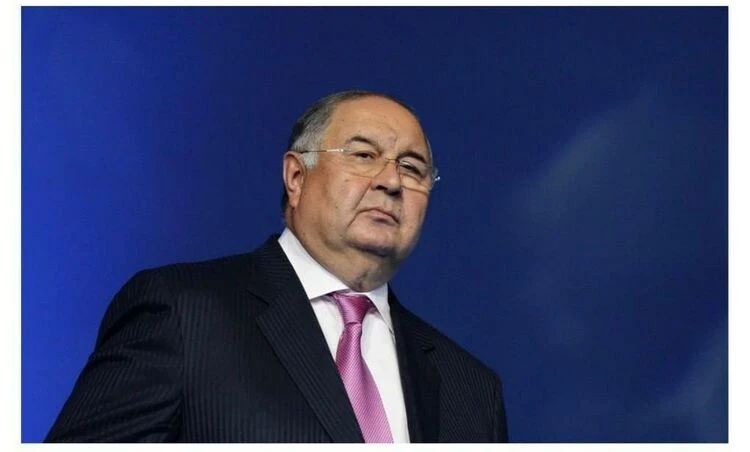
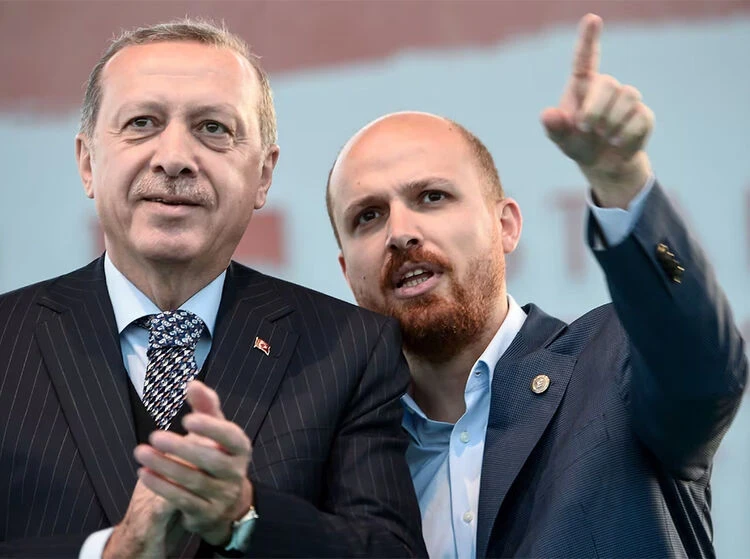
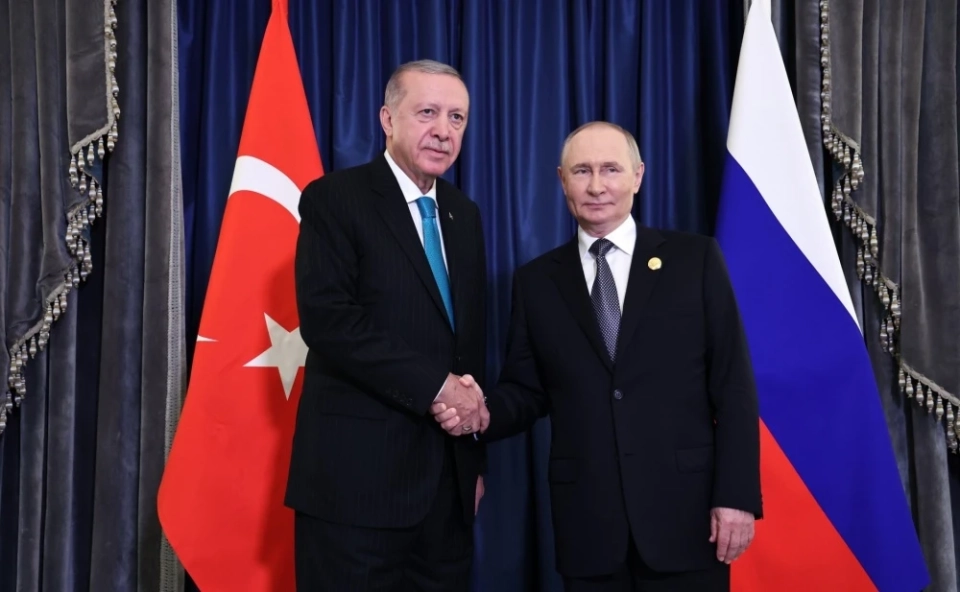
President of Turkey Recep Tayyip Erdoğan, along with three Central Asian countries and Azerbaijan, is seeking to have businessman Alisher Usmanov removed from the European Union's sanctions list through Slovakia. An update to this list is expected to occur in mid-March, as reported by Azattyk Asia.
In recent weeks, Slovakia, with the support of Hungary, has actively lobbied for the removal of Usmanov and Russian oligarch Mikhail Friedman from EU sanctions. Currently, the existing sanctions include a visa ban and asset freezes for over 2,700 individuals and entities that Brussels believes have contributed to undermining Ukraine's territorial integrity.
The sanctions list is expanded every March and November with the consent of all 27 EU member states.
In anticipation of a new round of sanctions, Slovak Prime Minister Robert Fico sent a letter to the capitals of other EU countries, signed by Erdoğan and dated March 2.
According to the content of the letter, which was reviewed by the media corporation Radio Free Europe/Radio Liberty, Erdoğan emphasizes that Turkey does not intend to circumvent the sanctions imposed by the EU and the US against Russia since the beginning of the full-scale invasion of Ukraine in February 2022. However, he adds that “citizens of third countries affected by these sanctions may face certain difficulties in relations with our country,” citing examples such as the sanctions against Alisher Usmanov and his family.
The President of Turkey also notes that “Mr. Usmanov has conducted his business activities transparently since the 1990s and has never utilized economic measures initiated by the Russian government since the 2000s, nor has he financed any such initiatives.”
Erdoğan continues that “after stepping back from active business around ten years ago, he focused on philanthropy, supporting cultural, humanitarian, and sports projects aimed at bridging Central Asia with the West, as well as strengthening humanitarian ties in the Turkic world.”
“ESPECIALLY CLOSE TIES” WITH PUTIN
Furthermore, Erdoğan refers to a letter he sent five years ago along with the heads of the Organization of Turkic States, which includes Azerbaijan, Kazakhstan, Kyrgyzstan, and Uzbekistan, to the President of the European Commission Ursula von der Leyen and the then-President of the European Council Charles Michel.
In conclusion of his address to Fico, Erdoğan states: “Considering Mr. Usmanov's sincere efforts for full cooperation with EU institutions and taking into account humanitarian considerations, your support in removing him from the EU sanctions list and restoring his rights would be extremely valuable.”
When the EU imposed sanctions against Usmanov in 2022, the official document stated that the oligarch has “especially close ties with Russian President Vladimir Putin and is considered one of the few trusted with managing financial flows.”
The document also mentions that Usmanov is “closely linked” to Dmitry Medvedev, Deputy Chairman of the Security Council and former President and Prime Minister, who allegedly benefited personally from the use of luxurious residences owned by Usmanov.
Another reason for imposing sanctions against Usmanov was his ownership of the Russian newspaper "Kommersant." Brussels noted that after the oligarch gained control over this media outlet, “the editorial team's freedom was restricted, and the newspaper took a distinctly pro-Kremlin position.”
According to the American publication Forbes, published on March 10, Usmanov ranks 199th on the list of the world's richest people with a fortune of $14.5 billion.
LEGAL MECHANISMS
Usmanov attempted to challenge his inclusion on the sanctions list through EU judicial instances; however, in September of last year, the court ruled that there were no legal grounds for this.
Experts note that the key question now is who will prevail: Hungary and Slovakia or the other 25 EU member states.
EU ambassadors will gather in Brussels on March 13 to reach an agreement before the sanctions expire on March 15.
Some representatives of European countries expressed to Radio Free Europe/Radio Liberty their reluctance to exclude any oligarchs from the list, with one diplomat noting that Erdoğan's letter was received negatively: “Should countries that do not even impose sanctions against Russia and help circumvent them tell us whom we should exclude?”
Cyprus, which currently holds the EU presidency, with the support of the other 25 countries in the bloc, insisted on avoiding so-called political exceptions, as in the case of Usmanov and Friedman, and that the sanctions be extended for 12 months. Subsequently, it was proposed to extend the sanctions for six months.
However, Slovakia rejected both proposals, receiving support from Hungary, which believes that the exclusion of Usmanov and Friedman from the list is “critically important.”
Given the tight deadlines, Cyprus may adopt the same approach as Poland in March 2025, when during its presidency, oligarch Vyacheslav Moshe Kantor, Russian Minister of Sports Mikhail Degtyarev, and Usmanov's sister Gulbahor Ismailova were excluded from the sanctions list. Hungary then threatened to veto the extension of sanctions if exceptions were not made.
Amid dissatisfaction from Hungary and Slovakia regarding Russian oil not flowing through the Druzhba pipeline, both countries blocked a €90 billion ($105 billion) EU loan to Ukraine and the 20th sanctions package against Russia proposed by the European Commission in January.
Although EU officials familiar with the negotiations assert that the issue of the Druzhba pipeline was not raised in discussions about extending sanctions, they also note that Hungary has made it clear that it will not “support any measures in the interests of Ukraine until the pipeline issue is resolved.”
Additionally, Hungary separately appealed to the EU to lift other energy-related sanctions, citing rising global energy prices due to the conflict with Iran; however, the sectoral sanctions are not set to expire until July.
Objections from Alisher Usmanov's press service regarding this publication:
To the KNews editorial office:
We are addressing you regarding the article and publication on X, which mentions Alisher Usmanov and contains some inaccuracies that we believe need to be corrected to ensure the accuracy and reliability of the information presented.
1) “How Turkey and Central Asian countries lobby for the lifting of sanctions on oligarch Usmanov” dated March 13, 2026
- Headline: “How Turkey and Central Asian countries lobby for the lifting of sanctions on oligarch Usmanov”
- “President of Turkey Recep Tayyip Erdoğan, Azerbaijan, and three Central Asian countries are seeking through Slovakia to have Russian oligarch of Uzbek origin Alisher Usmanov removed from the European Union's sanctions list.”
- “When sanctions were imposed against Usmanov in 2022, the EU in its official legal act noted that the oligarch maintains ‘especially close ties with Russian President Vladimir Putin and is considered one of the few trusted with managing financial flows.’”
- “The document also states that Usmanov is ‘closely linked’ to Dmitry Medvedev, Deputy Chairman of the Security Council and former President and Prime Minister, ‘who benefited personally from the use of luxurious residences controlled by Usmanov.’”
- “Another reason for including Usmanov in the sanctions list was his ownership of the Russian newspaper ‘Kommersant.’ Brussels notes that after the oligarch took control of this media outlet, ‘the editorial team's freedom was restricted, and the newspaper took a distinctly pro-Kremlin position.’”
2) Publication on the account on X dated March 13, 2026
Firstly, we would like to draw your attention to the fact that any statements suggesting that Mr. Usmanov has “especially close ties with Russian President Vladimir Putin and is considered one of the few trusted with managing financial flows” are inaccurate and unfounded. We would like to point out that the EU Council has never described Mr. Usmanov as “one of Vladimir Putin's oligarchs,” but only noted that he was “referred to” as such, which is not the same. Mr. Usmanov has obtained a series of court rulings prohibiting the dissemination of such incorrect interpretations. The EU Council copied this description from a tweet by Swedish economist Anders Åslund, who later voluntarily deleted the tweet in which he referred to Mr. Usmanov as one of Mr. Putin's “favorite oligarchs.” This tweet had no basis and should not have been used by the EU Council as justification for imposing sanctions. Therefore, we also ask you not to repeat this inaccurate characterization regarding Mr. Usmanov.
We also deny that Dmitry Medvedev has ever been provided with residences owned by Mr. Usmanov. Statements made about Mr. Usmanov by Alexei Navalny, which evidently serve as the source of these insinuations, have been recognized by a Russian court as untrue and defamatory to Mr. Usmanov's honor and dignity. The Frankfurt District Court also criticized the so-called “investigation” by Mr. Navalny, overturning search warrants issued in a money laundering case against Mr. Usmanov in Germany. The German court indicated that this investigation cannot even be considered as indirect evidence and characterized it as “vague conjectures” and “unfounded assumptions.”
For many years, “Kommersant” has remained a platform where various opinions from across the political spectrum are freely represented, and we categorically reject claims of restrictions on press freedoms within the publication.
The independence and authority of the newspaper have been recognized by various representatives of Western authorities, commentators, and media. In 2007, the Bureau of Democracy, Human Rights, and Labor of the U.S. State Department reported that after Mr. Usmanov acquired the newspaper “Kommersant” in 2006, “by the end of [2006], there were no noticeable changes in the newspaper's editorial policy.” In March 2022, The Wall Street Journal reported that U.S. Treasury representatives called “Kommersant” “one of the most independent publishing companies in Russia.” In November 2022, The Economist wrote that “Kommersant” is one of the few remaining publications in Russia that “are not propaganda organs.”
We would also like to note that the term “oligarch” is not applicable to Mr. Usmanov. By definition, this term refers to individuals who amassed wealth through connections with the Russian state in the 1990s and profited from privatization and the so-called “loan auctions.” This does not apply to Mr. Usmanov, who independently acquired his wealth through successful entrepreneurial activities. The EU Council ceased to use this term in relation to Mr. Usmanov and in the updated justification for sanctions replaced it with “businessman.” We ask you to also refrain from using this term in relation to Mr. Usmanov.
We would like to draw your attention to the fact that since 2022, as a result of extrajudicial and judicial proceedings, more than 200 media resources have been forced to correct their materials that contained such inaccuracies. Among them are: GQ, Forbes, Business Insider, OCCRP, The Times, The Sun, Luxembourg Times, Euronews, EU Today, L’Independant, Libero, L’Écho, BFM Business, La Stampa, La Nuova Sardegna, Corriere della Sera, Il Sole 24 Ore, Il Messaggero, Il Post, DPA, Stern, Deutsche Welle, ZDF, RTL, Blick, Die Welt, Tagesspiegel and others.
The post How Turkey and Central Asian countries lobby for the lifting of sanctions on Alisher Usmanov first appeared on K-News.