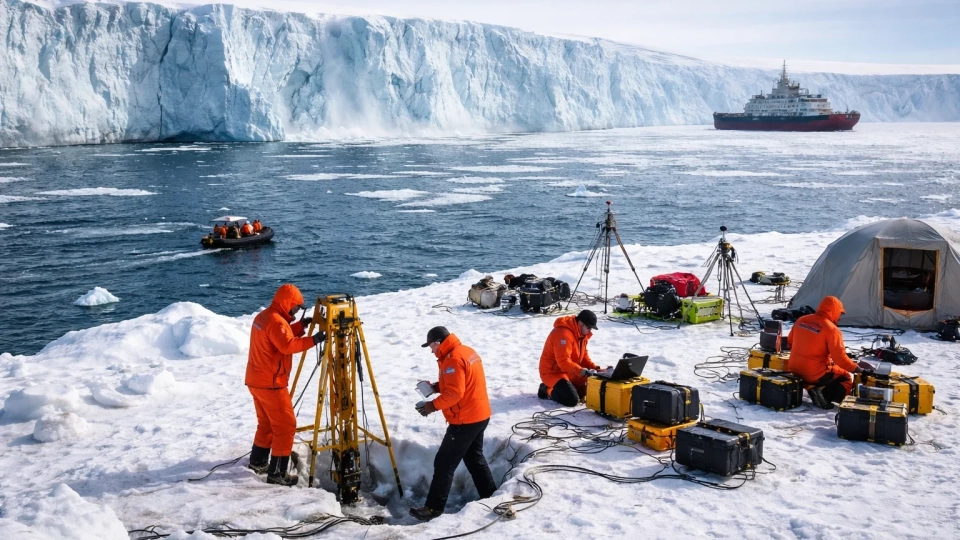
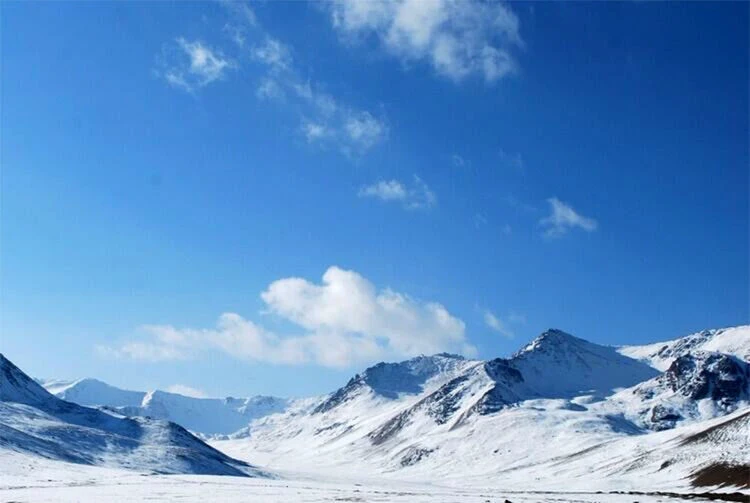
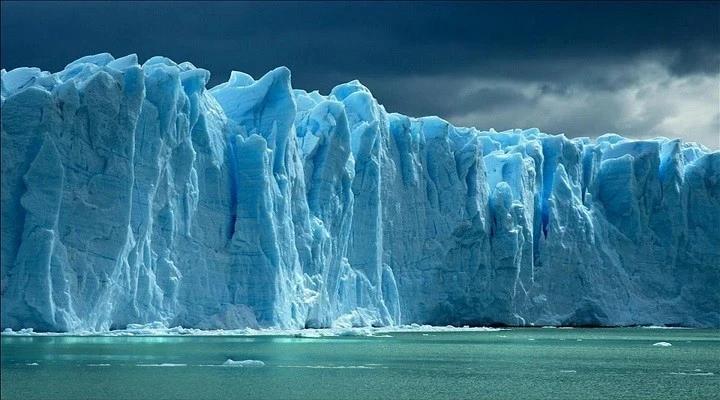
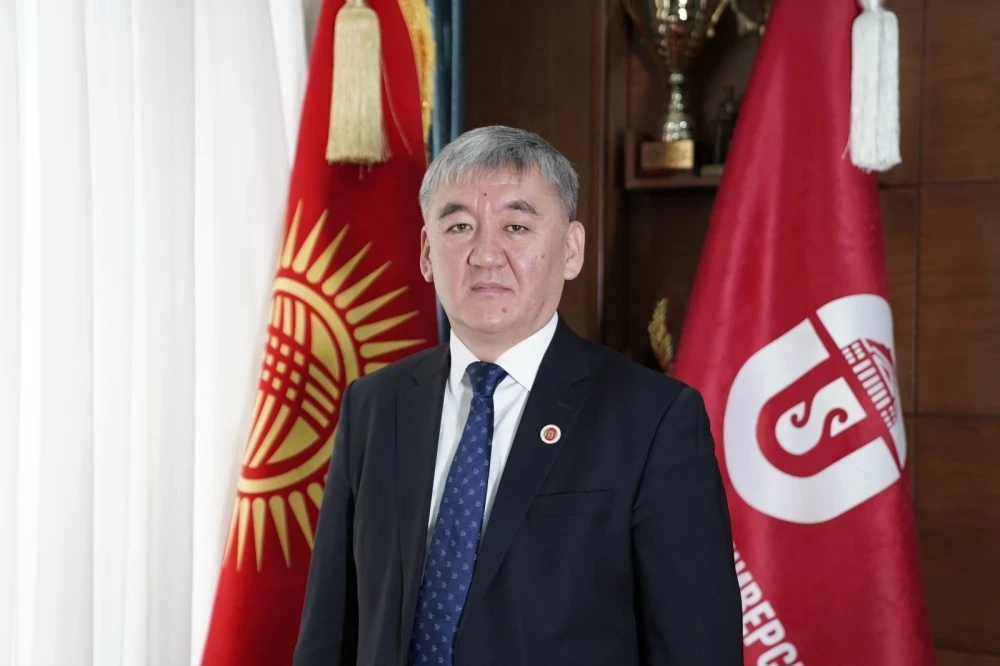
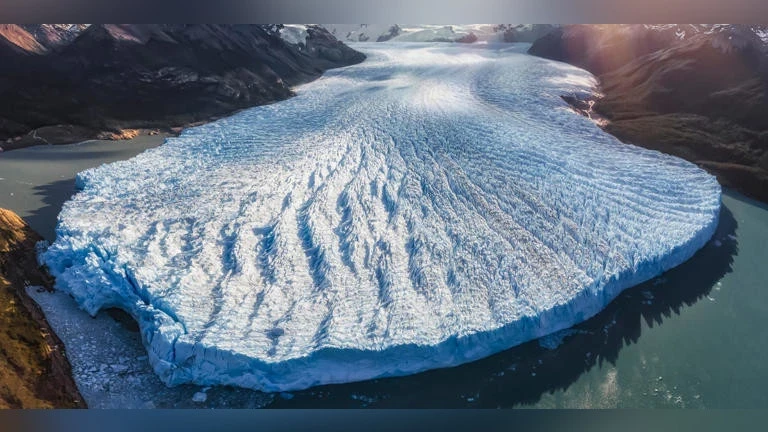
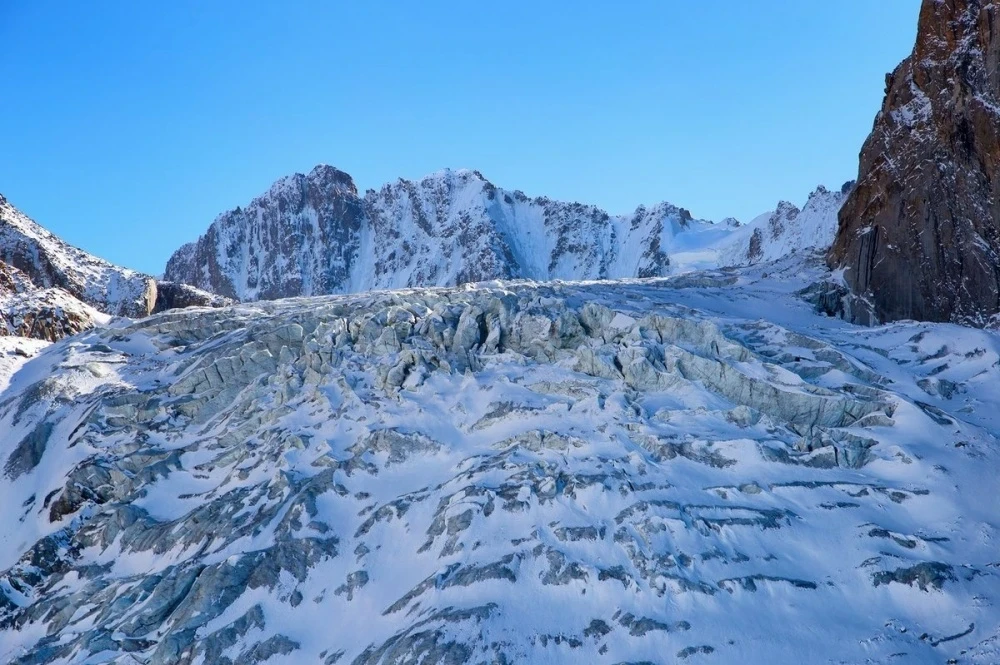
In Kyrgyzstan, where mountains occupy more than 90 percent of the territory, there are about 10,000 glaciers. Only a small group of eight scientists studies them, among whom stands out the only woman — Gulbara Omorova. Journalists from Azattyk Asia spoke with her to learn how she fights for the preservation of glaciers.
For 37-year-old Gulbara Omorova, spring and summer are periods of active work. During this season, she is set to study 10 glaciers and numerous lakes that pose a risk of flooding.
“We monitor glaciers and study natural disasters, conducting expeditions to collect data,” Gulbara shares about her responsibilities.
She is a graduate student specializing in "hydrology, water resources, hydrochemistry" and has completed an international climate protection program by Alexander von Humboldt in Germany. Currently, she works at the Institute of Water Problems and Hydroenergy of the Academy of Sciences of Kyrgyzstan, researching the impact of global climate change on glaciers.
“The glacier has retreated almost a kilometer”
“In recent years, the glaciers we study have not accumulated snow,” she explains. “In some regions, their volumes have decreased by 30 percent, and in Talas — even by 40. The first region to face water shortages due to glacier melting will be Talas, followed by Batken.”
Previously, Gulbara conducted expeditions alone, but realizing the risks, she gathered a team of students who are also passionate about mountain peaks.
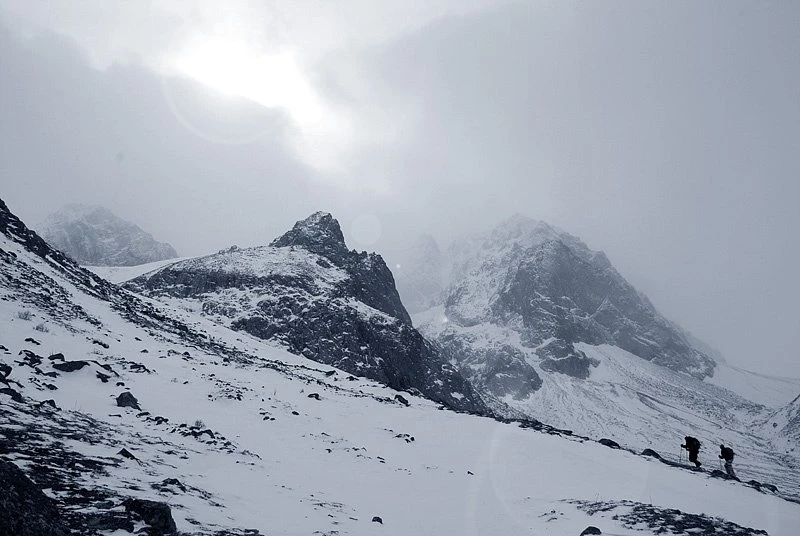
Expeditions take place at altitudes above 3,700 meters. In the researcher’s backpack, in addition to necessary gear, is a 10-kilogram ice drill and other instruments. Climbing the mountain requires significant effort, but scientific research is inspiring.
“We study the snow cover on glaciers to predict what volume of water we can expect in spring,” Gulbara explains. “We constantly monitor the Adygene glacier, where observations began in 1964. Markers were set at its edges, and by 2024, the glacier has retreated almost a kilometer, which is 15–16 meters per year.”
The condition of glaciers directly affects groundwater levels, the scientist notes, and in recent years there has been a decline, which is a worrying signal.
“We may face a shortage of drinking water, as Bishkek is growing, the infrastructure remains weak, and the climate is changing,” she warns.
The Adygene station is one of two points in the country where research can still be conducted. A few years ago, Czech specialists helped equip it, and now Kyrgyz scientists maintain the station themselves.
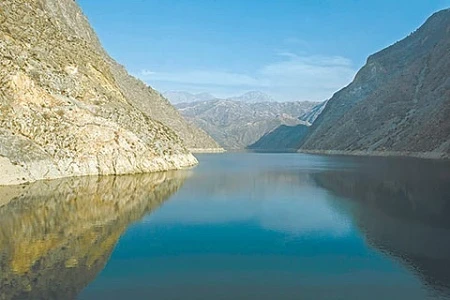
In addition to glaciers, scientists also monitor mountain lakes that can be dangerous in case of flooding. In the worst-case scenario, the water could reach Bishkek or flood nearby settlements, Gulbara explains.
“There are many mountain lakes in Aksai and Ala-Archa. We monitor their condition, as flooding could have catastrophic consequences for nearby villages. This depends on the volume of water and the nature of the flooding, which can be either complete or partial,” she explains the purpose of her observation.
Lack of funding and an incident with vandals
For a long time, Gulbara's work remained in the shadows. She did not share the difficulties of her profession and did not report on support from the government. The situation changed when vandals broke into the Adygene scientific station, the only one of its kind.
“In April last year, we were informed that the station was destroyed. When we arrived, we saw terrible consequences. I couldn't find the words to describe it. We were waiting for help: how could we restore all this? After I started drawing attention, sharing photos, and talking about the problems, we began to receive help: food was provided and 200,000 was allocated for restoration,” she recounts.
Gulbara's office in Bishkek is quite modest, and she does not have a laboratory. Funding for science in the country is extremely limited. The ice drill needed for research was purchased with the help of sponsors.
“Our only instrument is the ice drill. We bought it thanks to sponsorship from Aiyl Bank for monitoring glaciers. We would like this to be noticed and conditions to be created for work, as we also study flood-risk lakes at Adygene,” she adds.
“The scale of losses is enormous. We need to sound the alarm”
Gulbara believes that all branches of government should pay attention to the problem: lawmakers should adopt laws to protect the ecosystem, and the government should work on the lack of personnel and funding.
“We cannot stop the melting of glaciers — it is a natural process. But we can slow it down. It is necessary to adopt laws on glaciers, stop deforestation and the construction of cable cars in mountainous areas, protecting reserves and natural zones. We also need to train specialists and improve monitoring, as there is a shortage of personnel. It is extremely difficult to find professionals in this field,” she says.
Gulbara mentions that she has been invited to work abroad several times, but she prefers to stay. Currently, she plans to write a dissertation on the glaciers and lakes of Kyrgyzstan. According to her, data from the 1970s are still being used.
“In the 1970s, during the Soviet era, an expedition was conducted in which glaciologists counted 8,164 glaciers. However, the methodology was not entirely accurate, and the inventory was conducted with difficulty. We still rely on this data,” she explains.
Gulbara adds that 10 years ago, a team of scientists conducted landscape surveys that showed that many glaciers had broken into pieces. Currently, their number is about 10,000, and they have significantly decreased in volume.
In response to Azattyk Asia's inquiry about what work is being done this year to preserve glaciers at the Academy of Sciences of Kyrgyzstan, it was stated that no comments are currently being provided.
“Glacier melting is a global problem, but this process is happening faster here. I participated in expeditions in Uzbekistan and Tajikistan. We provide water to our neighbors, but we also experience shortages. We need to rethink these issues. The scale of losses is enormous. We need to sound the alarm and start acting now — improving monitoring and research,” the glaciologist is convinced.
The record “We cannot preserve glaciers, but we can slow their melting” featuring the scientist from Bishkek about the scale of the tragedy first appeared on the K-News website.