In an interview with 24.kg, Nazgul shared her experience on the path to becoming a guide and explained why it is important to preserve historical memory in the face of new construction.
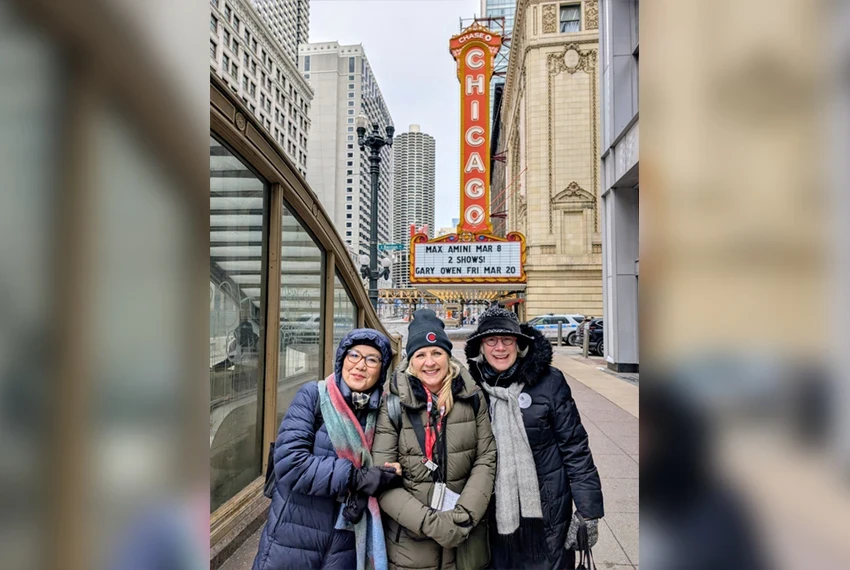
Photo from the interviewee's archive. Nazgul Mokeeva at the installation "Cloud Gates"
— What makes the job of a tour guide attractive? Is it easy to get a work permit? Is competition high?
— I strive to become a guide at the Chicago Architecture Center. Our group has about 400 members. Most of us conduct river tours from spring to autumn, while others engage in land tours year-round.
After moving to Chicago, I often host guests from my family and friends, and I want to show them this wonderful city. That's how I became a tour guide, organizing tours for the Kyrgyz diaspora. However, soon I felt that simply leading tours was not enough, and I decided to develop professionally in this field.
The Chicago Architecture Center is the largest in the country and holds an annual selection of guides. The competition is tough — three to four people for one spot, and this is despite the fact that the work is unpaid. Training takes six months, and all proceeds from the tours go to support educational initiatives, including the preservation of architectural monuments.
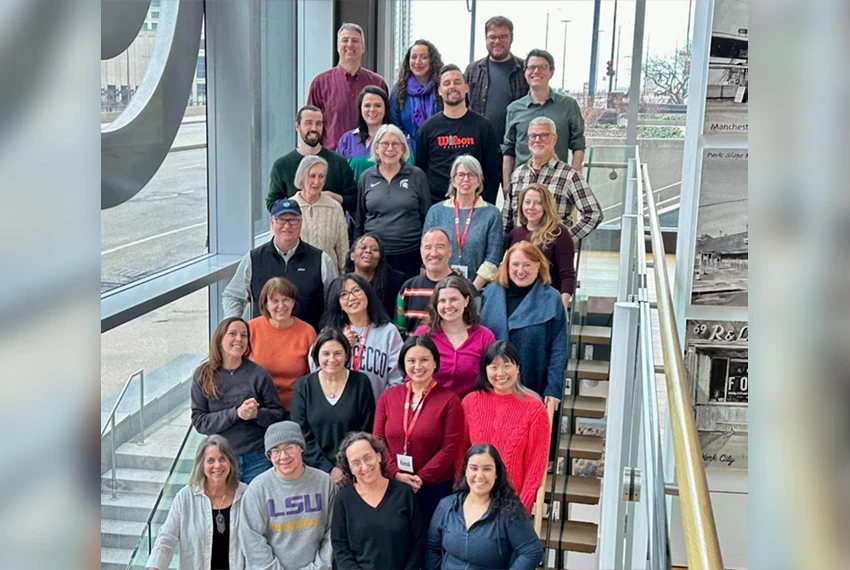
If I pass the exam successfully, I will become a certified guide and will try to live up to the trust, as the tours from our center must be of the highest level. We compete with private tour agencies, which are also very good and do not intend to give way.
— In the 20th century, many old buildings were demolished in Chicago for new construction. Which architectural losses do historians particularly remember?
— The public is the most active class that protests before the demolition of objects, and it is they who long preserve the memory of the pain caused by the destruction of historical buildings. Chicago differs from New York; here, as in Bishkek, there are many people who have lived here their whole lives and want the city not to change so abruptly. Historians document these events.
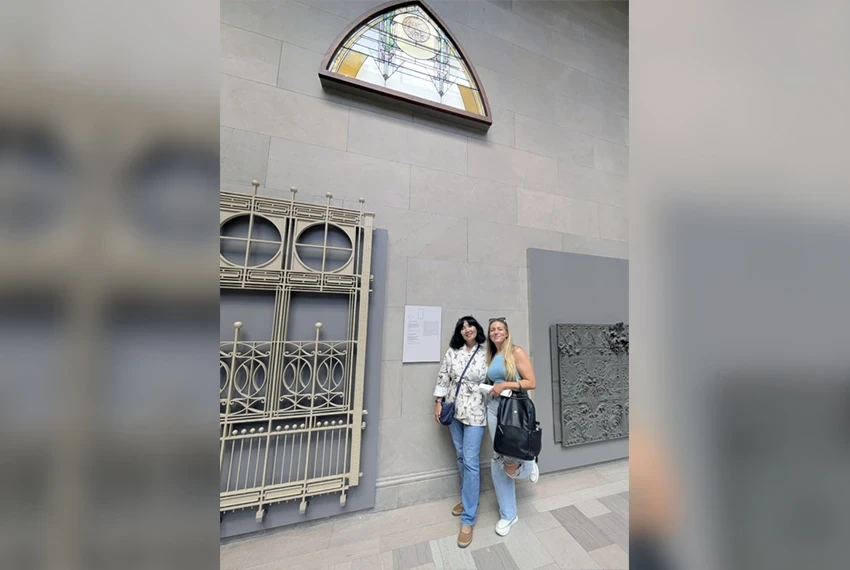
Among the most mourned objects are the Garrick Theatre and the Stock Exchange, designed by architects Sullivan and Adler, who promoted the unique Chicago style, rejecting Greco-Roman classicism. The main art museum in Chicago has a "Wailing Wall" with fragments of demolished buildings.
— When did the public struggle for the preservation of historical buildings begin in Chicago?
— The first mentions date back to 1905, when a threat loomed over the Green Tree tavern. The public raised their voices, but they could not stop the destruction. In 1920, they managed to save the Museum of Science and Industry in Jackson Park, built in 1893.
We barely saved the iconic Chicago Theatre, which became the city's calling card. Only in 1968 was a commission for the protection of architectural monuments established in Chicago with real powers, which began a strategic struggle for the preservation of monuments, including their inclusion in the register before they are demolished.
Read more on the topic Deputies allowed the transformation of irrigated lands for the construction of large energy facilities
In Chicago, there are protected streets and neighborhoods. In some places, only the exterior of the building is protected, while in others, it is allowed to add a porch to a historic hotel while strictly adhering to the original style, without using modern materials.
The struggle for the preservation of historical architecture continues. During our time here, we witnessed the demolition of the Chicago Tribune printing house for a casino and the demolition of several cozy 19th-century houses for the construction of a basketball court.

— Are there examples from Chicago's history that could serve as a lesson for Bishkek today?
— Certainly, it is important to learn from others' mistakes. Chicago has seen many senseless demolitions of architectural masterpieces for parking lots and shopping centers. One of the demolished neighborhoods in the city center remained vacant for almost 20 years due to the selfishness of the then mayor, who did not want to see old buildings next to his new project.
Journalists from the Chicago Tribune and other publications criticized the authorities not only for their arbitrariness but also for exceeding the budget. Without their involvement, there would have been no public oversight. Now, in the 21st century, we see how organically buildings from different eras coexist, and the eclecticism only enriches the city.


— What solutions implemented in Chicago to protect old architecture could be useful for Bishkek?
— First of all, there are tax incentives. For example, the owner of a mansion from 1870, which was on the verge of demolition, transformed it into a boutique hotel and received a property tax exemption for over 10 years. After restoration, this building became a gem of the southern part of the city.
Secondly, demolitions cause serious harm to the environment, so changing the purpose of buildings is now popular. Offices are being converted into residential complexes, old industrial buildings into public spaces with exhibition halls and rooftop gardens, and abandoned railway tracks into walking alleys with bike paths.
Thirdly, sometimes the city hall or activists gather and buy buildings that may be demolished to save them.

In Bishkek, it was sad to see how the house of artist Gapar Aitieva was destroyed. Why not restore it as a house-museum? It is part of our history, art, and architecture. In Chicago, for a building to become a landmark, it must meet two of seven criteria: be significant from an architectural, historical, or cultural point of view, be the site of a significant event or the residence of an outstanding person, or be created by an outstanding architect. If this can be proven, government funds are allocated for restoration.
— What is your attitude towards the demolition of old houses for new construction? Where do you think the line is drawn between development and the destruction of the urban environment?
Read more on the topic The architectural monument "House of the Artist" in Bishkek is under threat of demolition
— Development and moving forward are necessary, but it is important to approach construction issues thoughtfully. The example of the project in downtown Bishkek is a clear case of a reckless decision. How much labor and resources were wasted?! I am glad that the citizens defended the city center, and now they plan to create a pedestrian square there instead of another shopping center. Perhaps we will see the return of willows and fountains. But the question arises: why and for what purpose was all this done?
I am not an expert, but it seems that something is going wrong in Bishkek because it becomes increasingly difficult to breathe each year. While I lived at home, I got sick two or three times in winter, but in windy and colder Chicago, I stopped getting sick. Here, among the skyscrapers, a wind vortex is created, and sometimes it feels like I will be swept away, like Ellie from "The Wizard of Oz."

— The authorities explain demolitions by the expansion of roads or the construction of new infrastructure. How justified do you think such arguments are?
— In the 1950s-70s, many demolitions occurred in Chicago due to federal funding for housing construction and roads. Slums were destroyed, and under the pretext of this, sturdy buildings were also demolished. The mayor, not wanting to destroy his native neighborhood, shifted the highway, which caused damage to Black neighborhoods.
Truck drivers hate Chicago for having to drive through the entire city with its traffic jams. A bypass road could have been made. The main thing is not to rush to spend funds but to carefully calculate everything before issuing permits for construction and demolition.

— What do you think the city loses when old buildings disappear?
— Memory disappears, important milestones are erased. We need material evidence; otherwise, they are forgotten.
For example, the Osh market is not that old, but I visited it back in the 1980s when it was half-empty, and then in the early 1990s when it became crowded and lively. I loved the fabric rows, and "Kiyal" was my indispensable place before trips — that’s where I bought souvenirs. I brought people there on tours; it was an amazing place with a vibrant atmosphere! And now I read that they plan to demolish it.
— Are there buildings in Bishkek whose disappearance would be an irreparable loss for the city's history?
— Some may argue that Bishkek does not stand out architecturally and that it can be demolished. But what about garages? They are not architecture, they are not beautiful, but for the people who spent time there, they are important. Remember the movie "Garage," where people connected with each other and created memories.
Read more on the topic The head of the State Construction Agency tries to explain why old houses should be demolished in Bishkek
And the trees on Dushanbinka — why were they cut down? For a narrow road? And what about the Walnut Grove, which is also under threat? Breaking is not building; cutting is not growing.
As for the neighborhoods, "Intergelpo" should not be demolished. They say that the Soviet government built us factories, but the cooperative of citizens from Czechoslovakia and Hungary also contributed. They laid the foundation for industrial production with their resources and labor. The first maternity hospital, the park named after Julius Fuchik — all of this is important.
Tell foreigners that Alexander Dubcek, the father of the "Prague Spring," studied at school No. 6 in Bishkek, and you will surprise them.

In Chicago, entire neighborhoods are preserved as architectural monuments. "Intergelpo" deserves this too. This does not mean that it needs to be restored to its original state, but the spirit of the neighborhood and its unique architecture should remain.
The "Pink" house with the arch on Toktogul/Ekindi should remain. The railway station and the square around it are invaluable. The entire Erkindik Boulevard should be designated as architectural monuments. I am glad that the "Soki-Vody" ("Ak-Suu") pavilion near the "Ala-Too" cinema was restored. This place holds many childhood memories!
— How can we preserve the memory of places that have already been demolished?
— Tour guides can play an important role. For example, the Bishkek Walks project actively promotes the city and preserves memory through oral histories. I immersed myself in the history of Chicago thanks to similar tours and began my research.

For example, during a tour of Chicago, we learned a lot about the buildings and the site where the camp for Confederate prisoners, Camp Douglas, once stood. Only a plaque remains, and on the site of Fort Dearborn, copper plaques are embedded in the asphalt, marking its perimeter. One of the walls is installed in the Historical Museum...
Read more on the topic The Government House has been removed from the list of historical and cultural monuments
In Bishkek, a few years ago, when they uncovered the asphalt on Erkindik Boulevard, cobblestones were discovered. The owners of the "Ololo" studio preserved part of the cobblestone and embedded it in the wall of the conference hall. These are just stones, but they hold hundreds of stories. There are many ways to preserve memory, but oral histories need material "anchors."
— How do you envision Bishkek in 20-30 years: a city of skyscrapers or a place that carefully preserves history?
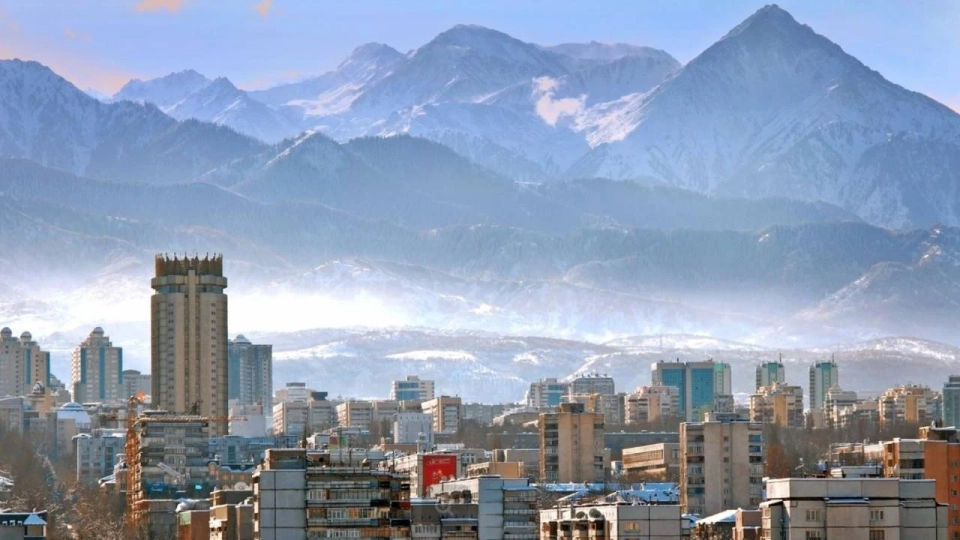
— Chicago does not have mountains, while Bishkek does. We take them for granted and sometimes do not even notice them. In Chicago, skyscrapers have become a substitute for mountains; they soothe the eye. Outside the business center, you can find cozy two- to three-story neighborhoods with green streets and quiet courtyards where people live for generations. I hope that Bishkek will preserve such oases of memory alongside the growth of high-rise buildings. It is important to live in the present, plan for the future, and remember the past.