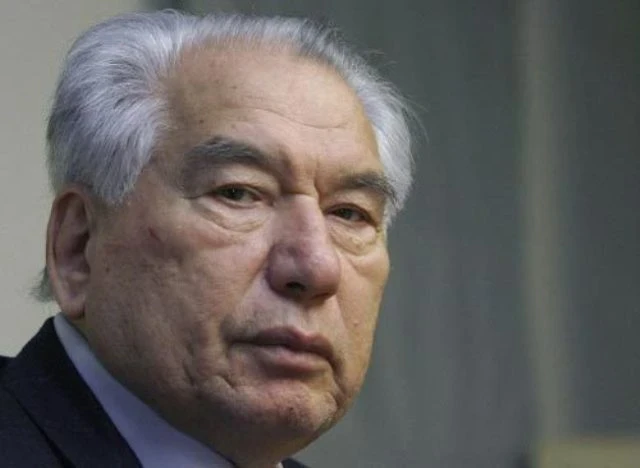
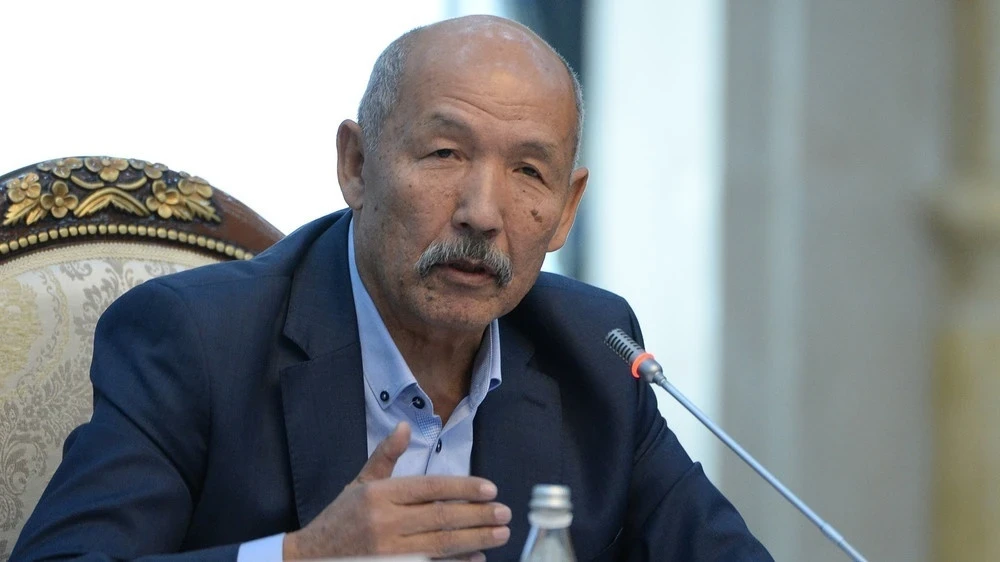
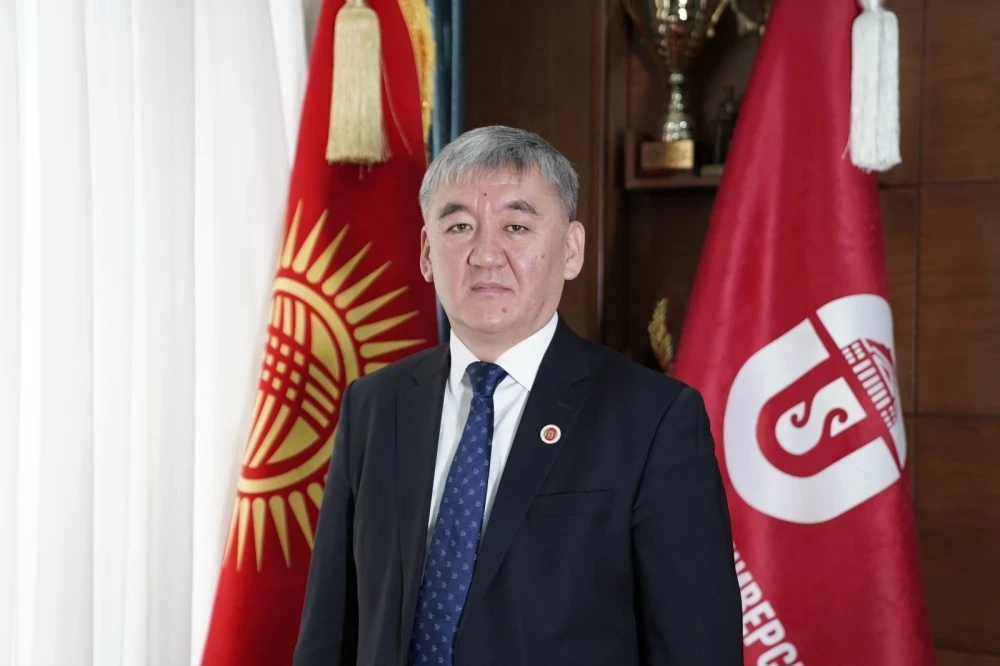
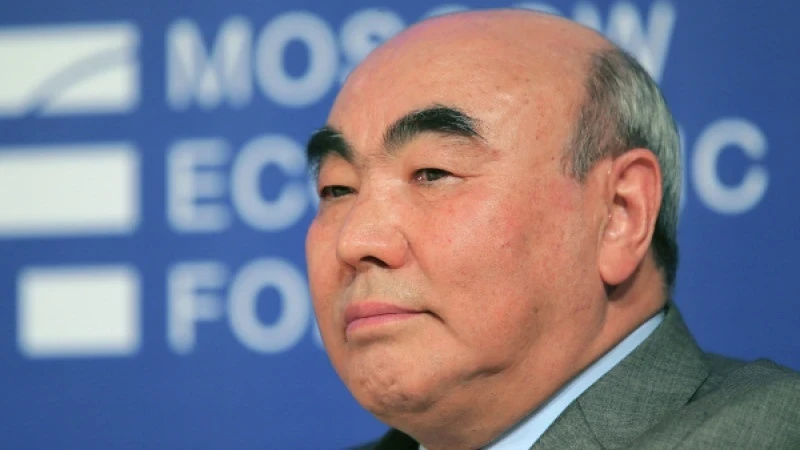
During a conversation with the president of the NAS, Kanat Abdrakhmatov, we discussed what changes the academy can expect under the new legislation.
- How has the work of the Academy of Sciences changed since the adoption of the new version of the law in 2025?
- So far, we have not yet felt the changes in practice. This is because the law was adopted in July of the previous year.
Now we needed to develop the regulations, one of which was the charter of the Academy of Sciences. Without its approval, we cannot start working. It took a lot of time to agree on the document; we actively worked with the Ministry of Science and New Technologies and the Ministry of Justice, which raised serious objections. The charter was sent back for revision several times, and we did not always agree with their demands.
Discussions with the ministries took almost six months, but last week the charter was published and will come into effect in 15 days. We expect that in 10 days we will be able to start working under the new rules.
According to the new charter, the functions of the Academy of Sciences are significantly expanded. One of the key changes is that the president of the Academy is now appointed by the president of the Kyrgyz Republic, rather than elected at a general meeting, as it was before.
Additionally, as the president of the Academy, I can now appoint directors of institutes and other divisions, which, in my opinion, will increase accountability. If someone performs poorly, they can be dismissed — such an option was previously absent.
The age limits for electing academicians and corresponding members have also been changed. We proposed setting an age limit of 70 years to rejuvenate the academic staff, but the Cabinet of Ministers opposed this. As a result, the age limit was abolished, and now anyone can nominate themselves.
The election process for academicians has also changed. In 2021, elections were held with violations, which caused dissatisfaction in the scientific community. Previously, elections were conducted at the level of the Academy's divisions; now they will take place at a general meeting, which, according to the founders, will help reduce corruption risks.
Another significant change is that the Academy of Sciences can now retain funds received from renting premises and land. Previously, these funds went to the State Property Fund, which created certain difficulties. Now we can use these funds for development.
Repairs have been carried out in our building. If you had been here a few years ago, you would have seen the condition of the premises. Now the conditions have significantly improved, and we can host guests and organize events properly.
- Does this mean that with the charter coming into effect, reforms will begin in the Academy of Sciences?
- Yes.
- Could the leadership of the Academy change?
- Yes.
- Are there already any decisions regarding this? Will you resign, or will the decision be made by the president?
- I believe the decision should be made by the president.
- Has there been a meeting with the president?
- No, there has been no meeting. I am not in a state of expectation. If I am invited and told, “Kanat Ermekovich, the law has come into effect, thank you for your work,” I will gladly return to my native Institute of Seismology, where I will continue to work on seismic safety.
- How many institutes are currently part of the Academy of Sciences?
- There are 19 institutes in the Academy of Sciences.
- Many do not quite understand what the Academy of Sciences does. You often mention that decisions in ministries are made without scientific justification.
- Unfortunately, the Academy of Sciences has not been given due respect for a long time, as for the past 30-33 years it has been treated as an afterthought.
For example, the first president of Kyrgyzstan, who previously headed the Academy, did not visit our academy even once during his 15 years in office and did not pass a single law that would contribute to its development, although, as an academician, he was aware of all the problems.
Since then, the attitude towards the Academy has only worsened. We found ourselves in a situation where we are neither developing nor closing down. Perhaps it was beneficial for someone for the Academy to eventually disappear, and the building to be used for other purposes.
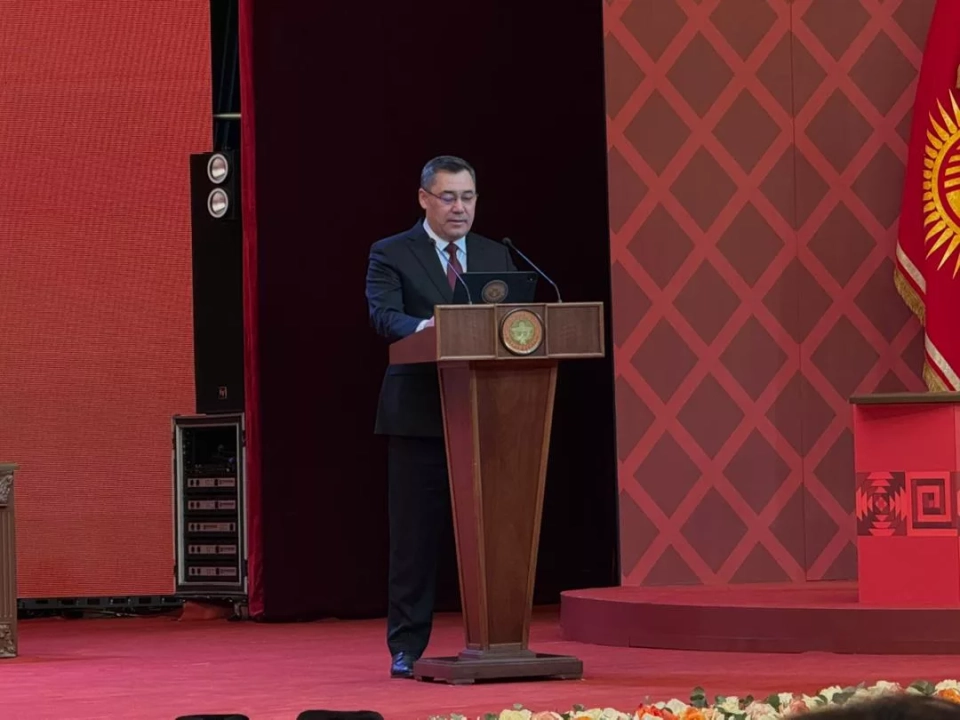
With the arrival of Sadyr Nurgozhoevich, the situation has radically changed. He has visited the Academy of Sciences five times during his presidency, which indicates his attention to science.
With his support, salaries, which had not been raised for many years, were increased, and for the first time in decades, a major renovation was carried out. All of this indicates that we are on the brink of significant changes, which I very much hope for.
- How will scientific work change?
- For example, in China, investments in science increased by 3299% from 1996 to 2020. This allowed China to take leading positions in many areas. At the same time, the Academy of Sciences of Kyrgyzstan receives only about 0.05% of the gross domestic product. Compare: 3299% and 0.05% — what can we talk about here? It is encouraging that we still exist at all.
- Will funding increase?
- This is a difficult question. It is gradually increasing. Today, for example, an off-site meeting of the Jogorku Kenesh committee was held on issues of state orders.
Additional funds are allocated for our scientific topics. In 2023, we were allocated 300 million soms for projects that are expected to benefit the national economy. We discussed how these funds were used.
For 2025, we were additionally allocated 110 million soms, and we are working on these projects. But if we convert this amount into dollars, it is a very small amount. For comparison: in 1997, I was in the USA, at the Massachusetts Institute of Technology, where the budget was about 6 billion dollars. Now, it probably exceeds 60 billion dollars.
- What is the nature of the state order?
- At the moment, in my opinion, the state order is being formed incorrectly. It should consist of the government approaching us with specific requests, for example, for the creation of new medicines or developments in the field of biotechnology. We then attract other institutes and form temporary scientific groups to fulfill the orders.
However, currently, the state order is formed differently: we propose topics that we believe may be useful to the government and send them to the government. They select some of the proposals and fund them. This is essentially additional funding for work over 3-5 years.
But there is often a demand for immediate results from science. However, academic science is fundamental science, and the results of its research do not always manifest immediately and can take years.
For example, the discovery of the structure of the atom once raised questions about its practical usefulness, but later led to the emergence of nuclear power plants and nuclear energy.
Unfortunately, business logic is often applied to science: “We will give you a million, and you will return one and a half next year.” But that is not how science works.
Nevertheless, we have projects that can yield results in 3-5 years. For example, at the Institute of Geology, technologies are being developed for using local minerals to create reagents that can significantly increase agricultural yields. These resources are found in Kyrgyzstan but are not currently utilized.
We are ready to show where these ores are located and what effect they can yield. But for this, we need either state investments or interested businesses.
There are also institutes where results cannot be evaluated in monetary terms, such as the Institute of Language or the Aitmatov Institute. Their contribution lies in preserving language, culture, and spiritual values, which cannot be expressed in soms.
This leads to a dismissive attitude towards the Academy of Sciences from those who are accustomed to evaluating everything solely by financial indicators.
- Have relations with the ministries improved?
- Yes, undoubtedly. We actively cooperate with the Ministry of Natural Resources, the Ministry of Emergency Situations, and other agencies.
However, we understand that the state cannot allocate significant funds for science. Therefore, we are increasingly focusing on international cooperation. This includes joint projects with developed countries and internships for young scientists — the only way to close the gap.
Modern research requires expensive equipment. For example, microscopes for nanotechnology cost between 200,000 and 300,000 dollars. We do not have such funds.
We are forced to work under conditions of limited funding. We are ashamed that we lag behind global science, and the main reason for this is low salaries. Young people do not want to go into science. For example, last year, the average salary in the Academy of Sciences was about 13,000 soms.
- How much do young employees earn?
- A new employee who has just joined earns 8,000 soms. A cleaner working for me earns 25,000 soms in two hours at a café. I myself, despite having 17 years of education and experience, earn only 25,000 soms. People do not appreciate this, and everyone thinks that I just read something and voice it.
Such an attitude towards science, unfortunately, has its roots.
- How is forecasting going? Climate change is becoming an increasingly relevant topic, and the state is also paying attention to it. Does the Academy of Sciences have forecasts or steps in this area?
- We have the Institute of Water Problems and Hydropower, which is actively engaged in this topic, particularly the issues of water and glacier reduction. They study this problem and provide forecasts.
Unfortunately, the forecasts are not encouraging. If the average global temperature has increased by 1.5 degrees due to global warming, in Kyrgyzstan it has increased by 2-3 degrees. If this continues, in 30 years, glaciers may disappear in some areas.
The situation with Issyk-Kul also raises serious concerns. The lake is shrinking and suffering from anthropogenic pollution. Wastewater treatment plants exist only in a few places, and all discharges are directed into Issyk-Kul.
If the situation does not change, we may face a terrible picture: a polluted lake where swimming will be impossible and there will be no normal fish. Issyk-Kul is a closed lake, and everything that gets into it remains inside.
There is a concept of ecological capacity. It is necessary to understand how many tourists Issyk-Kul can withstand. We must know when to say, “Enough.” We understand that people need income, but there are also limits.
I was born on Issyk-Kul myself, and I have memories of the full-flowing rivers that have now almost disappeared. This is a serious problem, and it needs to be addressed at the state level.
- What was decided at the committee meeting today?
- At the meeting, several instructions were given to the ministries to work more actively with the Academy of Sciences and consider our projects and proposals. We have questions for the Ministry of Finance, and they were also instructed to pay more attention to the requests of the Academy of Sciences.
Thus, decisions were made, but the specifics remain at the level of general phrases.