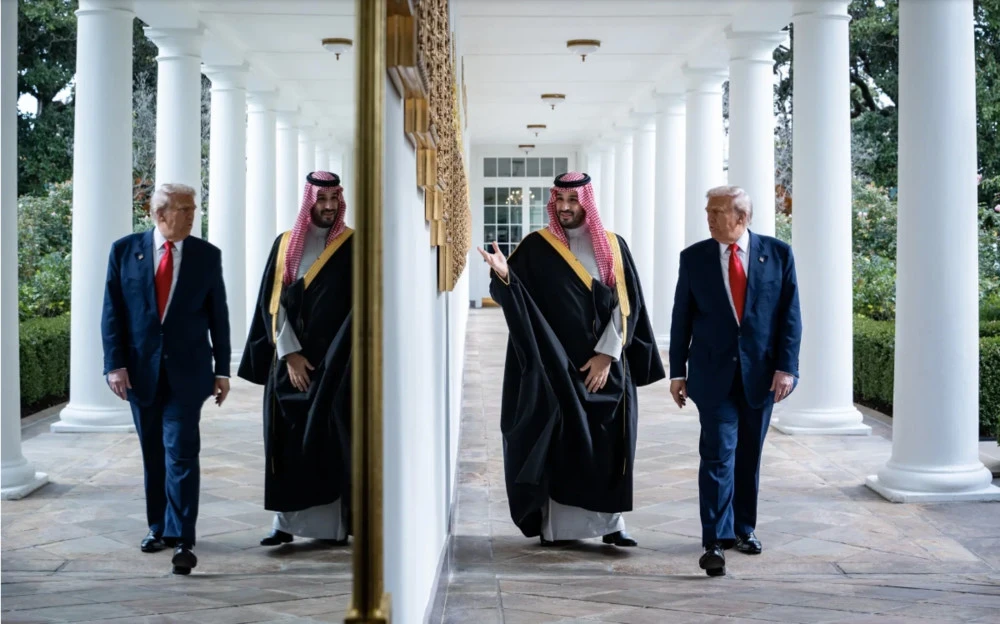
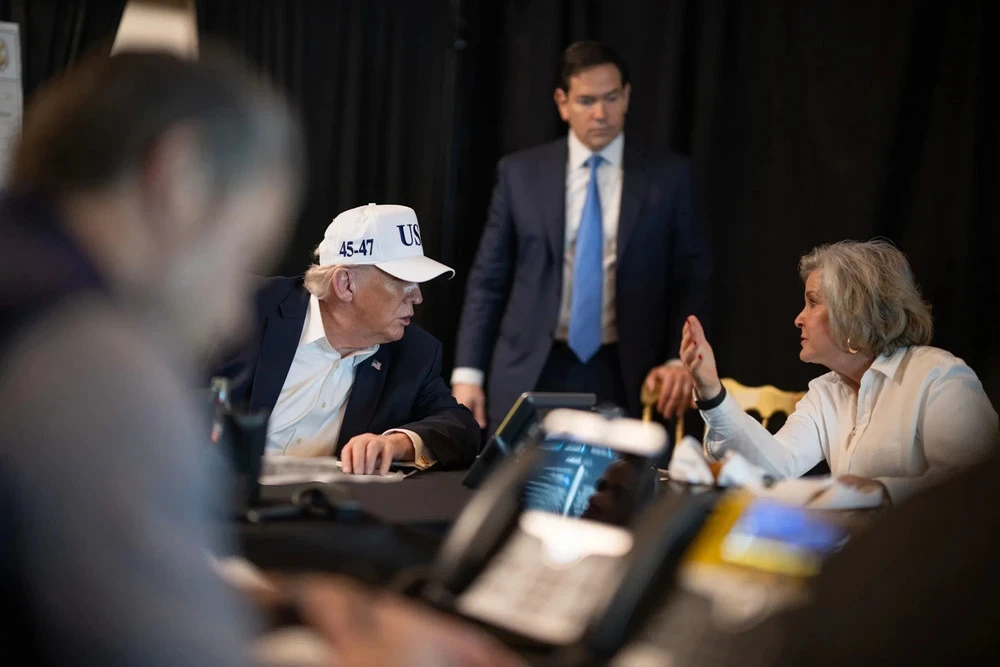
President Trump reports that allies who did not support his actions in Iran will have to face the consequences of their decisions, writes CNN.
He pointed out the need for independent oil extraction for those who do not wish to participate in the conflict, which, in his opinion, does not comply with international law.
“Stock up on your oil,” he wrote on Truth Social, which came before reports that the administration cannot guarantee the restoration of free navigation in the Strait of Hormuz before declaring the completion of its mission.
Furthermore, Trump predicted that the conflict would "end" in the next two to three weeks. “Whatever happens in the strait, we will not be involved,” he told reporters in the Oval Office.
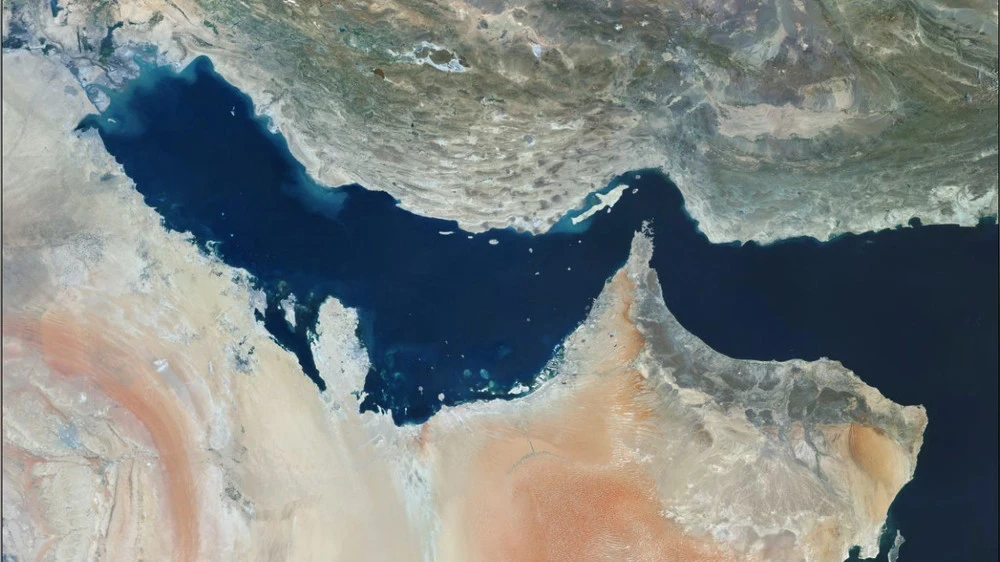
Iran uses the strategically important Strait of Hormuz to limit oil supplies and hold the global economy hostage. If Iran gains control over this waterway, it will be a significant victory.
Given the new signs of Trump's desire to end the conflict, officials are preparing justifications for his possible withdrawal without addressing the consequences. Defense Secretary Pete Hegseth stated on Tuesday that the U.S. has achieved a "regime change" in Iran, although the country is still governed by radicals who are unhappy with the U.S.
The administration is trying to rethink the concept of success, considering the growing pressure on Trump after more than a month of conflict. This is related to the established timeframe of four to six weeks for its completion and statements about "productive" negotiations with Iran, which official Tehran denies.
Trump's departure could lead to chaos, which aligns with his style that often disrupts the existing order rather than creating a new one. It also reinforces the principle of "America First," where countries act in their own interests.
However, the U.S. cannot ignore the consequences if Iran regains control of the strait. While Trump may be able to create justifications for his decisions, the markets may not take this easily.
“Although the United States is the largest oil producer in the world, this does not protect American consumers from fluctuations in oil prices, as they depend on the global market,” said Rosemary Kellanick, director of the Middle East program at the Defense Priorities think tank, in an interview with CNN.
This economic blow could trigger a global recession, which would negatively impact the U.S., especially ahead of the midterm elections, where Democrats hope for success in limiting Trump's influence.
In a broader context, the consequences of the conflict with Iran could deepen the rift in the transatlantic alliance, highlighting the need for European allies to increase their investments in their own armed forces.
Alarm signals are coming from Europe: Secretary of State Marco Rubio, one of the NATO supporters in Trump's circle, described the allies' reaction to the conflict as "very disappointing" and hinted at possible changes in U.S. commitments after its conclusion.
How Europe may pay for this.
In the face of uncertainty under Trump, allies understand that they can no longer rely on U.S. security guarantees, as the president seems ready to use their support as a condition.
Some countries, like the United Kingdom, initially refused to grant permission for the use of their bases for operations in Iran, while others, such as Spain, went further, provoking Trump's criticism of the "special relationship" with London and a threat to halt trade with Madrid.
Not all of Trump's words should be taken literally. Signs of a possible U.S. exit from the conflict appeared shortly after his threats to destroy Iranian power plants and desalination facilities if Iran did not meet his demands.
Trump sometimes uses public statements as a tactic to compel weaker opponents to act. Rubio hinted that "countries in Asia and around the world must make a significant contribution" to efforts to restore operations in the Strait of Hormuz.
While there is no obvious exit from the conflict for Iran and the U.S., European allies have the opportunity to stand up to Trump. Some countries possess demining capabilities that the U.S. lacks. France has expressed willingness to participate in an international mission to protect navigation through the strait, but only after the fighting ends.
“I think they are still trying to prevent an irreversible rift in transatlantic relations due to disagreements over Iran,” noted Stephen Flanagan, former senior director for defense policy and strategy at the National Security Council, at a briefing at the Middle East Institute. “However, Trump's criticism of Europeans complicates this task.”
“This is not our war; we did not start it.”
But such a position will not spare allies from the consequences of the conflict, which is becoming characteristic of Trump's second term.
Hundreds of millions of people around the world, from Asia to Europe, from Africa to the Middle East, did not vote for him and do not influence his decisions.
Nevertheless, his actions significantly change their lives.
The post Trump may end his war, but the rest of the world may pay for it first appeared on K-News.