Peter Thiel, co-founder of PayPal and an important figure in Silicon Valley, visited Rome in March 2026, where he held closed meetings with Elon Musk and other influential personalities. These events took place under strict secrecy and without press involvement, which already raises questions. Over the past few years, Thiel has actively discussed topics related to the coming of the Antichrist, and his lectures often intersect with theological reflections.
During the lectures in Rome, organized by the independent Cluny Institute and the Italian association Vincenzo Gioberti, Thiel once again raised questions concerning the Antichrist. Two Catholic universities declined to participate in these lectures in advance, emphasizing the sensitivity of the topic.
Thiel actively warns against the emergence of a world state, which he believes represents the Antichrist. It is paradoxical that a man who created technology for total control speaks out against this very control at conferences and closed meetings, as if trying to unite scientific and theological concepts.
Closed Club
During the lectures in Rome, Thiel spoke to a small group of people, which is his usual style. Notably, Thiel continues to promote the theme of the Antichrist, speaking at various closed events, including a conference in Paris in July 2023, which almost no one learned about until recently.
Thiel also shares his worldview through interviews and public discussions, addressing topics related to technological and theological interaction. In his analyses, he often refers to historical and cultural contexts, attempting to justify his ideas about the end of the world.
However, his lectures in San Francisco in September and October 2025, organized by ACTS17 Collective, became the most notorious. Tickets for these events sold out within hours, and participation required signing a non-disclosure agreement. External protests against Palantir and its technologies were not long in coming, and the events attracted public attention.
Despite attempts to maintain secrecy, some details leaked to the press. For example, Kshitij Kulkarni, a researcher, published a summary of one of the lectures, which elicited a negative reaction from the organizers, but the information had already spread.
Meanwhile, audio recordings of the lectures became available thanks to anonymous sources who provided them to major publications. Thiel did not deny their authenticity, but his representative clarified some points, trying to explain his positions on controversial issues.
In light of current world events, Thiel's lectures acquire an even sharper political context, especially against the backdrop of the war in Iran and changes in immigration policy being implemented by the new Pope.
Antichrist or Armageddon
Thiel views the modern world as moving towards two dangerous paths: one is Armageddon, the other is the Antichrist. He asserts that the second threat is underestimated. In his interpretation, the Antichrist is not just a character but an entire system of global control that, in the billionaire's view, will use fear of existential threats to concentrate power.
Thiel emphasizes that before the advent of nuclear weapons, the world seemed too large for self-destruction. However, after the events in Hiroshima and Nagasaki, the concept of the end of the world becomes more tangible and relevant, transitioning from theology to politics.
The Antichrist, according to Thiel, will use fear of threats such as global warming or nuclear war to convince humanity to accept authoritarian governance in exchange for security. In his opinion, this totalitarian rule is no less dangerous than the threats themselves.
In this context, Thiel connects his ideas with technological stagnation, noting that modern institutions are unable to cope with global challenges. He believes that progress in the physical world has stalled, and dependence on technologies such as artificial intelligence exacerbates authoritarian tendencies.
Thiel also points out that international organizations, such as the UN and global financial regulators, act as forerunners of the Antichrist. He sees this as a process of gradually suffocating freedom, where fear of technologies is used to justify global control.
Forerunners of the Antichrist
Figures such as activist Greta Thunberg and philosopher Nick Bostrom, in Thiel's view, can be seen as precursors to the Antichrist, using fear to justify global regulation. In his interpretation, Thiel draws parallels between modern challenges and traditional representations of the Antichrist, emphasizing that this image may not be as obvious as it seems.
Thiel emphasizes that the Antichrist will be young and charismatic, which will lead to his popularity. This idea is reflected in his reflections that figures like Bostrom represent a threat using humanitarian rhetoric to suppress progress.
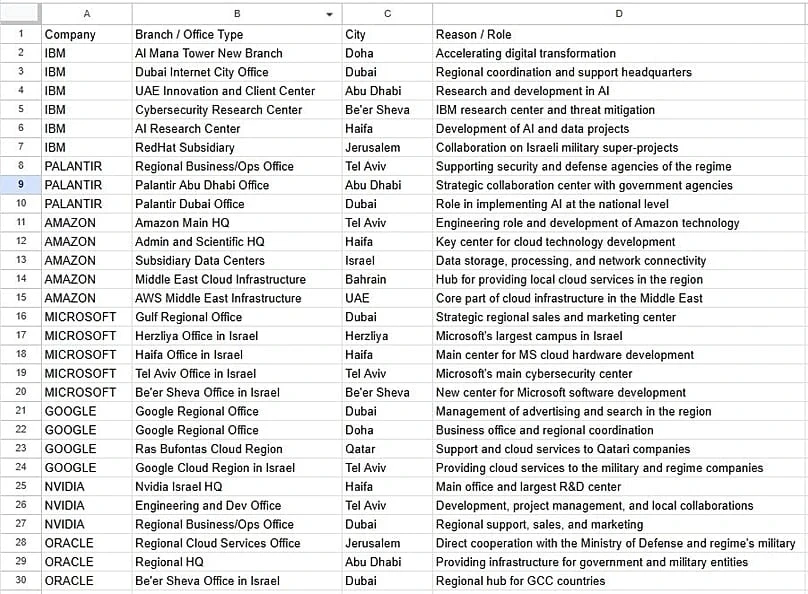
In his lectures, Thiel speaks extensively about how technologies can be used for control and surveillance, and how Palantir, as his own creation, becomes a symbol of this control. He raises the question of how his technologies can be perceived as a tool for salvation, while in reality, they may become an instrument contributing to the emergence of the Antichrist.
The modern Silicon Valley, in Thiel's view, is engulfed in "effective altruism," which he believes is merely a mask for deeper problems such as authoritarianism and loss of freedom.
Thiel continues to analyze how his own project Palantir, associated with total control, can be perceived as a precursor to the Antichrist, raising numerous questions about the future of technology and society.
The record "Eschatology of Silicon Valley: Does Palantir embody the prophecy of the Dajjal?" first appeared on the K-News website.