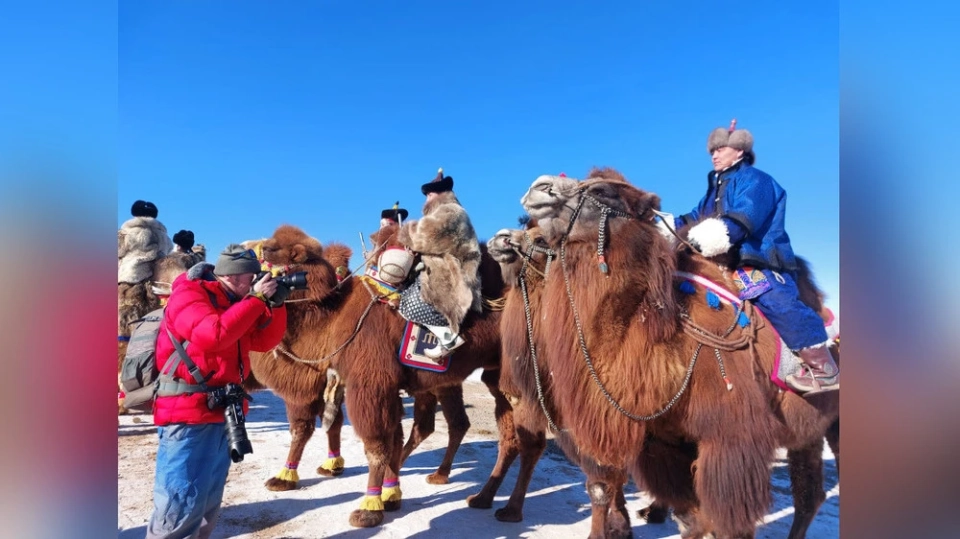
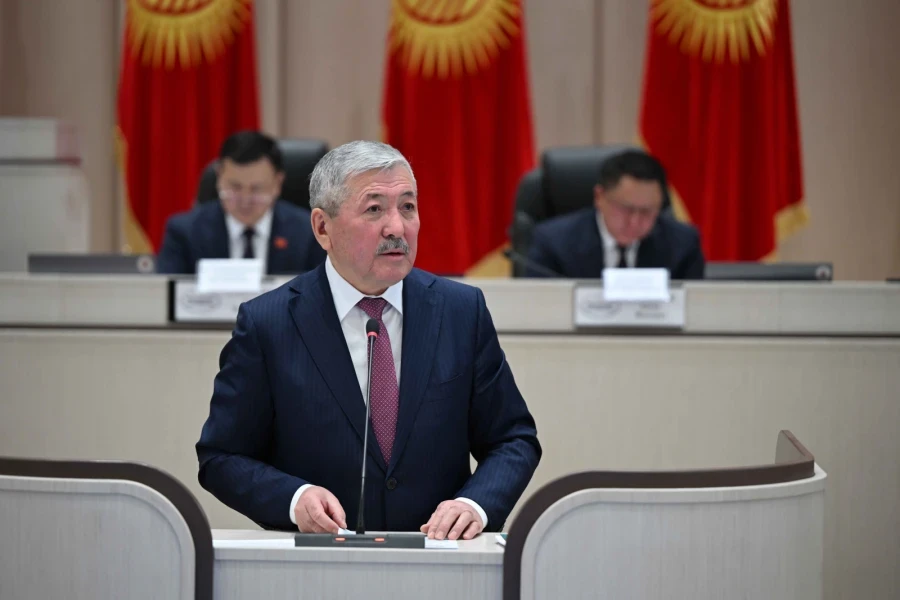
According to him, the festival is organized at the Ak-Tash pasture as part of efforts to develop winter tourism. "To activate winter tourism, we are holding the festival 'Ak Ilbirs' at the Ak-Tash pasture. The main goal of the festival is to develop winter tourism, for which the arrangement of ice venues is planned, as well as the conduct of national games such as salburun. The Orgochor rural district is currently preparing and organizing the festival together with the organizers. The event will also include work on the extraction of jade boulders in the village of Chon-Kyzyl-Suu," he informed.
The head of the Orgochor rural district, Nurdin Jusupov, reported that the festival will take place at the Ak-Tash pasture. He stated that the jade reserves are estimated to be more than 620 tons, and work is expected to be carried out to uncover it using machinery, as well as to change the course of the Chon-Kyzyl-Suu River.
Local resident and young activist Zhanibek Tabyldiev is also preparing for the festival. He has prepared a decorated horse-drawn sled and reported that he will be taking tourists on beautiful sleds featuring images of the snow leopard.
The jade nugget was discovered in the village of Chon-Kyzyl-Suu in the Jeti-Oguz district in 2013. At that time, the weight of the boulder was estimated at 100 tons. The State Agency for Geology and Mineral Resources of Kyrgyzstan provided photographs of the jade-like boulder.
To verify the authenticity of the jade discovery by local residents near the village of Chon-Kyzyl-Suu, a special commission was created, and a field visit was conducted to the site of the jade discovery. During the field study, rock samples were collected for mineralogical analysis. The single specimen of the jade-like boulder found in the Jeti-Oguz district was reported to have no practical significance by the State Agency for Geology at that time.
At the same time, the villagers decided to guard the find to prevent it from being stolen. Some residents voiced their estimates of the possible value of the stone boulder if research confirmed that it was indeed jade. They spoke of a potential value of 7-10 million dollars, which the villagers wanted to use to improve the infrastructure of the rural district.
The nugget was hidden underwater in 2013 — a small river was diverted over it.
In 2013, State Geology specialist Ivan Malukhin suggested that it was a jadeoid, 90% of which is underwater. This is a low-quality rock. However, the geologist did not rule out that high-quality jade could be inside the stone boulder.
In August 2013, the State Agency for Geology and Mineral Resources reported that specialists conducted a series of analyses and made an official conclusion that this rock has very little relation to jade. Samples of the rock were collected for analysis. After conducting the analysis, scientists unanimously concluded that the name of this rock is jadeoid. It can be used as raw material for making small items like vases, figurines, and ashtrays, but only in limited cases, as the rock is excessively cracked and has a weak color.
The issue of distributing the potential profits from the development of the jade deposit in the Jeti-Oguz district was actively discussed in the walls of the Jogorku Kenesh in 2014.
In 2022-2023, experts estimated the cost of jade extraction at 2-5 dollars per kilogram, while the price of the stone on the world market ranged from 10 dollars to 20,000 dollars per kilogram depending on the grade, quality, and other characteristics.
This stone is especially valued in China.