As a result, it was decided to hold a new competition, and the deadline for submissions was postponed to the fall. Consequently, five texts were selected, and options for musical accompaniment were determined based on the outcomes of the second stage of the competition.
According to the Ministry of Culture, the commission completed its work in September of last year, and all materials were submitted to Parliament. The press service of the Jogorku Kenesh confirmed receipt of the documents; however, the members of the relevant committee have not yet reviewed the drafts of the new anthem.
In this article, we will explore why the attempt to change one of the key national symbols of the country faced difficulties, as well as uncover the ideology behind this initiative. Details in the article 24.kg.
When the deadlines expired, and the anthem was still not adopted
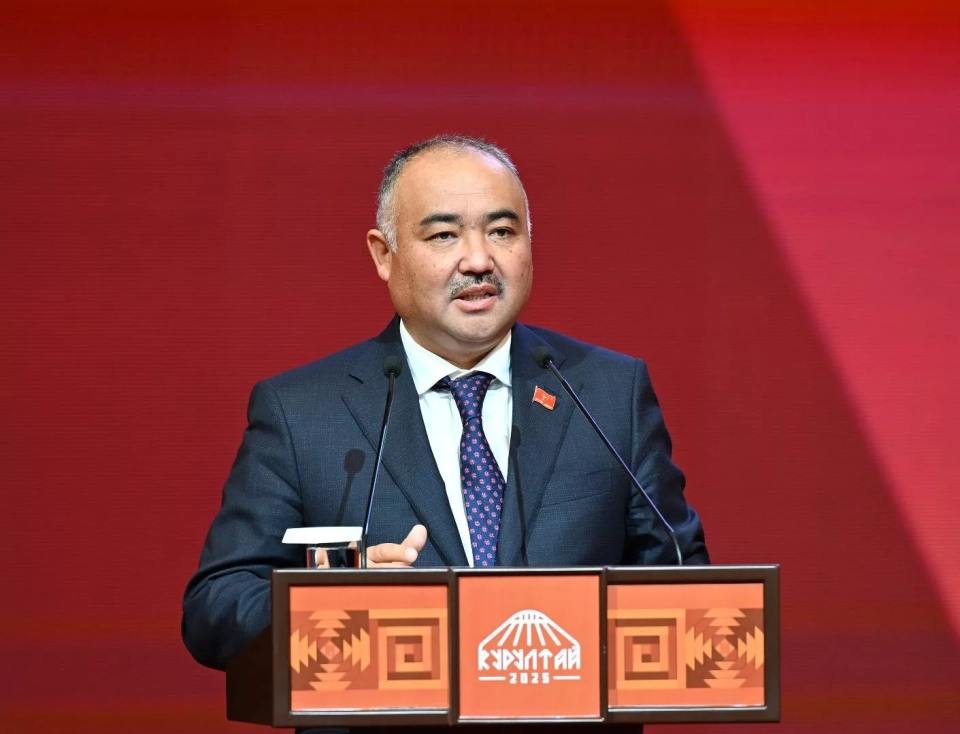
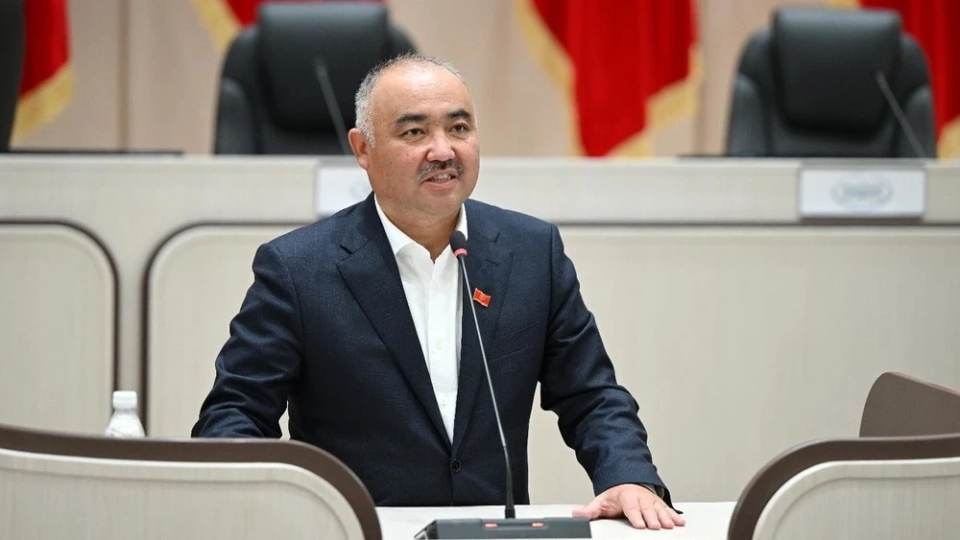
In 2024, the speaker of Parliament, Nurlanbek Turgunbek uulu, expressed the opinion that the republic needed a new anthem.He noted: “We adopted the current anthem at a time when we had just emerged from the Soviet Union. Now we are an independent state striving for development, and our anthem should reflect this. It should be such that everyone can sing it.”
President Sadyr Japarov supported this initiative, stating that the anthem does not correspond to modern realities and does not reflect the identity of the country more than 30 years after gaining independence.
“What is wrong with updating the anthem? It was written 33 years ago, when we had just begun our journey as an independent state. During this time, we have become a full-fledged state known on the international stage. Are we going to continue singing an anthem written in the past?”
Sadyr Japarov
From that moment on, the question of a new anthem became not just a cultural initiative but a state program.
Initially, the authorities planned to approve a new anthem by April 2025 at the latest. This date was set as a guideline.
The competition for a new anthem text started in January of last year, and many works were submitted for consideration—703 applications. However, only 285 of them were registered for evaluation, and none of the submitted works were suitable, prompting the organizers to restart the process with new deadlines.
Read on the topic
“Purring, not a song.” Edil Baisalov on the anthem of Kyrgyzstan
A new format was adopted: the selection was divided into two stages—first, the texts were chosen, then the musical accompaniment. The deadlines were split: by July 7 for the anthem texts, and by September 8 for the melody. According to the competition conditions, the commission was to select the five best options, based on which the final version of the anthem would be created.
The authorities promised significant prizes for the winners, with funds to be allocated from the presidential fund.
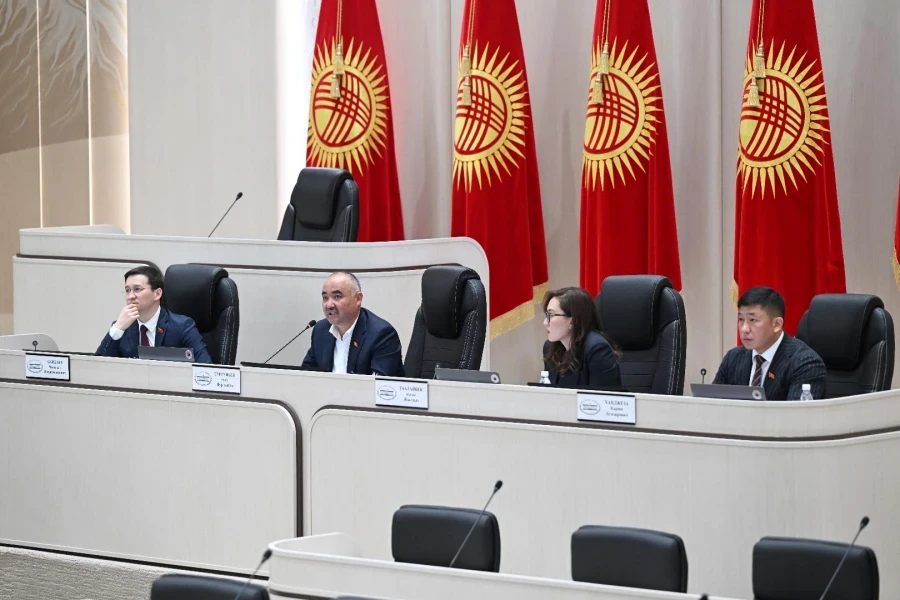
With the anthem projects and music that received high ratings, everything was sent to the Jogorku Kenesh. However, on September 30, 2025, the VII convocation of Parliament disbanded itself, and at the last meeting, Speaker Nurlanbek Turgunbek uulu promised to convene an extraordinary session to approve the anthem, but it never took place. The new anthem “hung” at the stage of consideration by the relevant committee.
Goals and reasons
Overall, it is evident that the desire to change the anthem has not only cultural but also political-symbolic significance. This is confirmed by both the speaker of Parliament and the president, who in their public statements emphasize that the current anthem was adopted at a time when Kyrgyzstan gained independence, and now, in their opinion, it is necessary to update the symbols that reflect modernity.The anthem serves as a marker of the break with the post-Soviet past and an attempt to establish a new identity for the country that has formed over more than 30 years of independence.
Thus, the process of changing national symbols, such as the anthem, flag, and coat of arms, is part of a strategy for the symbolic renewal of the state and is integrated into the rhetoric of sovereignty and traditional values.
Changing the anthem could bring three potential political benefits: first, it consolidates the era of Sadyr Japarov in a symbolic context; second, it distances the current leaders from the elites of the 90s; third, it creates an emotional narrative of unity and renewal.
Therefore, this is not just about music and lyrics, but about creating a new state ideology, where the main values become stability, unity, and continuity of power.
Implementation problems
Officially, the competition for a new anthem of Kyrgyzstan did take place. After the failure of the first stage, a new selection was conducted, and the best options are now awaiting parliamentary discussion. Nevertheless, the prolonged process and the lack of clear deadlines for decision-making indicate problems with this initiative.Read on the topic
We will hold an open competition for the anthem text—Nurlanbek Shakiev
The attempt to update the anthem was positioned as a large-scale ideological project, but did not receive clear public and institutional support. The Jogorku Kenesh is not yet ready to even name approximate timelines for the discussion, and the new anthem remains an unfinished administrative procedure rather than a result of national consensus.
The question “Why was it not possible to change the anthem on the first attempt?” leads to the next: “How ready is society to accept a new symbol if the path to it has turned out to be more technocratic than popular?”