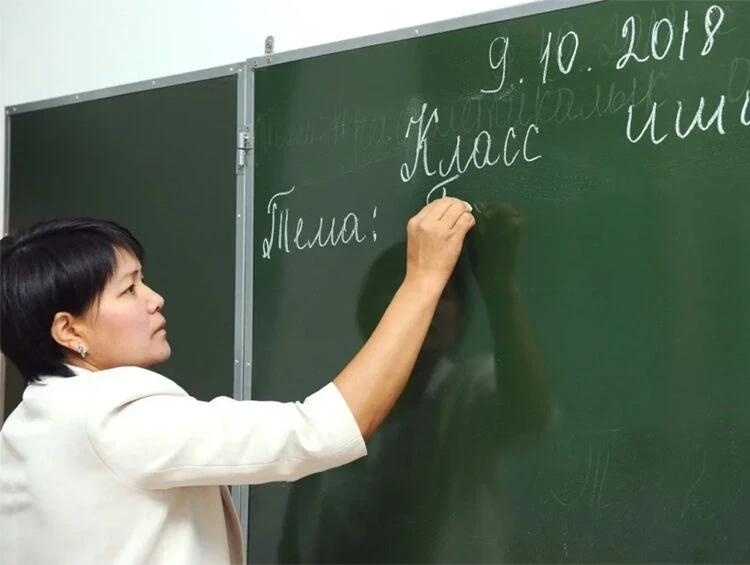
The reform of school programs is causing disagreements in Central Asia. In Kazakhstan, the authorities have decided to maintain a traditional approach to education: students will study algebra, geometry, physics, chemistry, and biology as separate subjects. Zhuldyz Suleimenova, the Minister of Education of Kazakhstan, reported that after consultations with educators and an analysis of potential risks, they decided to cancel the integration of subjects. She emphasized that in the context of digitalization, it is important to provide children with a deep understanding of the fundamentals of science, which is better achieved through separate teaching. The proposed idea to combine the exact sciences into groups "Mathematics," "Natural Sciences," and "Social Sciences" was rejected.
In contrast to Kazakhstan, Kyrgyzstan is moving in a different direction, transitioning to a 12-year education model. Last year, the republic announced the introduction of a new integrated subject "Ilm," which will combine the basics of physics, chemistry, and biology. According to the National Academy of Education of Kyrgyzstan, this comprehensive approach will be applied in education from grades 1 to 9. It is expected that this will allow students to form a holistic understanding of the scientific world at early stages. However, in the senior grades (10th to 12th), Kyrgyz students will return to specialized study of individual disciplines.
Thus, while Astana opts for proven specialization to maintain the quality of education, Bishkek is experimenting with an interdisciplinary approach to adapt school education to modern requirements.