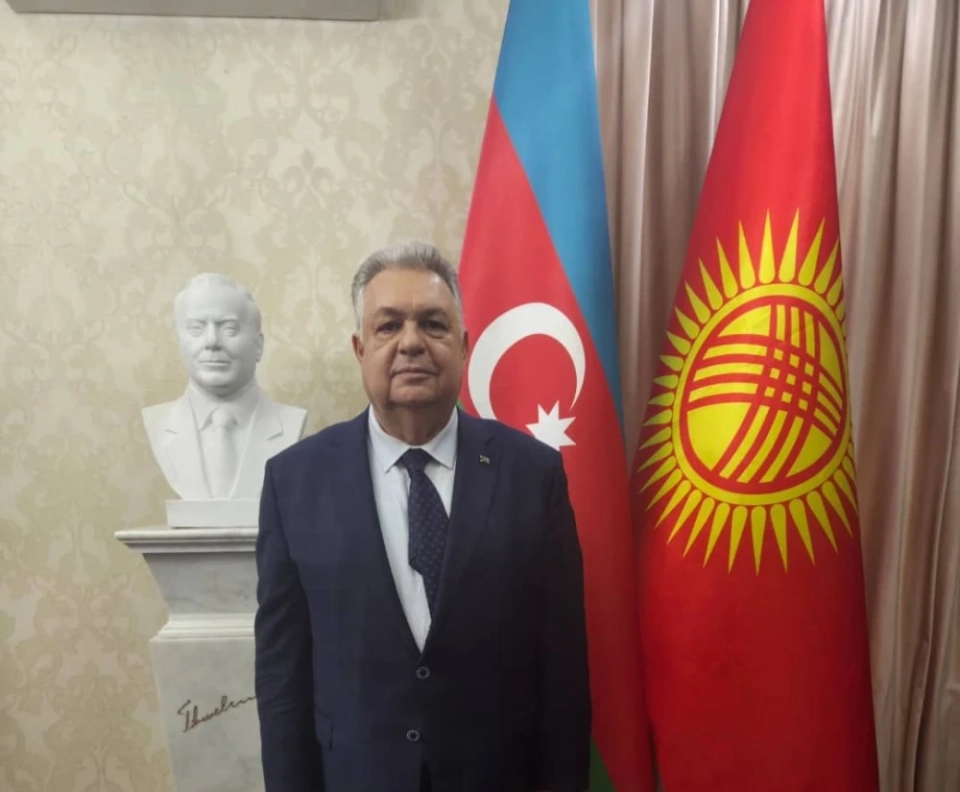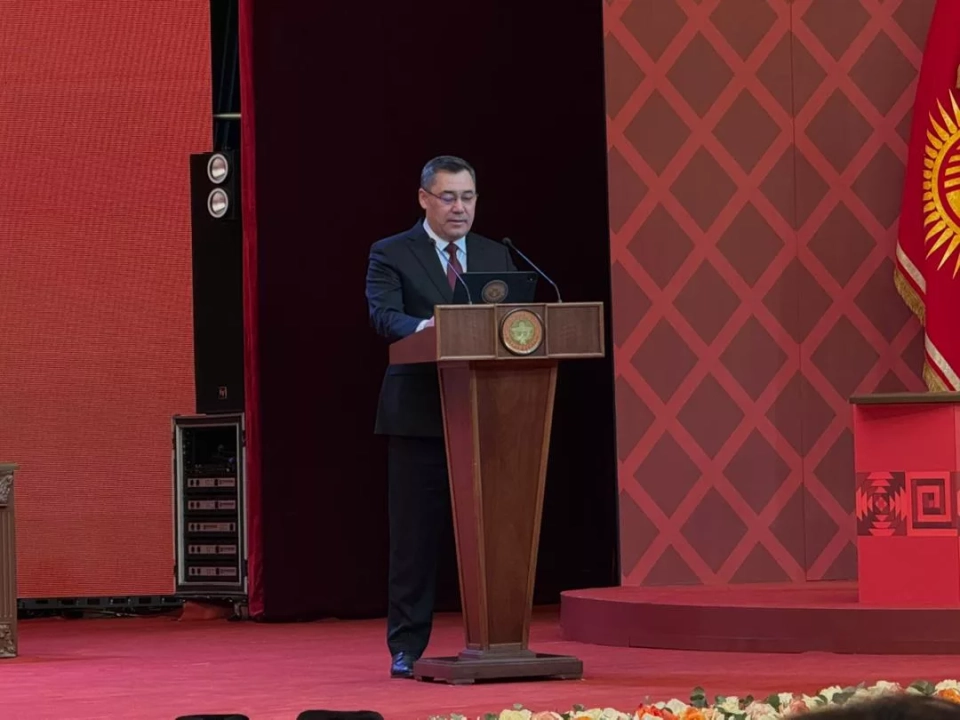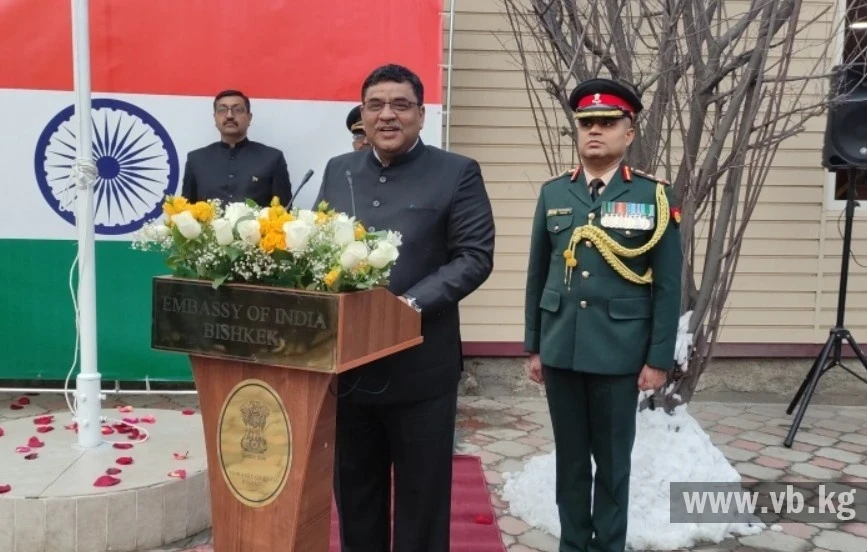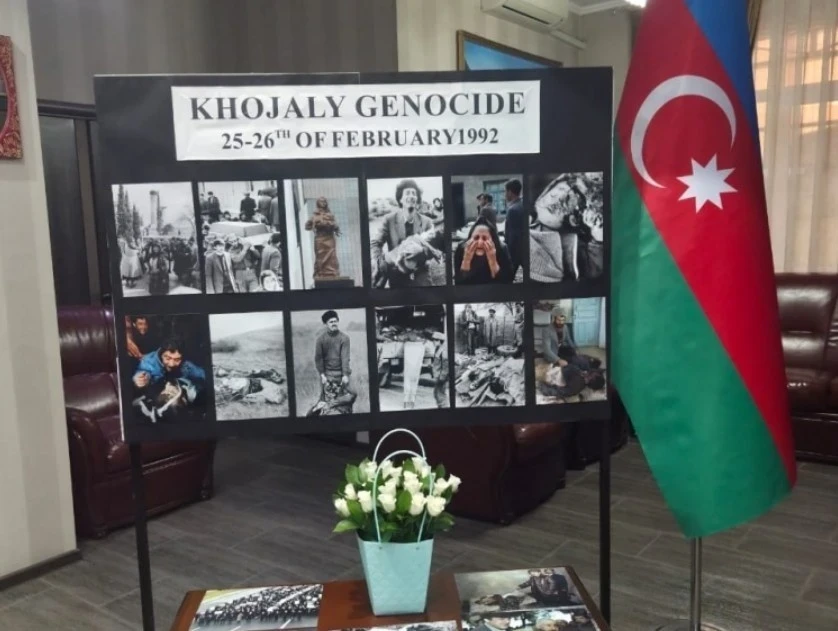
Speaking at the meeting, the Extraordinary and Plenipotentiary Ambassador of Azerbaijan to Kyrgyzstan, Latif Gandiyev, shared personal memories and the historical context of the tragedy, emphasizing the importance of preserving memory and justice.
“This day remains one of the most tragic in the history of our people. The pain from these events stays with us, and many embassy staff were witnesses to what happened. We remember everything as if it were just yesterday,” he noted.
The ambassador spoke about the values of internationalism and respect for different cultures that have been cultivated in society, and how they became the foundation for peaceful coexistence. However, history has shown that nationalist sentiments have not disappeared.
The events that began in 1988 became a real tragedy for the Azerbaijani people, who were unprepared for the conflict. The international community often turned a blind eye to this, citing a reluctance to exacerbate interethnic relations. “Silence only exacerbated the tragedy. It paved the way for the events in Khojaly, as a result of which more than 2,000 Azerbaijanis died from brutal attacks,” Gandiyev emphasized, adding that this was part of a strategy to intimidate Azerbaijan.
The ambassador also mentioned that during the years of occupation, many resolutions were adopted, including four from the UN, but Armenia had no intention of implementing these decisions. As a result, Azerbaijan had to rely solely on its own strength, uniting around President Ilham Aliyev to liberate the occupied lands and restore sovereignty.
“Over the 33 years of occupation, our people faced many difficulties: loss of lives, destruction of homes, forced displacements. We did not see justice on the international stage, but we managed to preserve our statehood and strengthen the spirit of independence,” Gandiyev added.
He also noted that the memory of the tragedy is important, as a people that forgets the lessons of history risks facing them again. “We have gathered here to pass the truth on to future generations and to avoid the repetition of such tragedies,” he said.
The ambassador reminded of other tragic events, such as the March events of 1918 and the deportation of Azerbaijanis in 1947-1953, emphasizing that the conflicts of the late 20th century were the result of long-term and carefully planned processes.
Gandiyev also noted that Azerbaijan has long sought a peaceful resolution to the conflict and hoped for diplomatic solutions. “Despite all the tragedies endured, today we advocate for peace, restoration, and the return of people to normal life,” he added.
After the end of hostilities, the country began a large-scale program for the reconstruction of the liberated territories. “Families are returning, new houses, roads, schools, and social facilities are being built. New jobs are being created, but demining remains one of the most challenging tasks. These lands are contaminated with mines, and their clearance requires time and resources,” the ambassador explained.
He pointed out that the restoration is taking place under difficult conditions and requires significant financial investment. “95% of the funding comes from Azerbaijan, while only 4.5% comes from the international community. Unfortunately, after the end of hostilities, more than 400 people, including civilians and children, were blown up by mines,” he added.
Latif Gandiyev expressed gratitude to all states and peoples that supported Azerbaijan, especially the countries of Central Asia, such as Kyrgyzstan, Kazakhstan, and Uzbekistan. “We are grateful to those who supported us in difficult times. This is not only material but also moral support, a manifestation of human solidarity,” he concluded.
In conclusion, the ambassador emphasized that the preservation of historical memory, mutual respect, intercultural dialogue, and the aspiration for peaceful coexistence should be the foundation for the future. Azerbaijan offered Armenia five options for a peace agreement, and in August 2025, an agreement was initialed in the USA. We hope for the swift signing of a peace treaty after certain requirements are met.
The exchange of delegations between both countries has already begun, and the dialogue process continues. Azerbaijan has opened its airspace to Armenian planes and has also started supplying fuel and lubricants to Armenia. Cargo from Kazakhstan and Russia is arriving in Armenia through Azerbaijan.
We advocate for strong peace and peaceful coexistence. As President Ilham Aliyev noted, our peoples must live together.