Entrepreneurs express serious concern that the proposed rules may fundamentally affect corporate law and the general conditions for doing business.
Essence of the Proposals
As indicated by the Ministry of Economy, the draft law developed by the State Tax Service aims to create a transparent business environment. The main goal is to prevent abuses of the LLC structure, ensure compliance with tax obligations, and balance the interests of the private and public sectors in accordance with the legislation of the Kyrgyz Republic.Among the key changes: the director of the LLC must be a founder for the first two years. If this is not the case, it must be confirmed that the company is actively functioning. Measures for disqualification of company leaders declared bankrupt are also provided:
- up to 3 years for the first violation;
- up to 10 years for a repeat violation.
***
Business representatives, as well as experts in corporate law, have opposed these innovations.Ban on Remarriage?
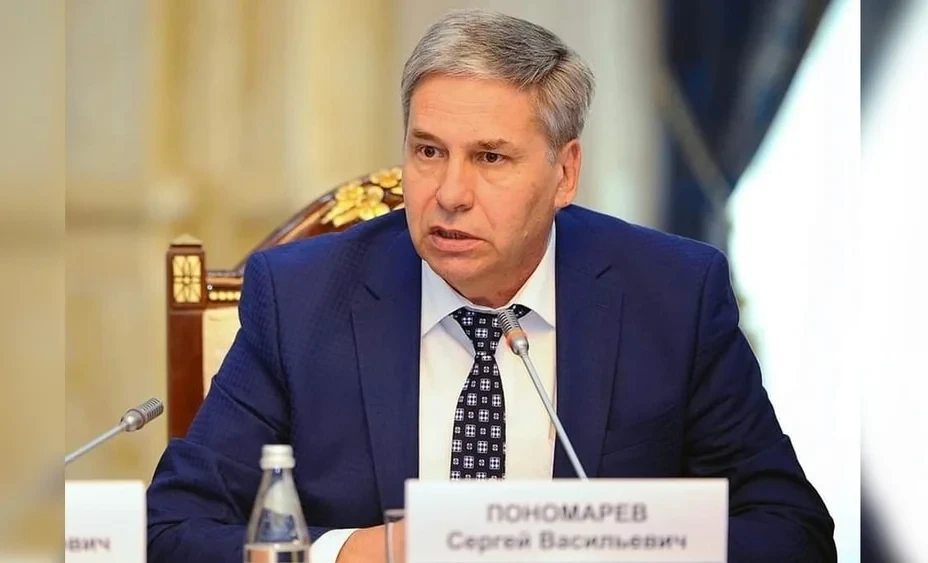
Sergey Ponomarev, head of the Markets Association of the Kyrgyz Republic, characterized the draft law as an unprecedented case where an agency tasked with supporting entrepreneurship proposes amendments without coordination and public consultations that could harm business.“These changes effectively destroy the LLC form. In international practice, for example, in the English system, the liability of founders is limited. Investors provide capital, and management is responsible for management. We risk becoming the first country to introduce such subsidiary liability for LLCs,” noted Ponomarev.
He also added that such changes could reduce investment attractiveness, asserting that the initiators of the amendments operate on the principle of “if we can’t take from the sheep, we’ll take from the shepherd.”
“I understand the government’s desire to combat shell companies, but that is the task of law enforcement agencies. It is also worth noting the absurdity of proposals to ban entrepreneurial activity for 3 to 10 years. Bankruptcy is a normal process that many well-known businessmen have gone through,” he emphasized, citing examples of Donald Trump and Steve Jobs, who also faced bankruptcy.
According to him, these amendments imply a presumption of guilt and may lead to the loss of talented entrepreneurs.
“As one businessman joked, according to this logic, it should be forbidden for people who have been divorced for 10 years to remarry,” Ponomarev quoted.He believes that such proposals contradict common sense and the goals of improving the investment climate.
Ponomarev also noted that the innovations include a ban on attracting top managers during the first 24 months of a new LLC’s operation, while one of the founders must hold the position of director.
“What should be done if an investor from abroad has investment skills but does not know the local market? They should have the opportunity to attract a local specialist,” emphasized Ponomarev.
The head of the Markets Association also highlighted the absence of the necessary document analyzing regulatory impact (RIA), which violates the procedures for adopting the draft law.
“According to the law, this should be canceled, and a working group should be created to eliminate violations,” he added.
“I would like officials from the Ministry of Economy to meet with businesses more often. Recently, they have been avoiding communication with entrepreneurs. Open discussions need to be held,” concluded Ponomarev.
Lack of Willingness to Open New LLCs
Gulnara Uskenbaeva, head of the Suppliers Association, pointed out the problems associated with the introduction of subsidiary liability. She emphasized that these changes could pose serious risks to the economy.“These risks may significantly exceed the anticipated economic benefits for the budget,” Uskenbaeva added.
She acknowledged that unscrupulous entrepreneurs exist, but the introduction of unconditional subsidiary liability undermines the fundamental principle of corporate law, which assumes that investors are only liable to the extent of their contributions.
Uskenbaeva stressed that investors will not be able to attract management specialists and will have to manage the company themselves for 2 years, which will limit business development.
She noted that if an investor has funds but lacks management skills, this could lead to ineffective management.
“If problems arise, and they are very likely to arise, then all tax and other issues will fall on the shoulders of the investor. Who in their right mind would go for that? There will be no volunteers!” concluded Uskenbaeva.The expert expressed bewilderment regarding the rationale for the changes, especially considering that the country has already taken steps to simplify business operations.
In her opinion, the existing corporate model should be preserved, and current tools for controlling tax violations should be applied.
“All fraudulent schemes in taxation are impossible without corruption and the involvement of government agencies. Perhaps it is worth focusing on combating corruption, as the president suggests,” Uskenbaeva summarized.
Strengthening Liability of Founders Will Negatively Impact Business
Askar Sydykov, head of the International Business Council, expressed surprise at the proposals, which he believes undermine the principles of corporate law.“These changes effectively dictate who can create companies and who must lead them, while placing full responsibility for tax obligations on them,” noted Sydykov.
He reminded that the principle of separating a legal entity from a physical person is the foundation of a market economy, and placing full responsibility for tax obligations on founders could deter new investors.
Sydykov also emphasized that a professional is usually hired to manage the risks of a company, while founders deal with other tasks.
“If an entrepreneur has good ideas and risk-taking abilities, it does not mean they are a good manager. There is an institute of corporate governance for that,” he added, warning of possible negative consequences from the adoption of the amendments.
He also commented on the provision banning business after bankruptcy, calling it absurd.
“This is not a sport, but civil law. Why prohibit a person from doing business if one enterprise goes bankrupt? Bankruptcy is a normal process in the economy,” he noted.
Sydykov suggested that the initiators of the amendments aimed to simplify the management of inactive legal entities, but the possibility of simplifying the process of closing LLCs should be considered.
“It is necessary to simplify the bankruptcy procedure so that people can quickly close their businesses, as is done in developed countries,” he proposed.
He emphasized that in a market economy, only market mechanisms should be used, and there should be no return to administrative methods of management.
***
The draft law will be discussed until the end of March, after which it will be considered in parliament. The business community hopes for a consensus and the cancellation of controversial provisions, as well as the receipt of necessary documents for the draft law.