She spends the summer at the pasture Kök-Jayyk, where she hosts tourists and offers them her works. A journalist from Turmush spoke with her.
Umut, born on September 3, 1963, in Tilekmat, is the fourth of nine children in her family. “My mother was very hardworking and made shyrdaks and ala kiyiz — all by hand, for the children. I helped her from childhood, being nearby, and probably that’s why I learned all of this. She also made all the necessary items for the yurt. Thanks to her, I mastered the creation of home decor,” shares Asanalieva.
After finishing school, like many of her peers, she went to the city to pursue higher education. “In the first year, I couldn’t enroll. My mother worked as a milkmaid on a collective farm, but she was already of age. Then the chairman Turatbek Kasymov offered me to take her place: ‘Work as a milkmaid, and then we will send you to study.’ I joined the Komsomol brigade and stayed in the village, working as a milkmaid for three years. Later, I became a deputy, starting from the village council and rising to the district and regional levels,” she recounts.
In 1980, during this period, she married a fellow villager and gave birth to two sons. Later, during one of the sessions of the regional council, she was offered to study in Tashkent. “At the meeting, it was said that the party school accepts students with secondary education. I immediately submitted my application. The leaders even came to my home, asking if I could study in Tashkent with two small children. But my mother-in-law promised to help, and my mother said she would take care of the children herself. My husband also supported me, and I went. First, I went to Rybachye (now Balakchy), passed the exams, and enrolled. The study at the party school in Tashkent lasted four years: I enrolled in 1989 and graduated in 1993, but by that time the party had already collapsed,” she recalls.
After the party's collapse, there were no jobs in her specialty, and local leaders offered her a position as a history teacher, but she chose a different path. For the past 12 years, she has been receiving tourists who come to her region.
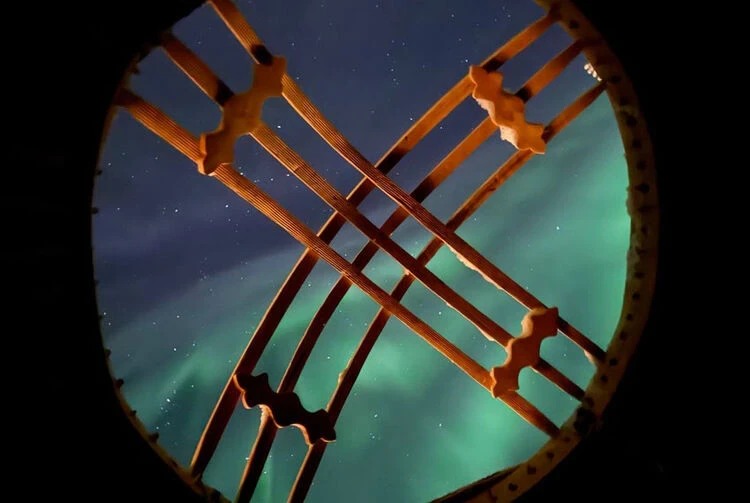
“We decided to rent land at the pasture Kök-Jayyk and host guests. My husband’s aunt had a yurt. We asked her, ‘Give us the yurt to start our work.’ She agreed, and that’s how our business began. Today we already have five yurts; some we bought with documentation, and I made the interior decoration of some myself,” says Umut Asanalieva.
From May, she starts receiving guests and tourists at the pasture. “Tourists highly value Kyrgyz yurts. Recently, many specifically look for a ‘real’ yurt. Some believe that yurts made of black wool look more authentic. Guests also love Kyrgyz cuisine, especially beshbarmak, kuurdak, and dry noodles,” she adds.
Some tourists highly appreciate Kyrgyz tea. “Once, we had French visitors. I prepared ‘kuurma chai’ for them — a traditional nutritious drink that is closer in consistency to soup. At first sip, it seems a bit greasy, and they initially refused to drink it. But then they started to try it and ended up drinking all the tea, saying it was very tasty. The next year, the same French people returned just for this tea. The translator later told me that they praised it so much that they decided to come back for sure,” shares the artisan.
According to her, many tourists also prefer tea from a samovar and often request it to be served that way. Umut hosts guests together with her daughters-in-law, sons, and grandchildren. Currently, she and her husband are raising three sons. “Although I don’t have a daughter, there are many girls among my grandchildren. In summer, they come to us, help receive tourists, and support me,” she says.
Umut dedicates the summer months to receiving guests, while in other seasons, she engages in her craft. She is a member of a group of local artisans with whom she sews shyrdaks and makes felt products — panels, souvenirs, and other items. “When I started receiving tourists, I met the artisans of the region and began working with them. I love making shyrdaks. We sew them, make souvenirs, panels, seat cushions, and home slippers. Tourists coming to Kök-Jayyk also buy my products,” she recounts.
Once, tourists became interested in the panels and asked how they are made. Then Asanalieva offered to demonstrate the process and even create an item together. “We decided to depict the mountain ‘Jarylgyn zhurok’. So together with the guests, we made a panel with this theme, which they really liked, and they took it with them. In general, tourists often buy lightweight items that are easy to take away,” she adds.
The prices for the items she makes with other artisans range from 800 to 25,000 soms. “Thanks to my craft, we visited Turkey. We wore Kyrgyz national clothing, and people welcomed us very warmly. Many asked to take photos. Once, when we were walking in another district of the city, a woman showed our photo on her phone and said that her daughter, who lives in that district, sent it to her. It turned out that her daughter had taken a photo with us and sent the picture to her mom,” she recounts.
In addition, Umut Asanalieva continues to engage in dairy farming: she used to work as a milkmaid on a collective farm, and now she milks six cows herself. “I milk the cows, skim the cream. From the milk, I make ayran, and from ayran — ‘suzmo’. The production of dairy products is waste-free. Sometimes people even ask for the whey from ‘suzmo’, saying it’s good for health. From ‘suzmo’, I make kurut. Each dairy product has its buyers: some love kaymak, some prefer kurut, and some — ayran,” she shares.
In the winter months, Umut studies English. “In winter, I study, and in summer, I practice by communicating with foreign guests. I try to learn English well. I studied it in school and educational institutions, so it’s a bit easier to learn now,” she adds.