The expected price becomes less important when it crosses a critical threshold. After that, the market can collapse sharply, and the cost loses its significance. Experts define this boundary at $150 per barrel, after which the fifth strongest energy crisis in human history will begin.
Currently, Russia and the USA are benefiting from rising oil prices. However, if prices reach extremely high levels, demand for oil may drop sharply, as production and transportation of goods become unprofitable at such costs. In such conditions, companies may prefer to suspend operations and wait for more favorable conditions, which has happened several times in history.
The first oil shock was recorded between 1973 and 1975 after the Arab embargo, when the price of oil rose nearly fivefold — from $3.2 to $14 per barrel. Now, for the world to plunge into a new energy crisis, it is enough for the price to rise just 2.5 times from January's $65 per barrel.
Although the crisis has already begun, it primarily affects countries that import oil through the Strait of Hormuz. Exporters are not currently experiencing difficulties and continue to profit. Nevertheless, the price of Brent reached $120, and if the conflict is not resolved, the cost of oil will continue to rise.
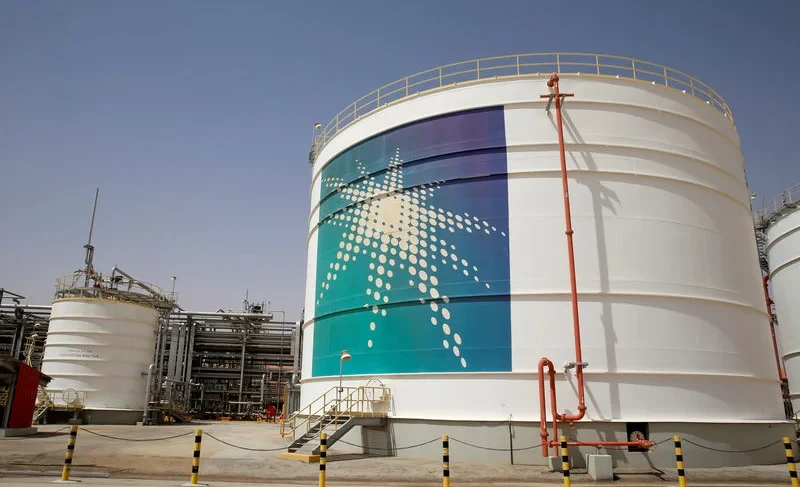
Saudi Aramco, the largest oil company in Saudi Arabia, is already selling light oil through the port in the Red Sea for $125 per barrel, exceeding market prices. Analysts predict that the price could increase by $10-15 each week, reaching $140, $150, and then $165 and $180 per barrel. The longer the conflict continues, the higher the likelihood of such prices.
This is due to the fact that oil reserves in countries that do not receive Middle Eastern raw materials will gradually deplete, leading to a sharp shortage.
As long as the price of oil has not reached $150, there was hope in the market for a quick resolution of the conflict. However, these expectations have not been met. This week, the market held its breath in anticipation of Donald Trump's ultimatum to Iran, which is set to conclude on Friday. If Iran does not open the strait, the USA may strike Iranian power plants, including the Bushehr nuclear power plant, which would trigger a new chain of retaliatory actions from Iran and make conflict resolution virtually impossible. In such a case, oil prices could rise even faster than predicted.
What will happen if the price exceeds $150 per barrel? Costs for freight, insurance, and logistics will increase, leading to higher prices for petroleum products — gasoline, diesel, aviation fuel, as well as gas and electricity. This will trigger a sharp rise in inflation and devaluation of national currencies. Companies will cut production or shut down, sending employees on unpaid leave and counting losses. In some cases, halting business operations will prove more profitable than operating under such high fuel and energy costs.
Countries with financial reserves, such as China, will begin to allocate funds to support citizens and businesses. Those states that are more dependent on Middle Eastern oil and have limited energy reserves will be forced to implement strict measures: rationing at gas stations, reducing public transport, closing government institutions and industrial enterprises. The standard of living will drop sharply, resulting from the oil shortage.
At risk are Japan, which receives up to 95% of its oil from the Middle East, and South Korea, which imports about 75%. India, although facing challenges, should cope better due to its purchases of Russian oil. The most vulnerable will be poorer countries, such as Pakistan, Sri Lanka, and Egypt, where a sharp currency collapse and severe inflation are possible, leading to social and economic crises.
No one wants such a global crisis, as it will affect all countries without exception. However, history shows that such crises arise from the inability of countries to resolve long-standing conflicts and contradictions characteristic of the Middle East. At the same time, some states will be able to recover from the crisis more quickly than the poorest countries.
After a crisis, recovery always follows. The last oil shock occurred in 2008 when the price of oil rose to nearly $150 per barrel, causing a sharp drop in demand and, ultimately, a decrease in prices to $45 in January 2009. A similar drop in demand and prices was observed during the COVID-19 pandemic.