How the issue of street animals is being addressed in Bishkek
Events related to stray animals usually unfold according to a familiar script: a sensational headline, touching footage, promises from authorities about "necessary actions," and assurances of soon restoring order. Society divides into two opposing camps: some demand strict measures for safety, while others advocate for humane treatment of animals. However, the main question remains open: is culling really a solution to the problem, or is it merely a show of force by the authorities?
Gunfire in the yard: two animals killed, one injured
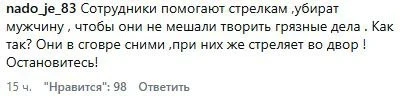
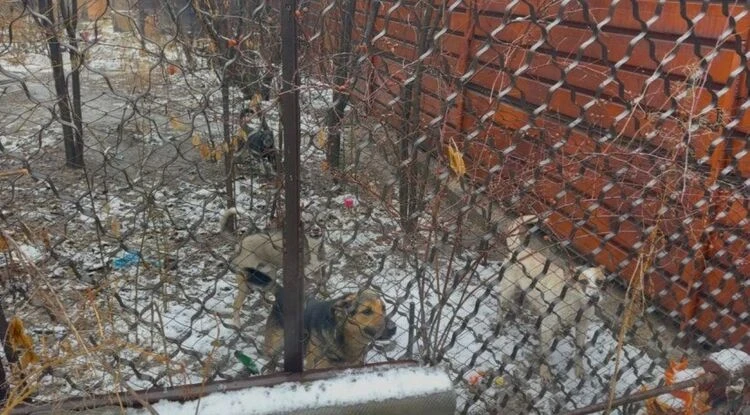
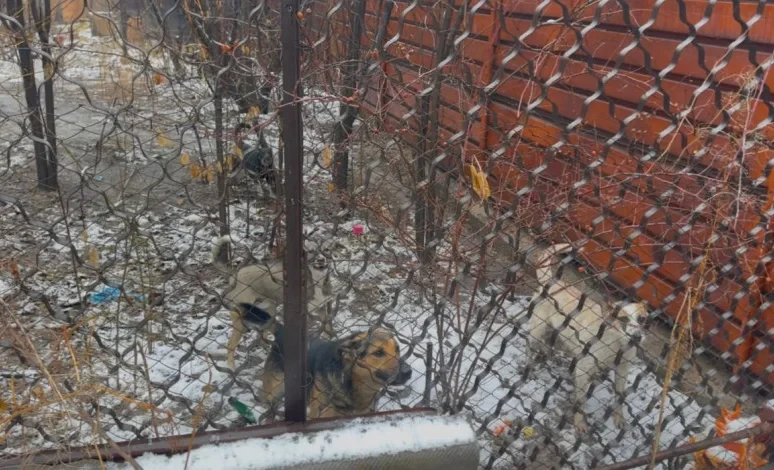
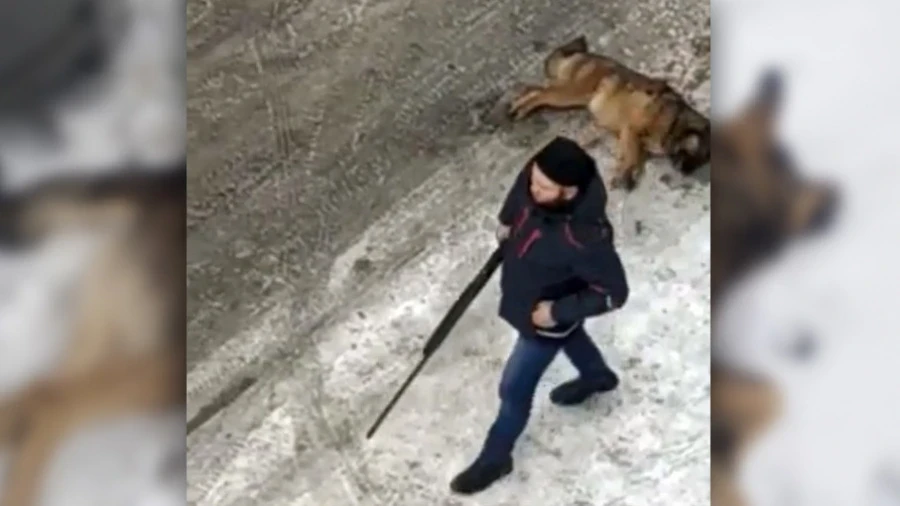
A video has surfaced on social media that quickly went viral. The footage shows armed workers from the municipal enterprise "Tazalyk" in Novopavlovka shooting two dogs in the yard of a private home in front of children and adults. The screams and chaos captured in the video shocked viewers. According to Irina Krasnova, the homeowner, none of the employees attempted to contact the animal owners before the shooting, knocked on the door, or presented documents for the animals. The shooting began suddenly, and one of the children ran into the yard at the moment of the shots, which posed a danger to him. This situation sparked discussions not only about the fate of the animals but also about threats to people.
- My husband is currently in intensive care, and my daughter is still afraid of loud noises, - shared activist Irina Krasnova. - Two dogs died, one was injured. We are discussing not only the animals — we are talking about the fact that armed individuals came into our yard and started shooting. I intend to go to court to seek a legal assessment of these actions.
The Bishkek city hall claims that the actions were aimed at sanitary safety and control over stray animals and were carried out based on permit documents. Vice Mayor Ramiz Aliyev stated at a meeting of the Bishkek City Council that some animal rights activists and residents keep up to 120 animals in their yards, which creates inconveniences for neighbors. However, such arguments did not alleviate the tension, and accusations of lying and inhumanity were directed at the vice mayor. Irina Krasnova noted that her dogs were sterilized, vaccinated, and had veterinary passports, and there were only eight animals in her yard, not forty.
Reasons for the emergence of stray animals
In public discussions, stray animals are often viewed as a standalone threat, but in reality, most of them are former pets or their offspring. Uncontrolled breeding, spontaneous trade, and the lack of mandatory microchipping lead to a constant replenishment of the street population.
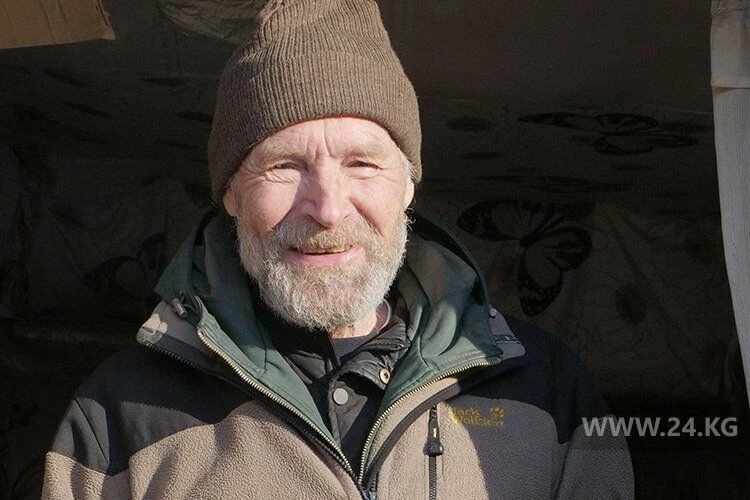
- We can discuss trapping, but as long as people continue to throw animals onto the streets, nothing will change, - says activist Mila Sokolova. - Without legislation on breeding control and real fines for abandoning animals, any trapping program will be endless. If we remove some, new ones will come in their place. It’s a vicious cycle that cannot be broken without holding owners accountable.
Until a system of accounting and fines for abandoning animals is introduced, and until breeding is regulated, culling will resemble an attempt to bail water out of a boat without fixing the hole.
Possible solutions to the problem
Activists propose an alternative approach focused on the "Kumayyk" program, which successfully operates in Kant and nearby areas with the support of international organizations: here, animals are caught, sterilized, vaccinated, and marked, and then either returned to their place or placed in caring hands. They believe that the funds allocated for culling should be directed towards creating shelters, a microchipping system, and mass sterilization to gradually reduce the number of street dogs. This approach helps to foster a culture of humanity, respect for life, and higher human standards, where order is achieved not through fear but through responsibility and care.
Global practice shows that sustainable population management is not achieved through forceful street cleaning but through systematic management of the population. For example, in Georgia, a municipal program for trapping, sterilization, and vaccination with subsequent monitoring is in operation. Turkey used a similar "catch–sterilize–vaccinate–return" model, which allowed for a reduction in reproduction without mass extermination. In most European countries, the emphasis is on mandatory identification of animals, breeding control, and owner responsibility, with extermination permitted only in exceptional cases. From this experience, it follows that a systematic approach leads to a gradual and predictable decrease in numbers, while one-off forceful measures only exacerbate the problem.
Shooting as a demonstration of power
When municipal services take to the streets with the task of "reducing the population," it creates an illusion of control and effectiveness. This looks good in news reports, but statistics usually remain off-screen. Experts in veterinary demography emphasize the so-called "vacuum effect": the destruction of part of the population frees up space, which is quickly filled by new animals.
- Culling will not solve the problem; it will only exacerbate it, - believes animal rights activist Zulia Yangalycheva. - Nature does not tolerate a vacuum: if you remove some dogs, new ones will come in their place, or the population will recover even faster. If you completely "cleanse" the territory, it may lead to an increase in the population of rats and other rodents, and in the suburbs, foxes and jackals will become more active, creating a risk of epidemiological chaos. Therefore, a scientifically grounded approach that includes sterilization and vaccination, rather than shooting as a show of force, is necessary.
Culling is inhumane not only because it takes the lives of animals but also because habituation to violence shapes a societal view that problems can be solved through destruction. When gunfire erupts in yards and children witness violence, it creates the impression that cruelty is a normal way to restore order. Over time, this leads to a desensitization to cruelty, which affects not only animals. A society that becomes indifferent to the suffering of the weak becomes more aggressive towards people. The true strength of the state is manifested not in violence but in the ability to solve complex problems humanely.
…or corruption and money laundering?
Activists believe that the city hall's interest in culling may be related not only to a reluctance to carry out complex reforms but also to financial gains. In 2025, nearly 7.5 million soms were allocated for these activities from the city budget, but the transparency of fund expenditure remains in question. Animal rights advocates argue that there is no clear reporting: it is impossible to determine exactly how many animals were killed, how many were removed, and how disposal occurred. It is this lack of transparency that raises suspicions of corruption.
- In 2025, the city hall allocated nearly 7.5 million soms for the culling of animals, - says volunteer Zulia Yangalycheva. – But who checks how much was actually spent on shooting dogs and how much might have gone into "pockets"? Who controls this process?
Discontent with Vice Mayor Ramiz Aliyev's methods is growing. Some residents consider his actions excessively harsh and disproportionate, and the approach itself is seen as demonstrative.
- The city faces many systemic problems — from garbage to stray animals, and instead of comprehensive solutions, we see only media stunts and activity on social networks. The vice mayor has become more of a blogger, shooting videos and making statements, but real changes are not felt. We need not media effects but professional work — transparent and responsible. We urge the mayor to assess the competence of the relevant leadership and evaluate how effectively the city's problems are being addressed, - states animal rights activist Tatiana Kulai.
As a result, activists are appealing to the mayor of the capital and the president of the country to assess the competence of Vice Mayor Ramiz Aliyev and reconsider the management model in this area. In their opinion, the issue goes beyond animal protection and concerns budget transparency, the professionalism of city services, and the ability of the authorities to solve problems without resorting to force.