According to the jury's verdict, Meta, which operates Instagram, Facebook, and WhatsApp, as well as Google, which owns YouTube, were found guilty of creating platforms that foster addiction, negatively impacting the mental health of 20-year-old Kaylee.
As a result of the lawsuit, the woman was awarded $6 million in damages, which could influence numerous similar cases awaiting consideration in U.S. courts.
Meta and Google expressed disagreement with the decision and stated their intention to appeal. A Meta representative noted that the issue of adolescent mental health is too complex to be reduced to the use of a specific app.
“We will continue to defend ourselves, as every case is unique, and we are confident in our efforts to protect teens online,” the company representatives added.
A Google representative also stated that YouTube is misinterpreted as a social network, emphasizing its functions as a streaming platform.
Ellen Rumm, who herself filed a lawsuit against TikTok after the tragic death of her son, noted in an interview with BBC Breakfast that this is the moment when “enough is enough.”
“How many more children will suffer because of these platforms?” she asked, calling for changes in the industry.
“Malicious actions and fraud”
The jury determined that Kaylee should receive $3 million for damages and another $3 million in punitive damages, as they concluded that Meta and Google acted with “malice, oppression, or fraud.”
It is expected that Meta will cover 70% of the compensation amount, while Google will cover the remaining 30%.
Throughout the trial, parents of other children not involved in the lawsuit also expressed support and shared their stories about the consequences of using social media.
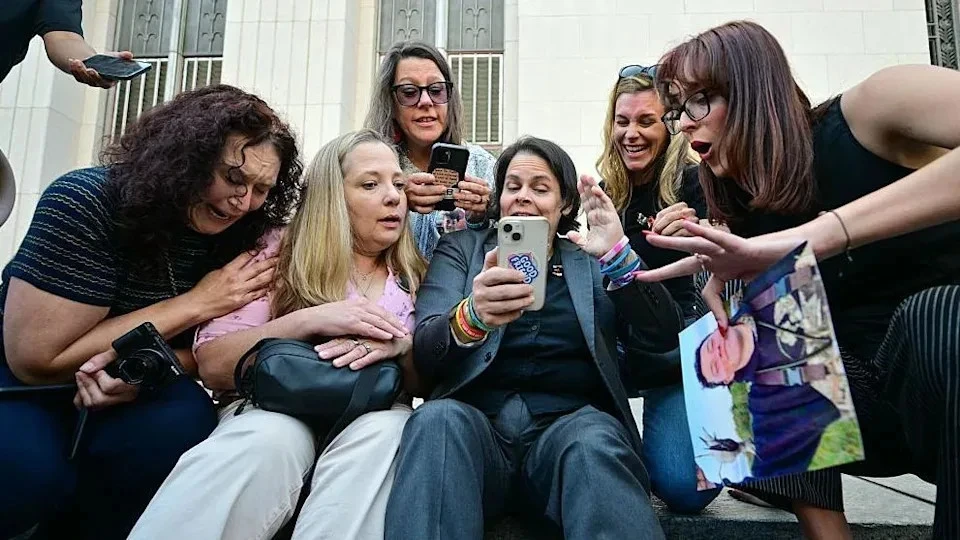
When the verdict was announced, many of them, including Amy Neville, rejoiced and hugged each other, anticipating this moment.
It is worth noting that this decision was made just a day after it was recognized in New Mexico that Meta had endangered children by providing access to unacceptable content.
Mike Proulx, the research director at the consulting group Forrester, noted that this decision highlights a “critical point” in the relationship between the public and social media.
Some countries, such as Australia, are already introducing restrictions for children on social media use, while the UK is experimenting with possible bans for users under 16.
“Negative sentiment towards social media has been building for years, and now it has led to open conflict,” Proulx added.
UK Prime Minister Sir Keir Starmer also noted that the current state of affairs is “unsatisfactory” and requires additional measures to protect children.
Emphasizing the importance of government consultations on banning social media for youth, he said: “The question is not whether there will be changes, but how many and what measures we will take.”
Where do we go from here?
The Duke and Duchess of Sussex, long-time advocates against the harms of social media, called this decision “a long-awaited reckoning.”
“We hope this will be a moment when the safety of children is prioritized over profit,” they added.
Ian Russell, a British internet safety activist whose daughter took her own life in 2017, expressed hope that this event will be an important step towards change if governments take appropriate action.
During the court proceedings in February, Mark Zuckerberg, head of Meta, referred to a policy prohibiting users under 13 from using the company’s platforms. However, when presented with data indicating that young children could use their platforms, he stated that he had always aimed for quicker progress in identifying underage users.
The focus of the trial was on Instagram and Meta, while Snap and TikTok reached settlements with Kaylee before the trial began.
Kaylee's lawyers argued that Meta and YouTube created “addiction machines,” failing to protect children from accessing their platforms.
Kaylee reported that she started using Instagram at the age of 9 and YouTube at 6, encountering no age restrictions.
“I stopped communicating with my family because I spent all my time on social media,” Kaylee testified in court.
Her anxiety and depression began at the age of 10, which was later assessed by a psychotherapist.
She also began to excessively worry about her appearance, using Instagram filters that altered her looks almost immediately after starting to use the platform.
Kaylee was diagnosed with body dysmorphic disorder — a condition related to excessive concern about one’s appearance.
The lawyers argued that features of Instagram, such as infinite scrolling, were designed to create addiction.
According to them, Meta seeks to attract youth to keep them on the platforms longer.
And when Kaylee's lawyers informed Instagram head Adam Mosseri that her longest day of platform use was 16 hours, he disagreed that this indicated addiction, calling the teenager “problematic.”
Kaylee's lawyers argued that the jury's verdict sends a clear message that no company is exempt from responsibility for its users, especially when it comes to children.
Next month, a new case against Meta and other social networks for harming children will begin in federal court in California.