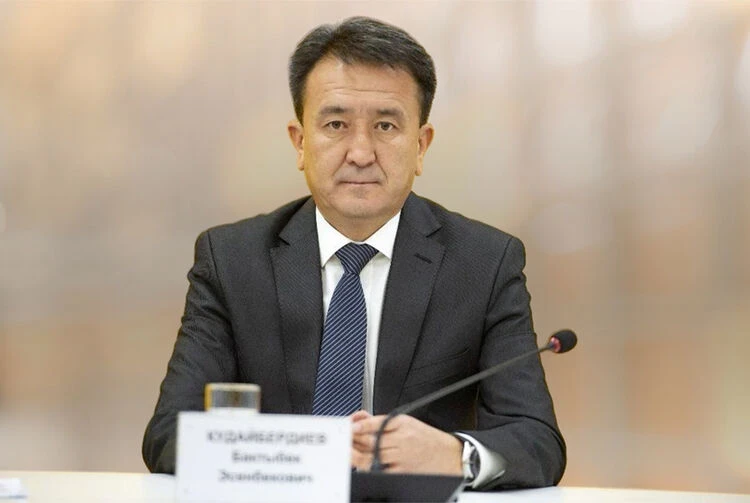
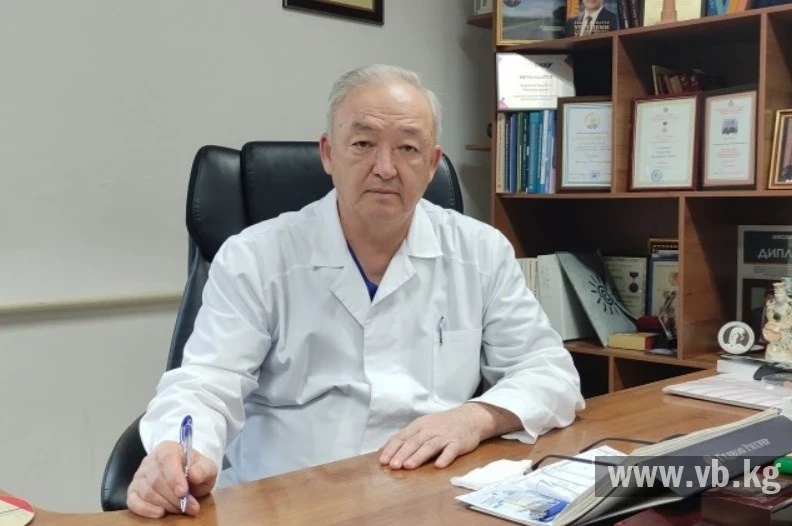
Professor and former Minister of Health Talantbek Batyraliev noted in an interview that for successful personnel training, attention must be paid to infrastructure, funding, the organization of research institutes, and their international integration. He emphasized the importance of scientific medicine for the development of the scientific intelligentsia.
“Moving forward without dwelling on the past is the right path,” the professor believes.
“How to Reorganize Rabkrin” — an article by V.I. Lenin, where he proposes to establish a closer organizational link between party and state structures to combat bureaucratism. This work serves as a reminder of the necessary reforms in modern science in Kyrgyzstan.
A clear and realistic concept for reforming science is needed. Comparing with the USA or Germany is impractical due to different scales. For example, countries like Japan, South Korea, and Singapore, despite their small sizes, have been able to develop successful strategies in the field of science and high technology.
Japan, being one of the leaders in the scientific field, adopted the Basic Law on Science and Technology in 1995, which allowed the government to approve five-year scientific development plans. In 2021, a new version of this legislation came into force, which continues to support Japan's high positions in science and technology.
The country has achieved success in areas such as high technology, automotive engineering, energy conservation, robotics, medicine, and space research. Kyrgyzstan should also pay attention to high technology, energy conservation, robotics, and medicine.
South Korea, actively developing science and technology, makes significant investments in research and development. dzen.ruissras.ru
The main features of South Korea's state policy in this area include:
Investments in large research infrastructures. The country has developed two "roadmaps" aimed at strengthening Korea's positions in science and technology. issras.ru
Support for strategically important technologies. Experts have identified 120 key technologies, including semiconductors, batteries, autonomous vehicles, and display technologies. issek.hse.ru
Attracting international scientific centers. In 2004, the Korean Foundation for International Cooperation in Science and Technology (KICOS) was established to transform the country into a scientific center of Northeast Asia. eup.sgu.ru
Participation in international scientific infrastructures, such as CERN and the European Molecular Biology Laboratory. issras.ru
Singapore actively develops science, focusing on education, research, and funding for scientific activities. The country aims to take leading positions in scientific achievements through international cooperation. funduma.ruinternationalwealth.infodzen.ruOnlinePatent.ru
Education
Emphasis on STEM (science, technology, engineering, and mathematics). The government is training personnel ready to meet the needs of high technology. Programs such as the TechSkills Accelerator (TeSA) are aimed at continuous professional development. rsbu.sg
Application of the Singapore method — in-depth teaching of mathematics and other subjects. This approach is implemented in all schools and is actively spreading beyond the country. dzen.ru
Focus on international standards — the Ministry of Education of Singapore studies the experience of leading countries and adapts their methodologies. externat.foxford.ru
Research
Development of biomedical sciences. The establishment of the Institute of Bioengineering and Nanotechnology (IBN) has led to new treatment methods, such as genetic engineering. vk.com
Creation of IT ecosystems, such as Punggol Digital District and Singapore Science Park, which bring together startups and research institutes to stimulate innovation. rsbu.sg
Infrastructure
Research institutes of the Agency for Science, Technology and Research (A*STAR) focus on research that contributes to economic growth.
Science-intensive universities oriented towards creating fundamental scientific knowledge.
Scientific medical centers and hospitals working on clinical research and medical innovations.
internationalwealth.inforsbu.sg
Funding
State regulation — A*STAR manages grants and scholarships, entering into contracts with enterprises. Priority areas are defined by two divisions: Biomedicine and Engineering Sciences.
Private funding — the R&D sector in Singapore is actively supported by private investments. In 2021, funding from private sources reached 7 billion Singapore dollars, which is nearly 7 times more than from the state budget.
International cooperation — Singapore actively participates in global scientific projects and shares experiences with international colleagues.
These points are important for comparative analysis and require careful study.
The personnel issue in Kyrgyzstan's science is particularly relevant.
An analysis of the current state of science in the country reveals structural limitations that hinder its development.
Among the reasons are the low prestige of scientific activity and uncompetitive salaries, which reduce motivation for research work. A scientific career is often perceived as unprofitable, leading to a shortage of young specialists.
The existing practice of distributing funds for grants, where the majority of the money goes to maintaining the administrative apparatus and performers receive only a small share, deters researchers from participating in competitions. It is necessary to revise the Statutory Documents of research institutes and universities, establishing a ban on funding individuals who do not participate directly in projects, as well as clearly defining the roles of participants to exclude outsiders.
International grants should be allocated to specific researchers with a clear indication of their role in the project.
It is important to create mechanisms to support scientists who go beyond state programs and seek private grants and participation in international research.
Modernizing science funding requires clearly defining the themes of state projects that should receive sustainable funding, without limiting their number, as is done in Japan.
For successful management of science, an objective self-assessment of existing structures is necessary.
Initial international consulting will help identify necessary changes and exclude the influence of interested parties on the analysis.
Leading consulting companies such as McKinsey, BCG, and Bain provide strategic consulting, while Deloitte, PwC, EY, and KPMG offer a wide range of services for large companies and governments.
A clear regulation on the timeframes for reviewing dissertation works and certification cases should be established in the National Academy of Sciences of the Kyrgyz Republic.
New academic titles in research institutes and research centers, equivalent in status to associate professors and professors in universities, should be introduced, and the process of submitting documents for academic degrees should be simplified.
It is necessary to revise the lists of professors in the National Academy of Sciences of the Kyrgyz Republic, excluding those who have not published in the last 10 years.
It is important to attract young scientists with PhDs and grant them the title of "Professor of the National Academy of Sciences of the Kyrgyz Republic" for active scientific activity.
Attracting outstanding scientists from abroad and working with highly qualified specialists should become a priority for the Academy.
A two-stage evaluation of the activities of the Academy of Sciences through independent auditing and international consulting is necessary.
To understand the necessary changes, an initial international analysis without the influence of interested parties is required.
The four largest consulting networks, such as Deloitte, PwC, EY, and KPMG, dominate the market and provide independent audit and consulting services.
These companies conduct audits for most public companies in the USA, and their total revenue in 2024 reached 212 billion dollars.
Modern methods of evaluating the activities of scientists and scientific institutes should be implemented to enhance transparency and efficiency.
It is necessary to increase the percentage of foreign members of dissertation councils to ensure access to international experience.
It is important to ensure equal rights between PhDs and candidates of sciences, which will simplify the internationalization of science.
Digitalization of scientific activity requires improving internet connectivity for access to global data.
The implementation of digital technologies in science is a strategically important direction for integrating Kyrgyzstan into the global scientific community.
For the successful realization of this process, infrastructure is needed, including new fiber-optic lines and data centers.
Access to global scientific publications should also be improved by placing Kyrgyz journals on international platforms.
Only by creating a transparent scientific environment can Kyrgyzstan move forward in the scientific field.