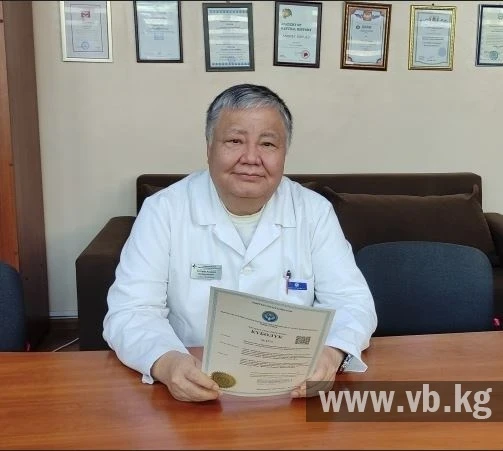
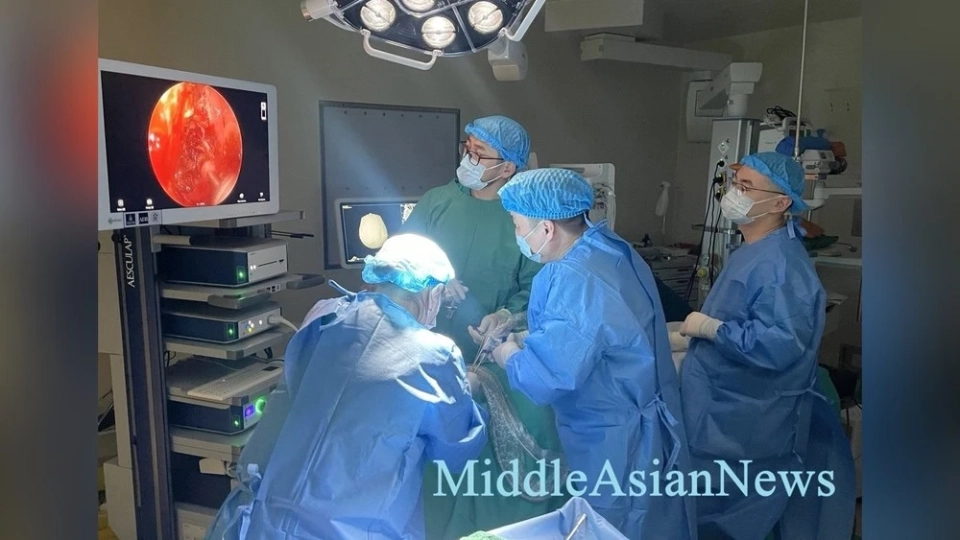
I.V. Pershukov is a professor, Doctor of Medical Sciences, and also a PhD, heading the Department of Hospital Therapy with a course in Radiological Diagnostics and Oncology at Jalal-Abad State University.
In his comments, he stated:
“On January 15, 2026, the oldest medical journal, The New England Journal of Medicine, published by the Massachusetts Medical Society (USA), released the results of studies on stenting, endarterectomy, and drug treatment of asymptomatic significant carotid artery stenosis exceeding 70%.”
Previously, approaches to treating asymptomatic carotid artery stenosis were quite ambiguous. Studies conducted over 30 years ago showed only a slight benefit from carotid endarterectomy compared to drug therapy. However, modern advances in stroke prevention call into question the effectiveness of endarterectomy. Stenting, being a less invasive method, has long remained an alternative to endarterectomy without sufficient scientific justification.
The CREST-2 study, the results of which were published in The New England Journal of Medicine, conducted a parallel independent comparison of stenting and drug treatment, as well as endarterectomy with drug therapy.
Participants in the "Carotid Revascularization and Medical Management for Asymptomatic Carotid Stenosis" (CREST-2) study provided important data that help clarify this issue.
Within the CREST-2 study, two parallel experiments were conducted, where all patients received intensive drug treatment. In one of them, 1245 patients were randomly assigned to groups for stenting or only drug treatment, which showed significant advantages for stenting. At the same time, in another parallel study, 1240 patients were assigned to groups for carotid endarterectomy and only drug treatment, where no significant differences between the groups were found.
Key findings of the study: The graph shows Kaplan-Meier estimates of the frequency of primary outcomes over 4 years in the stenting and endarterectomy groups. The primary outcome is defined as any stroke or death, assessed from randomization to 44 days, as well as ipsilateral ischemic stroke during the remaining follow-up period up to 4 years.
How should the data be interpreted? The results of the CREST-2 study on endarterectomy align with the conclusions of two other recent studies addressing similar issues: SPACE-2 and ECST-2. These results suggest that routine carotid endarterectomy for patients with asymptomatic stenosis is no longer necessary.
However, should stenting be applied on a large scale for asymptomatic stenosis? Experts urge caution. First, the low stroke rate with stenting is explained by strict patient selection and high qualifications of interventionalists, which is not always feasible in vascular centers. Previously conducted studies, such as ACST-2, showed that the risk of periprocedural stroke or death with stenting was about 1% higher than with endarterectomy.
Secondly, the differences between stenting and drug treatment were based on a small number of events. The authors emphasize that if three more events had occurred in the stenting group, the difference could have become insignificant. In the SPACE-2 study, where only 197 patients underwent stenting, no advantages were found compared to the best medical therapy. If we consider the overall event rate across all four patient groups in CREST-2, the differences between endarterectomy and stenting were less pronounced. Moreover, as drug therapy improves, the benefit of revascularization for asymptomatic carotid stenosis has decreased.
Thirdly, drug therapy could be further improved. The authors of the study note that only 60-70% of patients reached the target systolic blood pressure (<130 mm Hg), less than 80% achieved the target LDL cholesterol level of less than 70 mg/dL, and only about 50% of diabetic patients had hemoglobin A1c levels within the target range. New medications, such as PCSK9 inhibitors, as well as lower target LDL cholesterol levels of less than 55 mg/dL, represent additional treatment options that were not available in this study.
Percentage of patients in the stenting group achieving target systolic blood pressure
Percentage of patients in the endarterectomy group achieving target systolic blood pressure
Percentage of patients achieving target LDL cholesterol levels in the stenting group
Percentage of patients achieving target LDL cholesterol levels in the endarterectomy group
A key question remains whether the benefit gained over the 4 years of the study justifies the early risk associated with stenting. In the CREST-2 study, the rate of periprocedural stroke or death with stenting was 1.3%, while with drug therapy alone, complications were not observed. Subsequently, the rate of ipsilateral stroke was 0.4% per patient per year in the stenting group and 1.7% per patient per year in the drug therapy group. Thus, out of 100 patients who underwent stenting, only 1 per year receives a real benefit in the form of stroke prevention, while approximately 1 patient may experience a stroke or die as a result of the procedure.
Over 4 years, 95 out of 100 patients underwent an unnecessary procedure. It is also important to note that about two-thirds of complications in patients receiving only drug therapy were non-disabling strokes. Such patients typically experience good or satisfactory recovery, and in these cases, revascularization is indicated only when symptoms are present. For this reason, experts recommend initiating intensive drug therapy in patients with asymptomatic stenosis and postponing revascularization until symptoms appear, which occurs in only a small portion of patients. Exceptions will be made for those who prefer to risk revascularization or cannot take medications — for them, stenting will be the preferred option, but only in centers with experienced interventional cardiologists.
The CREST-2 research team deserves praise for conducting a large-scale study dedicated to the treatment of asymptomatic carotid stenosis against the backdrop of intensive drug therapy. Future studies are needed to identify a small group of patients with stenosis who continue to develop symptoms despite medical treatment. A prospective approach may include the use of magnetic resonance imaging to detect atherosclerotic plaques in the carotid artery and their intraplaque hemorrhage, which is a significant stroke risk factor.”