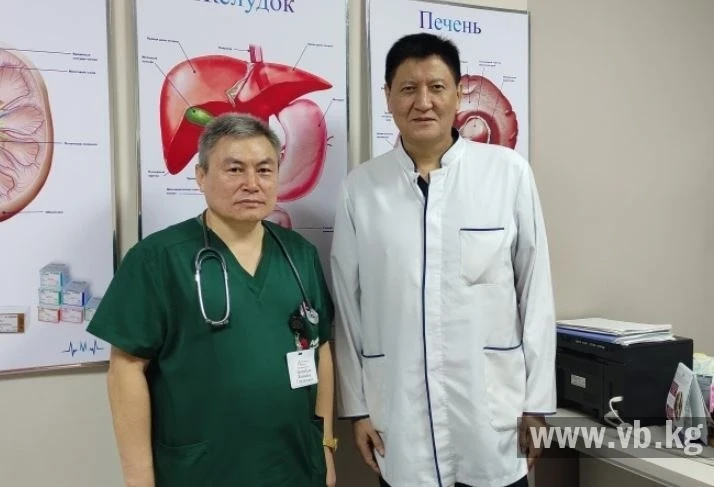
- The success of any surgical intervention depends on the correct medical indications, the necessity of the operation, as well as the qualifications and equipment of the surgeon, - asserts Rasul SultanGaziev, an outstanding surgeon from Kyrgyzstan and Doctor of Medical Sciences. The experienced specialist often faces the need to eliminate the consequences of surgeries performed by his colleagues, which usually requires significant effort.
- Correcting mistakes is always more difficult than performing the initial intervention. A repeat operation is usually associated with a large number of problems related to technical complexity and possible complications. The psychological state of the patient is also an important aspect, and finding common ground with them can be challenging, - he adds.
- I entrusted my life to Rasul Abalievich. He saved me several years ago. Therefore, when the need for a repeat operation arose, I had no doubts about his professionalism and that together with anesthesiologist Zhanibek Sardalovich, they would do everything possible to save me, - shares his experience Marat, a patient who managed to return to life thanks to the efforts of the doctors.
Two and a half years ago, Marat underwent laparoscopic metabolic surgery in one of the clinics in Turkey to treat type 2 diabetes. This method is considered one of the most modern in the world and yields good results. The man was indeed able to return home feeling healthy, having lost excess weight and normalized his blood sugar levels. However, in November of this year, he was brought to Rasul Abalievich in extremely critical condition.
- Before going to Turkey, I thought for a long time about whether to have such an operation. However, the signs of diabetic foot that I developed scared me and made me decide to undergo the intervention. I now understand that perhaps I shouldn't have done it. I'm not the only one who regrets the consequences. I have an acquaintance who also tried to get rid of diabetes, but his health significantly worsened. If someone were to ask me now about metabolic surgery, I would say no, - says Marat about his experience.
According to him, over the course of two years, he lost 40 kilograms, his blood sugar levels began to rise again, and his blood pressure dropped. He often lost consciousness, sweated profusely, especially during meals, and practically stopped eating, continuing to lose weight. Soon, severe pain was accompanied by problems with taking painkillers.
Marat refused to return to Turkey for repeat treatment, not due to financial costs, but due to a loss of hope for receiving qualified help from doctors there, as he noted, believing in his domestic specialists.
- I saw that new clinics, such as "Amanat," are opening up with modern equipment and highly qualified doctors. I trusted our doctors more than the Turkish ones and sought their help, - he adds.
Rasul SultanGaziev explained that laparoscopic metabolic surgeries are new methods of surgical treatment for diabetes that have been applied over the past ten years. They are recommended for patients with type 2 diabetes, excess weight, and high blood sugar levels, despite the medications taken.
- During the operation, part of the stomach is removed and sections of the small intestine are swapped, which leads to the activation of hormones and improvement in the function of the pancreas, which begins to produce insulin. Thus, it is possible to normalize insulin levels in the body, - the surgeon clarifies. - However, since this technology is new, the effectiveness of the intervention will be assessed only after several years.
- To date, this treatment is considered the only way to stop the progression of diabetes. Medications only slow it down, and gradually new problems arise in the body, damaging the blood vessels of the eyes, kidneys, and extremities. Patients often face comorbidities. The advantage of the operation is that it is less painful and allows for a quick return to normal life without leaving scars, - he adds.
However, in this case, something went wrong, and the body reacted negatively to the intervention. Despite initially good results, serious complications began two years later, leading to the patient's critical condition.
According to Zhanibek Erkinbaev, Marat was admitted to the clinic in extremely critical condition. After the operation, food was not being absorbed, and the body was not receiving the necessary nutrients, leading to metabolic disorders. The level of albumin in the blood dropped to 21 g/L, with a normal range of 35-50 g/L, which required urgent and complex repeat surgery. Without it, the patient's life would be at risk.
- We understood that he might not withstand anesthesia in such a condition. Anesthesia depresses the central nervous system and affects blood pressure. Nevertheless, there was no other option. We decided to take the risk, as the patient was waiting for our help, - Erkinbaev recounts.
After the anesthesia was administered, the pressure indeed dropped sharply, but the surgeon managed to stabilize it. During almost five hours of surgery, he was worried about the possibility of cardiac arrest, as the patient suffered from ischemic heart disease.
- I did not expect the situation to be so critical. I could barely find the remaining part of the stomach, which was only 30%. The other 70% and three meters of small intestine were excluded from digestion, causing severe pain and a deficiency of necessary nutrients, - shares his impressions Rasul Abalievich.
- Additionally, a large ulcer formed at the junction of the stomach and intestine, possibly due to prolonged use of ketonal. In my opinion, my colleagues overdid it by excluding 70% of the stomach, - he adds.
- Our task was to restore the normal functioning of the digestive organs. We connected the remaining part of the stomach with the disconnected part and returned the three meters of intestine to their place. We removed the ulcer, and now all the organs are functioning normally, - Rasul Abalievich reports with a smile.
- I feel weak and follow a diet, monitoring my sugar levels, but the main thing is that thanks to such doctors, I am alive! - says Marat gratefully and finally smiles. – At home, indeed, even the walls help…