Tazabek investigates what lies behind the prices: from 32 to 48 soms per liter — and how this range affects the future of an entire industry. The issue concerns the profitability of over 900,000 cows, the financial well-being of hundreds of thousands of farming families, and shelf prices for 7 million consumers.
Milk Production in Kyrgyzstan
As of February 1, 2026, according to data from the National Statistical Committee of the Kyrgyz Republic, the country produced 86,878.4 tons of raw milk — a 2.1% increase compared to the same period in 2025 (85,105.3 tons). Increases are observed in all seven regions, although growth rates vary.
The Chui region ranks first, accounting for 28.5% of the country's total milk production. Together with the Issyk-Kul region, the two northern regions make up almost half (47.6%) of the total volume. At the same time, the cities of Bishkek and Osh show significant declines: by 14.4% and 26.2% respectively — which is linked to ongoing urbanization and the reduction of private farms.
Cattle Population: The South Maintains Quantity, the North — Quality
As of the end of 2025, the total number of cows in Kyrgyzstan was 934,259 heads. The regional distribution reveals an important paradox in the industry.
The Jalal-Abad and Osh regions together hold 44.6% of all cows in the country — over 416,000 heads. However, these regions also exhibit the lowest productivity: the average milk yield in the Jalal-Abad region is 68.7 kg, while in Osh it is 94.7 kg, compared to the national average of 111.7 kg.
The Chui and Issyk-Kul regions, with only 32.1% of the total cattle population (300,000 heads), produce 47.6% of the milk. This is due to better breed characteristics, a more developed feed base, and better conditions for keeping livestock.
The productivity difference between regions is almost threefold: a cow in the Chui region produces 190.8 kg of milk per month, while in the Jalal-Abad region, it produces only 68.7 kg. Interestingly, the Jalal-Abad region showed the highest growth in milk yields (+8.7%), which may indicate a gradual improvement in nutrition and herd renewal.
Milk Price: 32–48 soms per liter
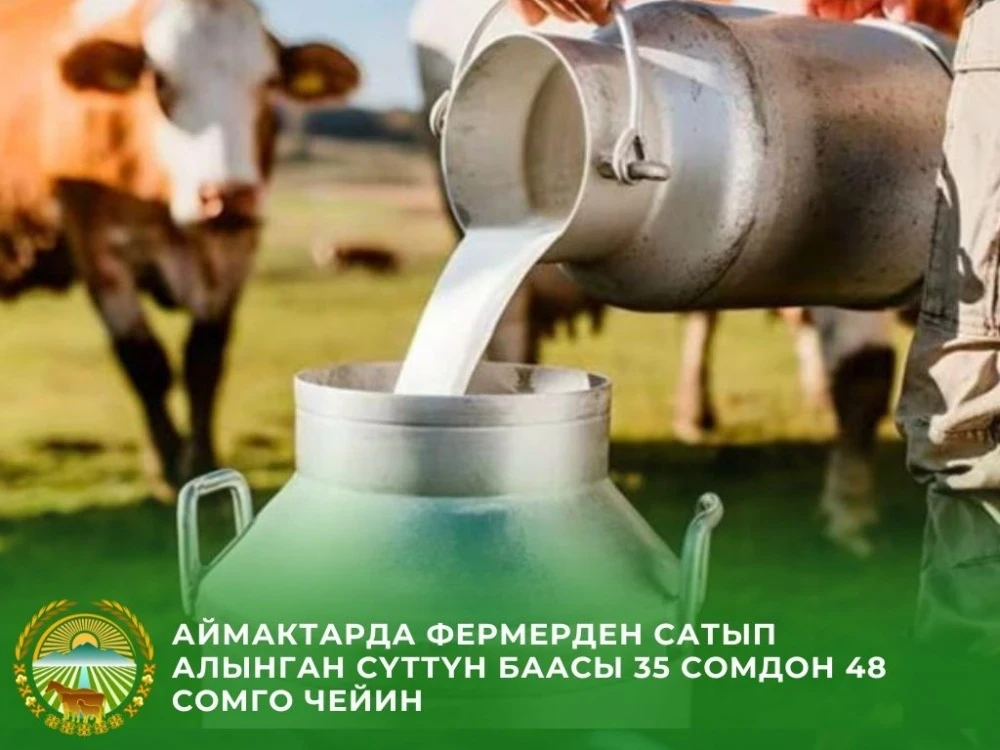
The purchase price of raw milk is a critical issue for the industry. According to the Ministry of Water Resources, Agriculture, and Processing Industry of the Kyrgyz Republic, as of early 2026, the price for milk with a basic fat content of 3.4% ranged from 32 to 48 soms per liter.
However, the actual price that farmers receive is often lower. This is due to the fat content of the milk: the base price is determined for milk with a fat content of 3.4%. When recalculated to actual indicators, the situation changes.
For example, if the price for a liter of milk with a fat content of 3.4% is 36 soms, and a farmer delivers milk with a fat content of 2.8%, after recalculation, they receive 29.64 soms — 18% lower than the base price. In the opposite situation, with a fat content of 4.2%, one of the factories may pay up to 49.35 soms per liter.
Torobaev explained the prices at which dairy factories buy milk from farmers
At a plenary session of the Jogorku Kenesh on February 11, 2026, Deputy Aysarkan Abdibaeva raised the issue of low purchase prices. Deputy Prime Minister Bakyt Torobaev provided specific examples: one dairy factory accepts milk at 49.35 soms for a fat content of 4.2% and at 33.82 soms for a fat content of 3%. Another factory pays 51.68 soms and 36.47 soms respectively.
“Initially, everyone bought at 35 soms per liter, but then it was decided that the price would depend on fat content. Each dairy factory has a corresponding table,” clarified Bakyt Torobaev.
Processors' Opinions
Representatives of dairy factories insist that a sharp increase in purchase prices creates systemic risks. In 2024, at a meeting under the Ministry of Agriculture, where processors and suppliers from the Talas, Chui, and Issyk-Kul regions participated, a threshold of 40 soms per liter was discussed. At that time, enterprises warned:
— An increase in the price of 1 liter of pasteurized milk (2.5% fat) by 20-30%. A kilogram of butter may rise in price by 10-20%. This will lead to an increase in prices for all dairy products, and some enterprises may cease operations.
These concerns remain relevant. Processors also point to problems with the quality of raw materials: from one liter of milk delivered by farmers, an average of only 600 ml of pasteurized product is obtained. This means that if a factory buys a liter for 40 soms, the actual cost of raw materials for producing 1 liter of milk is approximately 66.7 soms. Considering additional costs for processing, packaging, logistics, and markup, the retail price may exceed 90-100 soms.
Among other problems mentioned by factories: uncontrolled use of veterinary drugs by farmers for cows, which negatively affects the quality and safety of milk. The Ministry of Agriculture proposed to create independent laboratories to assess the quality and composition of milk, but the implementation of these proposals has not yet taken place.
Deadline March 15: What is Happening Now
On March 11, 2026, a working meeting was held at the Antimonopoly Regulation Service under the Ministry of Economy and Commerce, dedicated to the establishment of basic prices for raw milk by regions of the Kyrgyz Republic.
Following the meeting, the importance of a transparent approach to price formation to support farmers and develop the dairy industry was emphasized. The Ministry of Water Resources, Agriculture, and Processing Industry committed to intensifying the activities of interdepartmental working groups.
According to Government Resolution No. 724 of December 4, 2024, such groups establish basic prices twice a year: for the winter period — by September 15, and for the summer — by March 15. Thus, only a few days remain until the deadline.
In the Jogorku Kenesh, the possibility of regulating prices for meat, milk, and beans was discussed
At the same time, another regulatory measure is being developed in the Jogorku Kenesh. At a meeting of the Finance Committee, Deputy Kamila Talieva inquired whether the Antimonopoly Service would be able to control prices for meat, milk, and beans. The head of the agency, Aibek Mamyraliev, confirmed that the relevant draft law would be submitted to parliament soon.
“The proposed legislative initiative aims to change the approach to pricing for socially significant products,” stated Aibek Mamyraliev, head of the Antimonopoly Regulation Service.
We remind you that pasteurized milk with 2.5% fat content is included in the List of socially significant goods, for which temporary state price regulation may be introduced (Government Resolution of the Kyrgyz Republic dated September 8, 2023, No. 455).
The deputy reported on the low purchase price of raw milk
Amid discussions about prices in parliament, other serious signals are emerging. Deputy Meder Chotonov noted that low purchase prices threaten the profitability of farming enterprises. Deputy Chyngyz Azhibaev pointed out the need to combat cattle smuggling in the Batken region. Deputy Saltanat Amanova raised the issue of the need to increase lending to farmers to boost livestock numbers.
Systemic Problems in the Industry
Disputes over figures reflect deep structural problems that cannot be resolved solely through price regulation.
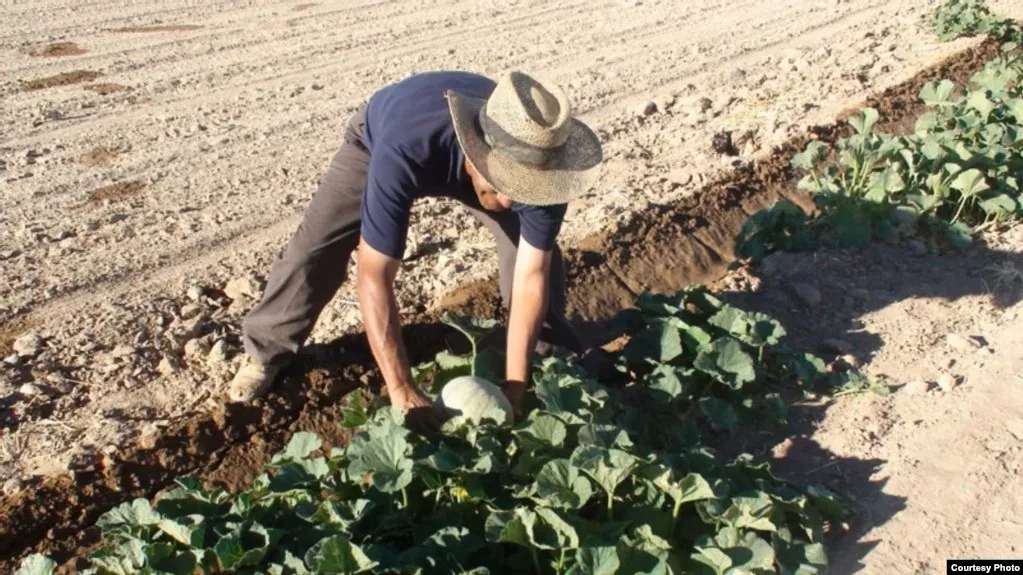
Raw milk in Kyrgyzstan is mainly produced in peasant and personal subsidiary farms. As noted by the Ministry of Economy, this directly affects product quality: unlike organized farms with a unified diet, standards of care, and veterinary control, individual farms often do not meet any of these conditions.
The gap in milk yields between the Chui (190.8 kg) and Jalal-Abad (68.7 kg) regions is due not only to geography and climate but also to differences in the genetic potential of the livestock. The law “On Breeding in Animal Husbandry,” currently under consideration by the Jogorku Kenesh in its second reading, is intended to create a legal framework for improving the breed composition.
The lack of an independent quality control system is another issue. The acceptance of milk and the assessment of its parameters are carried out by the processing enterprises themselves. Farmers are effectively deprived of the opportunity for independent verification and, consequently, the ability to contest the recalculation of prices.