The public organization MoveGreen, engaged in independent air quality monitoring, has presented its annual report on the state of atmospheric air, covering the period from December 2024 to November 2025.
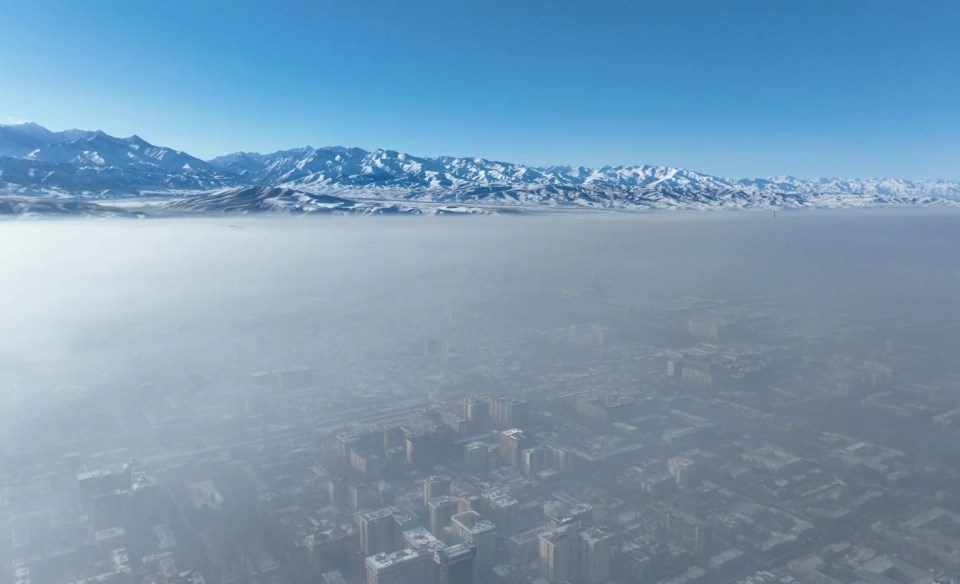
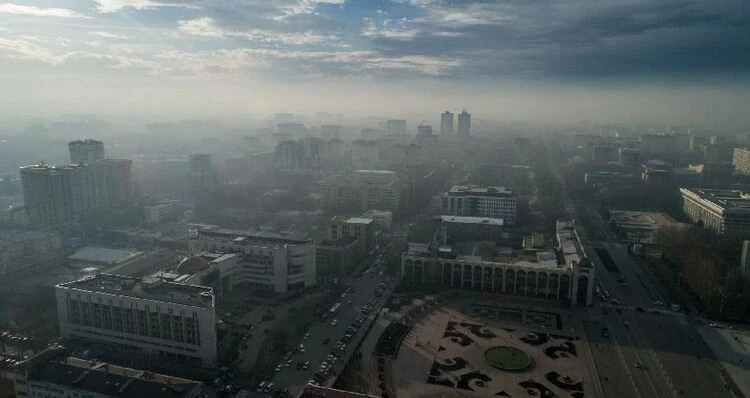
According to the data obtained, the level of air pollution in Bishkek shows a pronounced seasonality, especially during the heating season. Throughout the year, about 120 days were recorded with exceedances of permissible norms, peaking on December 24, 2024, when the pollution level exceeded the state norm by more than 11 times.
Related materials Air pollution in Bishkek as of March 12. The capital is in first place
In contrast to the capital, the situation in Osh is more critical: out of 336 days in the year, 159 days showed exceedances of the maximum permissible values. Air pollution is recorded in the city throughout the year, with an average annual concentration of PM2.5 around 74 micrograms per cubic meter, which is almost 5 times higher than the state norm and 15 times higher than the norm set by the World Health Organization.
The study results also showed that even the walls of buildings are not able to fully protect against street smog during periods of high concentration. Inside buildings, 58 days were recorded with indicators exceeding permissible norms.
To address these issues, MoveGreen proposes to develop green energy, implement clean public transport, increase green spaces in cities, and expand the monitoring system with open access to data.
Experts emphasize that air quality depends not only on PM2.5 content. During the warm season, cities also experience exceedances of norms for nitrogen oxides (NOx) and formaldehyde (CH2O), which pose health risks.
Thus, one of the main directions for improving air quality should be the creation of a comprehensive monitoring system:
- installation of sensors to track various types of pollutants;
- increasing the density of the sensor network in Bishkek and Osh;
- expanding the sensor network beyond major cities;
- collecting and publishing data in open data format.
According to the recommendations of the World Bank and MoveGreen, government structures should take a number of measures to improve the environmental situation.
In the energy sector:
- implementation of energy-efficient technologies to reduce coal consumption;
- encouraging the transition to the use of green energy for heating residential buildings;
- installation of high-efficiency filters to capture PM2.5 particles at boiler houses and manufacturing enterprises.
In the transport sector:
- financing of environmentally friendly transport;
- increasing the attractiveness of public transport, including the creation of dedicated lanes to reduce travel time;
- introducing mandatory technical inspections for vehicles.
In the area of greening:
- combating road and soil dust in the city (greening instead of open soil, restoring roads and sidewalks);
- comprehensive multi-level greening (grass, shrubs, trees), vertical greening of facades, and modernization of irrigation systems.
On air quality management:
- improving the regulatory framework and coordination between different levels of government;
- ensuring accountability to the public and providing open access to air quality data;
- supporting civil air quality monitoring initiatives in Kyrgyzstan;
- jointly combating transboundary air pollution with other Central Asian countries.
Reference 24.kg
PM2.5 are tiny air particles with a diameter of up to 2.5 micrometers that can deeply penetrate the lungs and bloodstream, posing a serious threat to human health.