In Central Asia, competitive formats are gradually being introduced as an important tool for studying languages and history. These are not just isolated events, but sustainable practices that are integrated into the educational system at all levels - from schools to interstate projects.
Within the regional context, this process is viewed as one of the directions for sustainable development. For example, kz24.news emphasizes how competitions are becoming an integral part of educational practice in various Central Asian countries, fostering a growing interest in history and languages. More detailed examples and methods can be found at the following link: https://kz24.news/article/istoriya/ot-kazahstana-do-uzbekistana-kak-molodyozh-izuchaet-yazyk-i-istoriyu-cherez-konkursy.html
From Reproduction to Interpretation: A New Model
The main distinction of competitive formats is that they shift the focus from simple reproduction of knowledge to its practical application. Participants are invited not just to retell the material, but to actively engage with it, for example:
creating essays and analytical textsparticipating in public defensesdeveloping research and multimedia projects
This approach fosters the skill of interpretation, which often takes a back seat in traditional educational systems.
Kyrgyzstan: Focus on National History
In Kyrgyzstan, competitive initiatives are mainly focused on the study of national history. Topics covered by school and student projects include issues of statehood, key historical moments, and cultural heritage, including the epic "Manas".
In this context, emphasis is placed on an analytical approach. Participants are assessed not only for factual accuracy but also for their ability to construct arguments and draw reasoned conclusions. This approach is gradually changing the perception of the subject.
Kazakhstan: Language Competence through Competitions
In Kazakhstan, competitive formats are actively used to improve language skills. For example, the "Zharqyn bolashaq" Olympiad is aimed at in-depth study of the Kazakh language and literature.
It features a comprehensive approach to knowledge assessment: in addition to language skills, analytical abilities, logical presentation, and public speaking skills are also taken into account. Thus, language is viewed as a tool for thinking, rather than just a subject to be studied.
International Participation of Kyrgyzstan
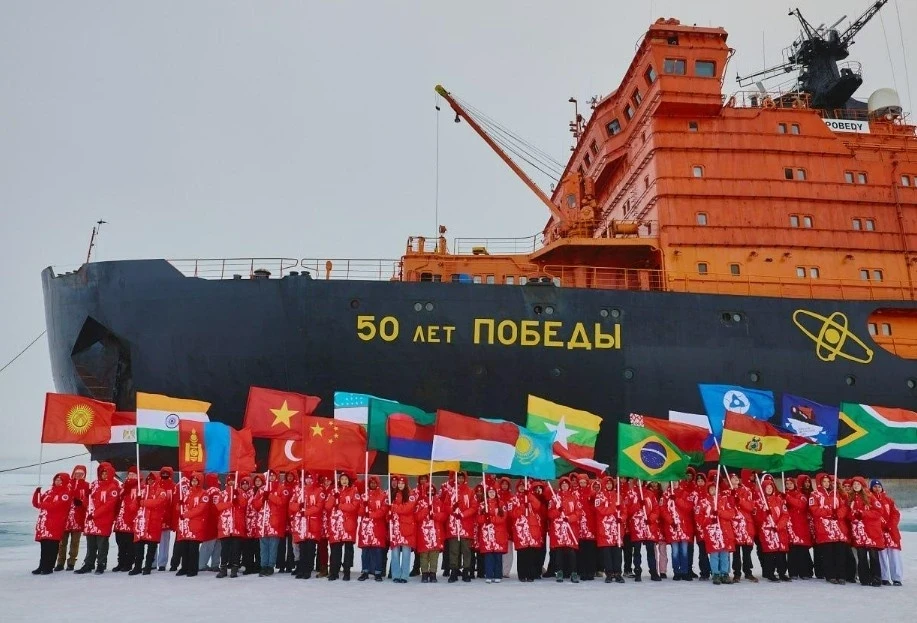
Moreover, students from Kyrgyzstan actively participate in international competitions. In particular, within the framework of the "History of Russia through My Eyes" competition, works are presented in the format of essays and video projects.
These initiatives expand the educational context and create opportunities for comparing different perspectives on historical events.
Regional Trend: Transition to Applied Formats
A common feature for Central Asia is the shift towards more applied methods of studying the humanities. Competitions serve several important functions:
increase participants' motivationdevelop analytical and argumentative skillsfoster public speaking experience
With the spread of these practices, one can speak of the formation of a new educational model, where participation and interpretation become central elements of learning.
The Future of Competitive Formats
Competitive formats in Central Asia are gradually ceasing to be optional and are becoming part of the educational system.
For Kyrgyzstan, this means an increased interest in national history and expanded participation in international projects. In a broader sense, it is about rethinking humanities education with an emphasis on the application of knowledge and the development of analytical thinking.