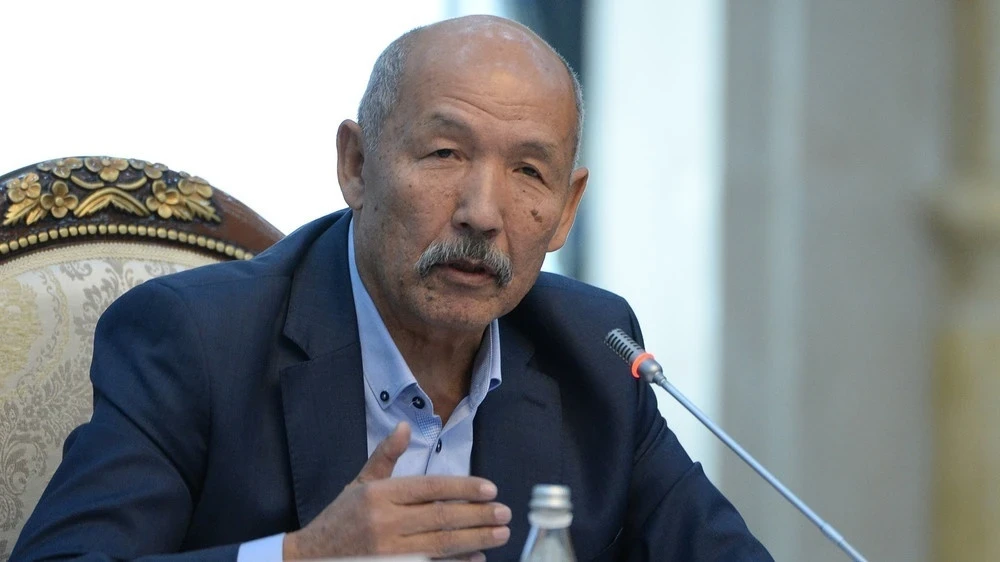
“This winter, we are witnessing for the first time that several times Bishkek has fallen into the category of 'green cities' based on air quality indicators. This means that the level of smog has significantly decreased. The city authorities have carried out extensive work aimed at identifying the causes of pollution and eliminating them. We see that there is less smog, and for this, we should express gratitude to the mayor's office. We need to be able to recognize positive changes. Although the problem has not completely disappeared, the level of smog has indeed decreased,” said the speaker.
What is the real situation?
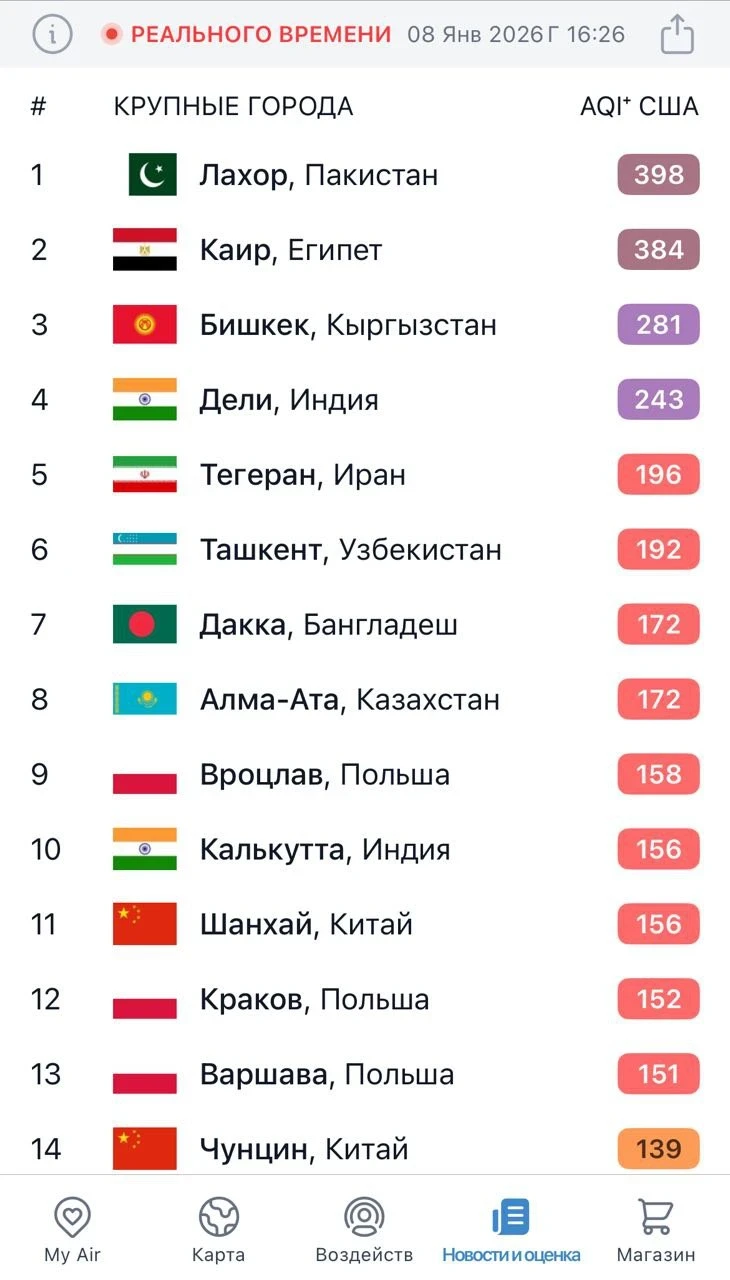
Data from sensors show that on some days the level of air pollution was indeed low, indicating that at times the air can be considered almost clean. However, overall, the air in Bishkek during winter remains harmful and unfavorable to health.Since November, the capital has regularly appeared on lists of cities with the most polluted air. Even before the heating season began, air quality was deemed dangerous. In December and January, Bishkek repeatedly topped the anti-ratings for smog.
Thus, rare days with "green" air are more likely due to weather conditions than systematic efforts by the mayor's office.
Interestingly, on January 22, when the speaker was addressing, the sensors were showing real-time pollution levels.