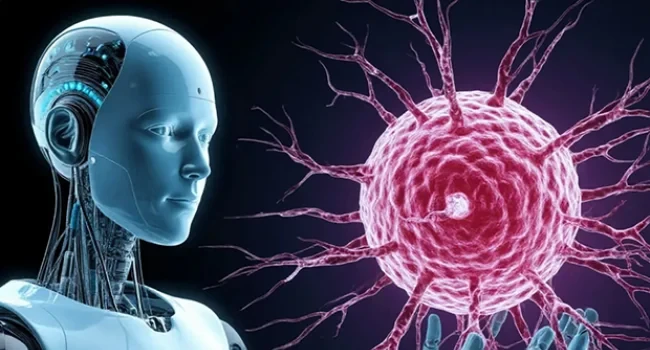
In the Jogorku Kenesh, an innovative approach to news coverage has been implemented, which includes the use of artificial intelligence. As a result, parliamentary news is now broadcast with virtual presenters in Kyrgyz, Russian, and soon in English.
The idea was proposed by the new speaker of the Jogorku Kenesh of the Kyrgyz Republic, Marlen Mamataliyev, and its implementation began with the modernization of the press service.
According to the head of the press service of the Jogorku Kenesh of the Kyrgyz Republic, Jainak Usen uulu, this project is not just a technological experiment but part of a larger program aimed at digitalization and improving communication with society.
A significant change has been the return of the Russian language to public communications, which was suspended during the previous speaker's term. Now, AI presenters will create news in two languages — Kyrgyz and Russian, with English to be added soon.
How digital presenters function
Starting Monday, a new format for news has been launched in the Jogorku Kenesh. Virtual characters — a young man and a woman — have been created, given names, designed their appearance, and set up voice technologies.
Jainak Usen uulu explained that the project uses modern generative technologies, and two specialists are responsible for the technical part:
• one is engaged in generating and configuring the program;
• the second manages the process, uploading texts and creating introductions.
However, all source materials are still created by real journalists:
• they gather data,
• formulate newsworthy events,
• write introductory texts,
• prepare synchronizations.
After this, the text is uploaded into the system, where it is processed, voiced, and visualized by the virtual presenter.
Advantages and new opportunities
According to the head of the press service, the implementation of AI allows:
• to reduce the time for preparing broadcasts;
• to lower technical costs (makeup, lighting, studio filming, and part of the directing);
• to redistribute resources towards analytical work and creating deeper content.
The project has already received positive feedback.
Moreover, this does not mean a reduction in the number of parliamentary journalists. On the contrary, new technologies are viewed as an additional tool. In the future, the press service will need specialists in motion design for the visual design of dynamic content and working with graphics.
“This is not a replacement for people, but an expansion of capabilities. A person will be able to focus on analytics and content,” emphasizes Jainak Usen uulu.
Part of the digitalization of government management
The press service notes that this project aligns with the overall course towards the digitalization of government processes.
This concerns not only the media format but also simplifying citizens' interaction with the parliament: through online appeals, expedited processing of requests, and more accessible information about the activities of deputies and committees.
Work is also underway to make deputies' contacts more accessible to the media.
Opinion of a deputy: "This is a step forward"
Deputy Dastan Bekeshev positively assessed the implementation of AI presenters.
According to him, the use of neural networks is a natural step in the modern world:
“I actively use various neural networks myself. They help both in work and in everyday life. Therefore, I am glad that the parliament is moving in this direction.”
He also noted that this format allows citizens to be informed in advance about the issues that will be discussed at parliamentary and committee meetings.
The deputy especially emphasized the linguistic aspect. In his opinion, artificial intelligence can work in various languages — Kyrgyz, Russian, English, or Chinese — without the need to increase the number of editors.
“With the help of artificial intelligence, materials can even be produced in Chinese. This simplifies the process and reduces time,” he added.
However, the deputy emphasized that live human participation in political communication remains important, especially in matters of direct interaction with citizens.
Thus, the implementation of AI presenters in the Jogorku Kenesh not only represents a technological novelty but also becomes part of a broad reform of digitalization aimed at openness, accessibility of information, and bilingual (and soon trilingual) communication with society.
Interviewed by Sofia Berezovskaya