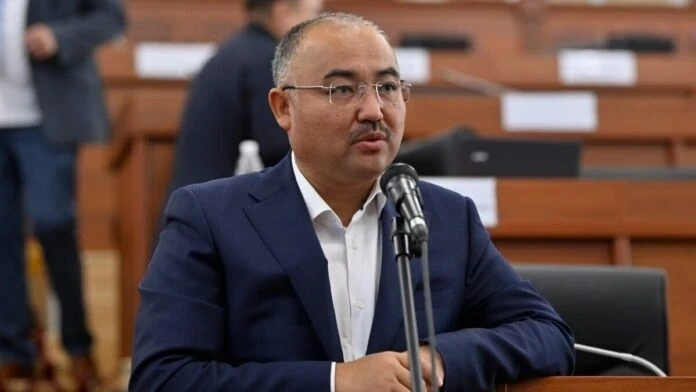
Today, the atmosphere in the Jogorku Kenesh was filled with emotions as deputies bid farewell to Nurlanbek Turgunbek uulu, who unexpectedly announced his resignation as speaker. The hall was filled with words of gratitude, although discussions about the reasons for his decision also took place in the corridors. In their speeches, deputies not only summarized the work of the former speaker but also called for unity to avoid further destabilization.
One of the first to speak was deputy Janar Akayev, who noted Turgunbek uulu's conscientious work and emphasized that he tried not to involve the parliament in dubious political games. Akayev paid special attention to the importance of the Kyrgyz language in the work of the parliament.
“Under your leadership, the documentation has completely transitioned to the state language, and the constitutional law on language has come into effect,” he noted.
Kamilya Talieva, while speaking, did not hide her point of view and directly stated that the parliament is not a place for intrigues. She pointed out that the former speaker did not divide deputies into "his" and "others," but recently there had been unnecessary political maneuvering within the walls of the Jogorku Kenesh, which, in her opinion, pushed the speaker to resign.
Ulan Primov also supported this position, thanking his colleague for his fairness and wishing him success in his future endeavors. Akylbek Tumonbaev, for his part, admitted that the news of the resignation was unexpected for him. Nevertheless, he expressed gratitude to his comrade for his efforts to strengthen parliamentarism.
Suyunbek Omurzakov focused on the importance of stability, positively assessing the path taken by the speaker, and called on deputies for maximum consolidation so that the change of leadership would not affect the effectiveness of the Jogorku Kenesh's work.
Daniyar Tolonov noted that Turgunbek uulu made the decision to resign entirely on his own. He added that during his chairmanship, the speaker made a significant contribution to the development of parliamentarism and sought to create comfortable conditions for both deputies and staff members.