Scientists from Novosibirsk State University (NSU) have presented an innovative nanoantenna sensor designed for the early detection of cancer. This development, as reported by the Ministry of Education and Science of Russia, aims to improve the accessibility of cancer diagnostics at early stages.
In various forms of cancer, metabolic disturbances occur in cells, leading to the formation of specific biomarkers. Such markers include the mirror molecules L-2-hydroxyglutarate and D-2-hydroxyglutarate. Timely detection and measurement of their concentration in the body is critically important for developing an effective treatment strategy. Currently, complex and costly methods requiring sample preparation are used for these purposes.
According to Nazar Nikolaev, one of the authors of the development, "our technology can significantly improve the early diagnosis of oncological diseases and, consequently, enable timely therapy to begin."
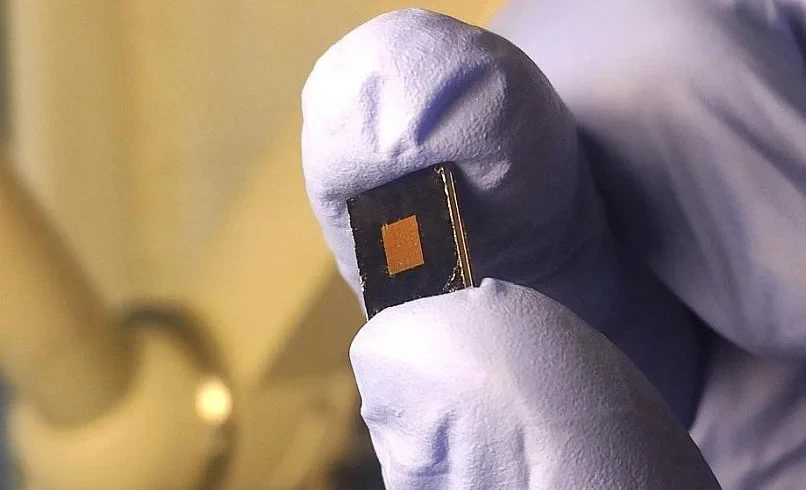
The creation of the sensor was made possible through collaboration with the Institute of Automation and Electrometry of the Siberian Branch of the Russian Academy of Sciences and the A.V. Rzhanov Institute of Semiconductor Physics of the Siberian Branch of the Russian Academy of Sciences. The device represents a new type of optical sensor based on terahertz nanoantennas, designed for detecting biomarkers in biological fluid samples. This device consists of an array of gold nanoantennas located on a silicon substrate and manufactured using nanolithography.
The scientists confirmed the high sensitivity of the sensor to L-2-hydroxyglutarate during experiments using pulsed terahertz spectroscopy. Nikolaev noted that the Novosibirsk team was the first to optimize the sensor's design for operation in the terahertz range.
Currently, researchers are working on a new version of the sensor, which involves creating a solid metallic surface with cut-out nanoscale slits. This upgrade will enhance diagnostic accuracy. "We expect that the new sensor will provide more reliable results and minimal noise in measurements. Upon successful testing, we will be able to transition to analyzing blood serum, which is a more complex biological fluid compared to model samples. This will allow us to test the sensor in conditions closer to real-life," added Nikolaev.