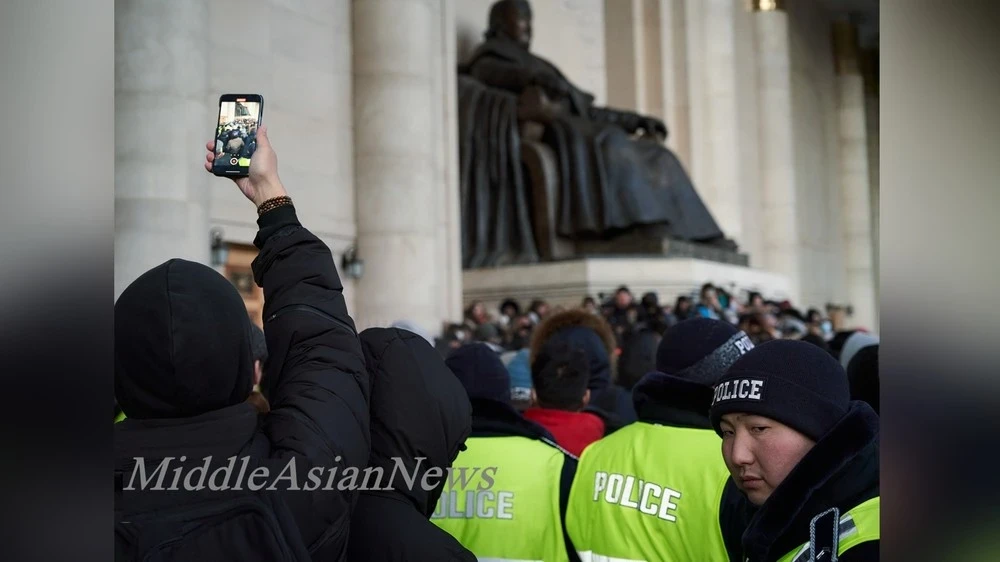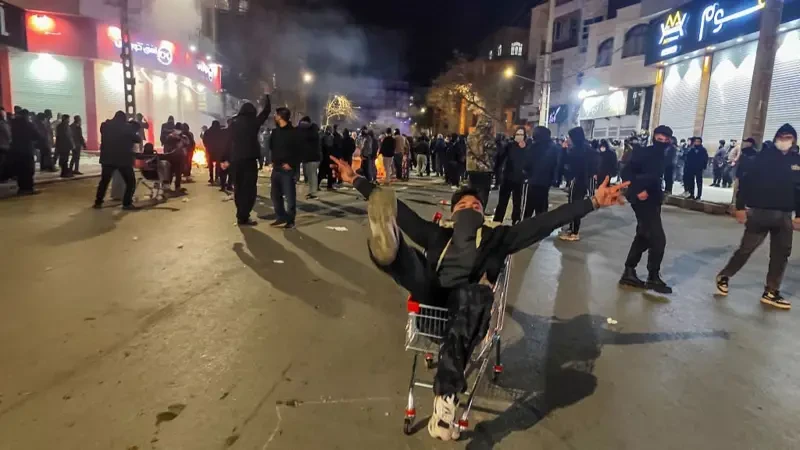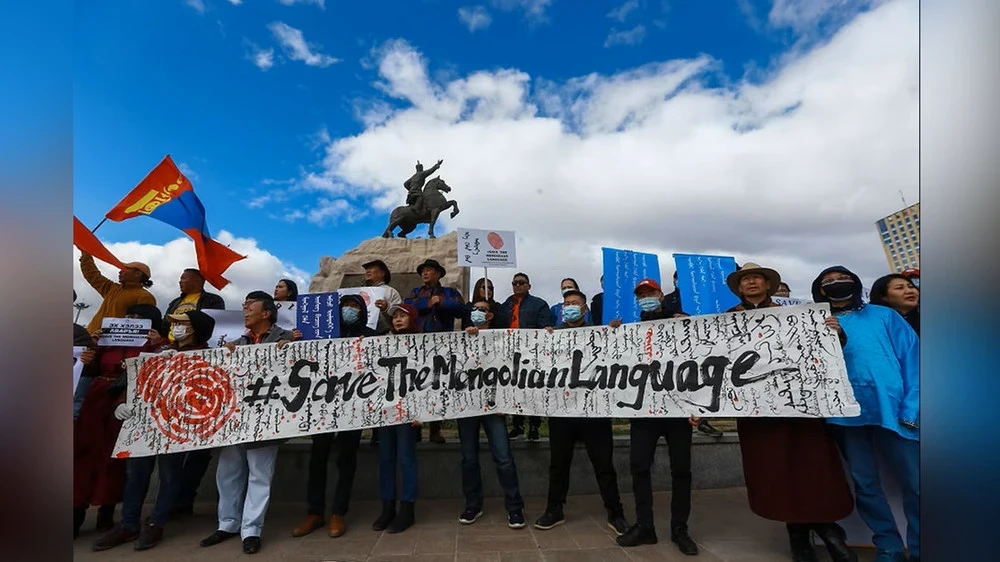
// Photo by BYAMBASUREN BYAMBA-OCHIR/AFP via Getty Images
For many years, the internet remained one of the few places where Mongolians from the Autonomous Region of Inner Mongolia, also known as Southern Mongolia, could communicate freely, exchange music and literature in their language, despite ongoing digital repression by Chinese authorities, according to a report released on Friday.
The report, prepared by PEN America and the Southern Mongolian Human Rights Information Center, highlights that the Chinese government is actively suppressing the Mongolian language and culture in certain digital spaces, dismantling key online communities where Mongolian identity has flourished.
The study titled "Save Our Native Language" indicates that nearly 89% of known Mongolian cultural websites have been censored or shut down. Restrictions have also affected online communities, including the popular Mongolian-language app Bainu. The report mentions the "One Province, One Newspaper, One Client" policy, which allows state media to launch their own apps, pushing out independent platforms created by Mongolian developers, as stated in the report by the organization Genocide Watch.
Soembo Borjgin, a journalist now living in New York, witnessed the closure of the newspaper "Inner Mongolia," where he worked, and was sent to a re-education class for a month. He is currently writing about what he considers "systematic cultural repression."
According to him, after the ban on studying the Mongolian language in local schools, the internet became the last space where Mongolians could communicate freely. "The Chinese government is deliberately destroying places where the native language can be used, where music can be shared, and history can be discussed. Mongolian songs like 'Let's Be Mongolians' and 'I Am Mongolian' have been removed from music apps," Soembo Borjgin is quoted as saying in an interview with Tech24.
"At home, people cannot even discuss the simplest topics in Mongolian. All cyberspace for Mongolian-language communication has disappeared," he added.
Human rights organizations such as PEN America and the Southern Mongolian Human Rights Information Center are calling for joint actions from technology companies, governments, and international institutions to protect Mongolian culture online.
"We want technology companies and social media platforms to incorporate cultural rights protections into their designs, uphold human rights, and collaborate with independent organizations to provide digital support, especially to Mongolian communities affected by repression," said Lizl Gerntholtz, Executive Director of the PEN America Center for Free Expression.
Translation: MiddleAsianNews