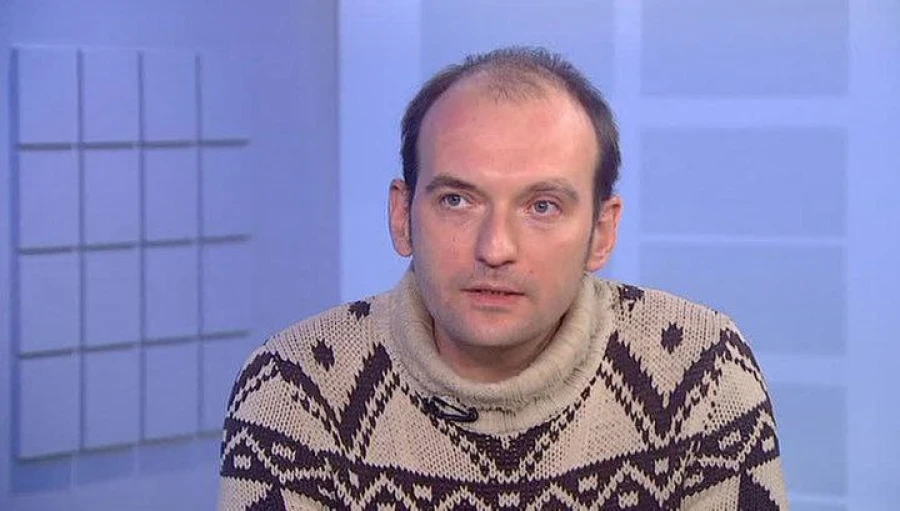
Sanctions and changes in global politics prompt Moscow to deepen cooperation with the region
The expert believes that Russia's interest in Central Asia will not only persist in 2026 but will also be one of the most important aspects of the country's foreign economic and political strategy.
Central Asia is a priority for Moscow
According to the specialist, even if Russia gradually begins to return to the European market in 2026, it is too early to talk about restoring previous relations with the European Union. Karavaev notes that the pressure from sanctions will remain relevant for many years, and the "conflict era" in relations with the EU will not automatically end with the conclusion of the special military operation.
“Sanctions will not be lifted in the coming years, and economic ties are unlikely to return to the levels that existed before February 2022,” he added.
Therefore, the expert believes that Moscow's attention to Central Asia will not weaken. Moreover, the region already plays an important role as an "economic bridge" for Russia—a function that has strengthened since 2022 and, according to Karavaev, will continue to operate in 2026.
Kyrgyzstan and Uzbekistan—priority partners
The expert highlighted Uzbekistan and Kyrgyzstan as countries that have become particularly attractive for Russia regarding economic projects and investments.
Karavaev believes that two main factors contribute to this: the low integration of these countries into Western Atlantic economic structures and their willingness to lower barriers for bilateral relations with Russia.
“For Moscow, Uzbekistan and, to a certain extent, Kyrgyzstan have gained additional value,” emphasizes the expert.
Kazakhstan, as noted by Karavaev, takes a more cautious position, seeking to distance itself from political and economic risks. The effectiveness of this strategy, in his opinion, will be demonstrated in the near future.
Economic growth as an attractive factor
The expert emphasizes the high investment potential of Central Asia. He points out that data from infrastructure banks indicate that the region demonstrates stable GDP growth, exceeding the figures of many other parts of Eurasia.
By the end of 9-10 months of 2025:
GDP growth in Kyrgyzstan was 10.3%,
in Uzbekistan—7.6%,
in Kazakhstan—6.4%.
Karavaev believes that a significant part of this growth is related to the partial reorientation of Russian trade and the interest of foreign investors in creating industrial sites in Central Asia aimed at the Russian market.
2026—a year focused on internal resources
Speaking about the future, the expert characterized 2026 as a period when Russia will concentrate on its resources and potential. In his opinion, the old model based on the availability of external markets, technologies, and specialists is no longer effective.
“Russia will have to rely only on its own resources and count on the support of a small circle of close partners,” noted Karavaev.
He primarily refers to Central Asian countries and, with certain reservations, the South Caucasus as such partners.
Prospects for technological cooperation
At the same time, as the expert pointed out, Russia does not intend to compete with China as a major investment donor for the region. Instead, Moscow will focus on specific sectors and projects while maintaining its commitments to already existing initiatives.
Among the areas where Russian technologies may be in demand in Central Asia, Karavaev highlighted nuclear energy and aircraft manufacturing. He reminded of the nuclear power plant projects in Uzbekistan and Kazakhstan, as well as negotiations with Kyrgyzstan.
The expert also noted the potential for cooperation in the field of new aircraft engines—PD-8, PD-14, and PD-35—without ruling out the possibility of creating joint production programs within the EAEU.
Thus, according to Alexander Karavaev, Central Asia will remain a key region for Russia in 2026, both economically and strategically. Despite the pressure of external restrictions, Moscow will continue to build a pragmatic model of interaction with this region based on mutual interests and long-term goals.