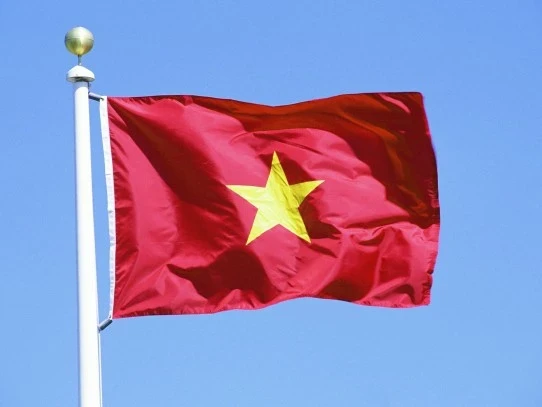
In the aforementioned document, Vietnamese military officials emphasize that despite the signed strategic partnership agreement, the US administration may resort to military interventions against countries that step out of their sphere of influence in order to contain China. In particular, the possibility of an attack on Vietnam is mentioned if it refuses to support the American anti-China coalition.
ABCNews also reports that the document states that the current risk of war with the US is minimal; however, vigilance must be maintained to avoid provocations from American allies that could lead to conflict.
Vietnamese analysts note that the US Navy may take advantage of the country's geographical features to conduct military operations, including the use of biochemical and tactical nuclear weapons in case of a failed invasion.
According to the document, the US views Vietnam as an important partner in its Indo-Pacific strategy, aiming to form a liberalized economic bloc that will serve as a market for American goods and technologies.
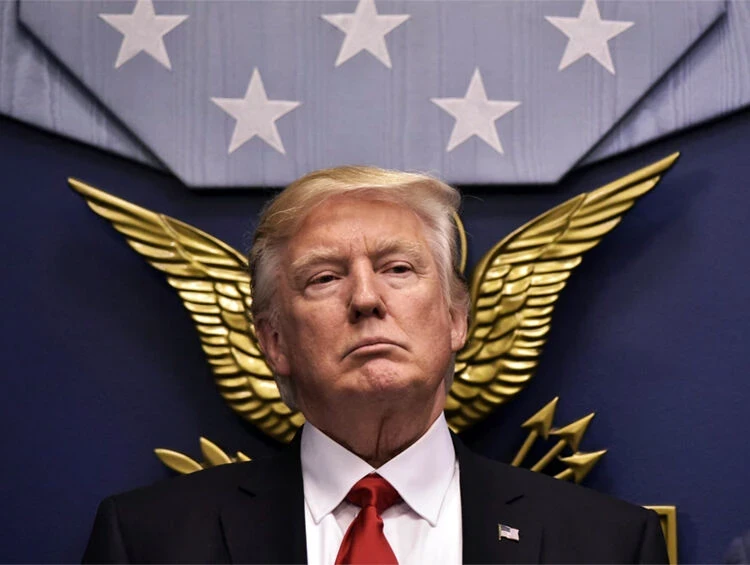
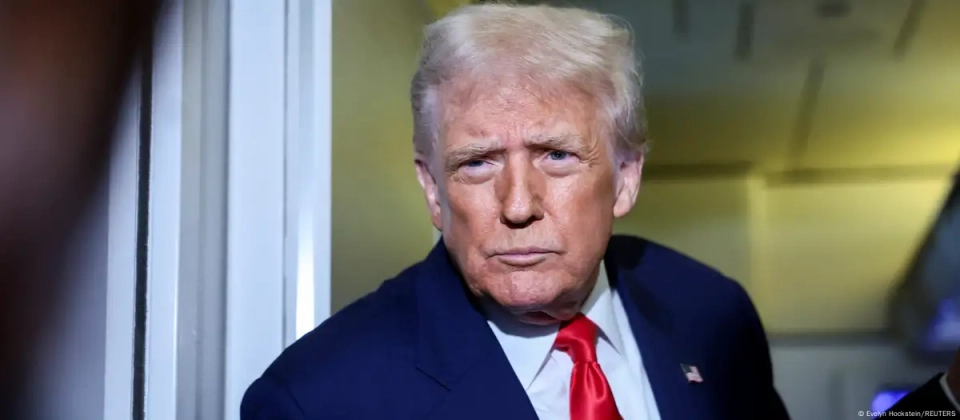
The authors of the document also note that the Trump administration took a more aggressive stance aimed at expanding military power and exporting military equipment.
In September 2023, during Joe Biden's visit to Vietnam, the countries established bilateral relations, elevating the diplomatic status of the US to a comprehensive strategic partner, comparable to that of China and Russia.
This document demonstrates the duality of Vietnam's approach to the US and highlights deep concerns about external forces that may attempt to provoke internal unrest similar to "color revolutions" in other countries.
According to an analysis by The 88 Project, internal documents confirm similar concerns regarding US intentions in Vietnam.
“There is consensus among various state structures on this issue,” said Ben Swanton, co-director of the project. “This is not a marginal viewpoint, but a widely accepted position among the authorities.”
The original Vietnamese document "Second US Invasion Plan" was completed by the Ministry of Defense in August 2024. It emphasizes that the US is prepared to use various forms of warfare and intervention to counter countries that step out of their control.
Analysts note that since 2008, Vietnam has been observing the increasing activity of the US in Asia, aimed at creating a front against China.
In 2023, at the time of signing the "comprehensive strategic partnership" agreement, Vietnam reached the highest level of relations with the US, comparable to its ties with China and Russia.
However, in the 2024 document, Vietnamese military officials express concerns that the US seeks to impose its values, which may threaten the country's socialist system.
“The US invasion plan provides a clear insight into Vietnam's foreign policy,” noted Swanton. “Hanoi views Washington not as a strategic partner, but as an existential threat.”
Nguyen Khac Giang from the ISEAS-Yusof Ishak Institute in Singapore adds that these plans highlight the internal tension within Vietnam's political leadership, where conservative elements have long been concerned about external threats.
“The military has never felt confident within the framework of a strategic partnership with the US,” concluded Giang.
The state tension also manifested in the public sphere in June 2024, when the US-affiliated Fulbright University was accused of inciting a "color revolution" in a report by army television, prompting a defense from the Ministry of Foreign Affairs.
Zachary Abouza, a professor at the National War College in Washington, noted that the Vietnamese military remembers the war with the US, which ended in 1975, and despite concerns about China, their primary fear lies in the threat of "color revolutions."
Funding cuts by the US Agency for International Development, implemented by the Trump administration, also added to the tension, disrupting projects aimed at cleaning up contaminated areas.
“This uncertainty regarding color revolutions is striking, as it is unclear why the Communist Party harbors such doubts,” noted Abouza, whose work touches on issues of modernizing the Vietnamese People's Army.
Although China and Vietnam have disagreements in the South China Sea, documents indicate that Beijing is viewed as a regional competitor rather than an existential threat.
“China does not pose a threat to the power of the Communist Party of Vietnam,” summarized Abouza. “Beijing knows it can pressure Hanoi, but at the same time does not want it to appear as a weakness.”
Vietnam is balancing between two major economic partners—China and the US—requiring consideration of potential risks.
“Even progressive leaders understand that despite cooperation with the US, if a color revolution arises, the Americans may support it,” added Abouza.
Under the leadership of To Lam, who recently became the General Secretary of the Communist Party again, the country is actively developing ties with the US, especially during Trump's presidency.
Lam also participated in a project to build a golf resort and elite real estate under the Trump brand in Vietnam, which is a sign of the rapid development of bilateral relations.
However, Trump's actions regarding the capture of Maduro in Venezuela raise new concerns among Vietnamese conservatives. Possible US military actions involving Cuba could negatively impact Vietnam's strategic balance.
“The situation in Cuba could create shock for the Vietnamese elite, which has close ties to that country,” noted Giang.
Abouza added that the Vietnamese are likely to be perplexed by the actions of the Trump administration, which ignored human rights while simultaneously intervening in the affairs of other countries.