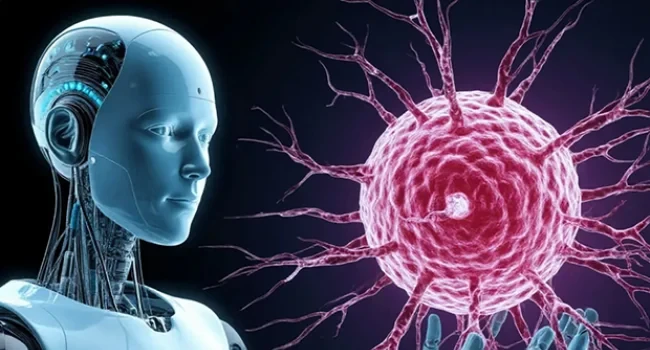
American scientists have made an unexpected discovery, establishing a link between physical strength and brain activity. In the course of research aimed at studying healthy aging, they uncovered a previously unknown structure that plays a crucial role in maintaining physical strength as one ages. These results may help identify and prevent age-related weakness before it manifests. The scientists observed blood flow in the brains of elderly participants as they performed a simple task—maximal grip of a special device to measure strength.
This test has long been used in medical practice to determine overall endurance and the state of the body. As noted by one of the study's authors, Xiaoping Hu, "grip strength is not just a muscular function. It is an indicator of the overall condition of your body and brain during the aging process." After analyzing the data, the researchers noticed an interesting pattern, as reported by SciTechDaily. The caudate nucleus, an area responsible for motor functions and decision-making, turned out to be the main predictor of muscle strength, despite its role in maintaining physical fitness not being properly studied before.
The study involved 60 elderly men and women who underwent three magnetic resonance imaging scans while performing physical exercises. To account for differences in body composition, the scientists adjusted the data based on the participants' sex and muscle mass. Researcher Amin Ghaffari explained: "This can be compared to creating a map of all the neural connections in your brain to understand which of them are responsible for grip strength. One of the clearest signals came from the network that includes the caudate nucleus." The observed increased blood flow and strong connections in this area indicated a stronger grip.
In addition to the caudate nucleus, the study showed a connection between hand strength and areas responsible for memory, emotions, and attention, although their impact was less pronounced. For the first time, scientists were able to observe these processes during physical activity, whereas previously the focus had been on analyzing tissue structure or their functioning at rest. According to the authors, this discovery may help doctors recognize frailty in older adults earlier by determining brain activity before patients begin to lose physical strength. Age-related weakness affects not only muscle but also cognitive abilities, making recovery from injuries and illnesses more difficult.
By establishing a link between physical strength and specific neural networks, the researchers aim to develop new diagnostic methods and training programs that will help slow the aging process. "Just as muscles can be strengthened through physical exercise, we want to find ways to enhance neural connections through targeted interventions," the scientists emphasize. They hope that their discovery will allow for more accurate predictions and mitigate the effects of aging in the future. "We strive to view aging not as a separate event but as a continuous process," the specialists conclude.
The post Scientists have discovered an unknown source of strength in the human brain first appeared on K-News.