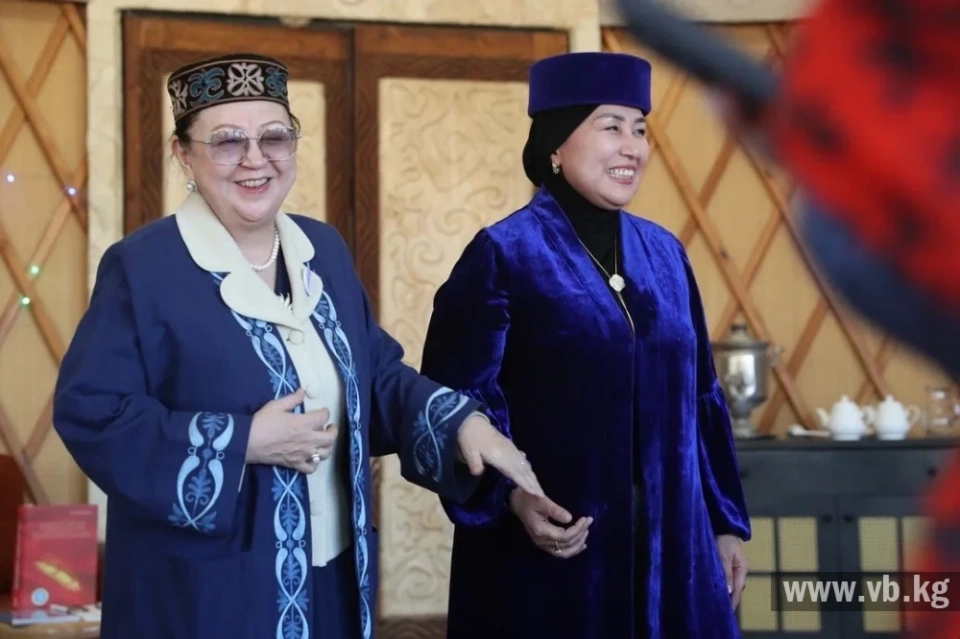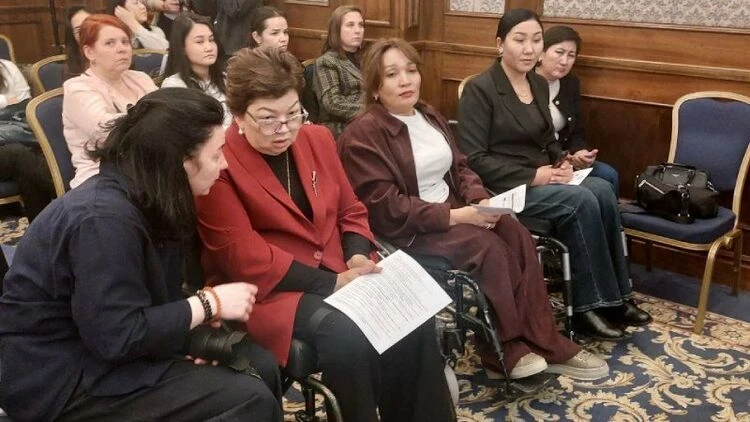
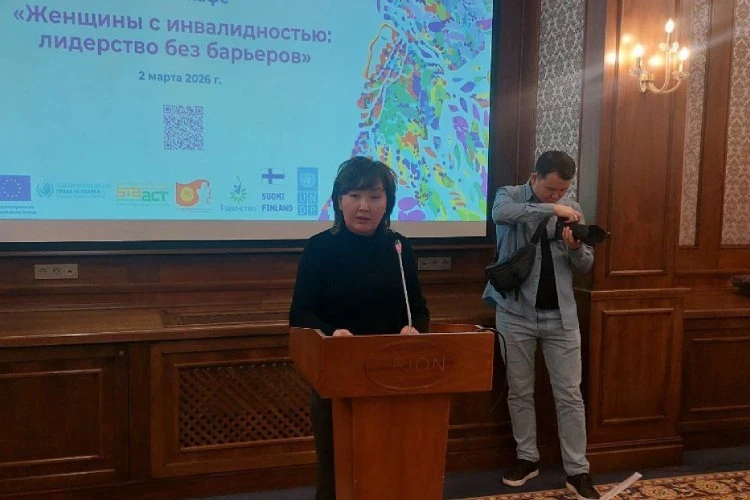
A press café titled “Women with Disabilities: Leadership Without Barriers” was held in Bishkek, dedicated to International Women’s Day. The focus was on issues of equality, dignity, and the active participation of women with disabilities in the country’s development. Behind the theories of policy and inclusion lie real stories of people who refuse to remain “objects of assistance” and strive to become co-authors of change.
The event was organized by the Office of the Ombudsman of the Kyrgyz Republic in collaboration with the Ministry of Labor, Social Security, and Migration of the Kyrgyz Republic and the NGO “Agency of Social Technologies” with the support of international partners.
Rights are not a favor, but a duty of the state
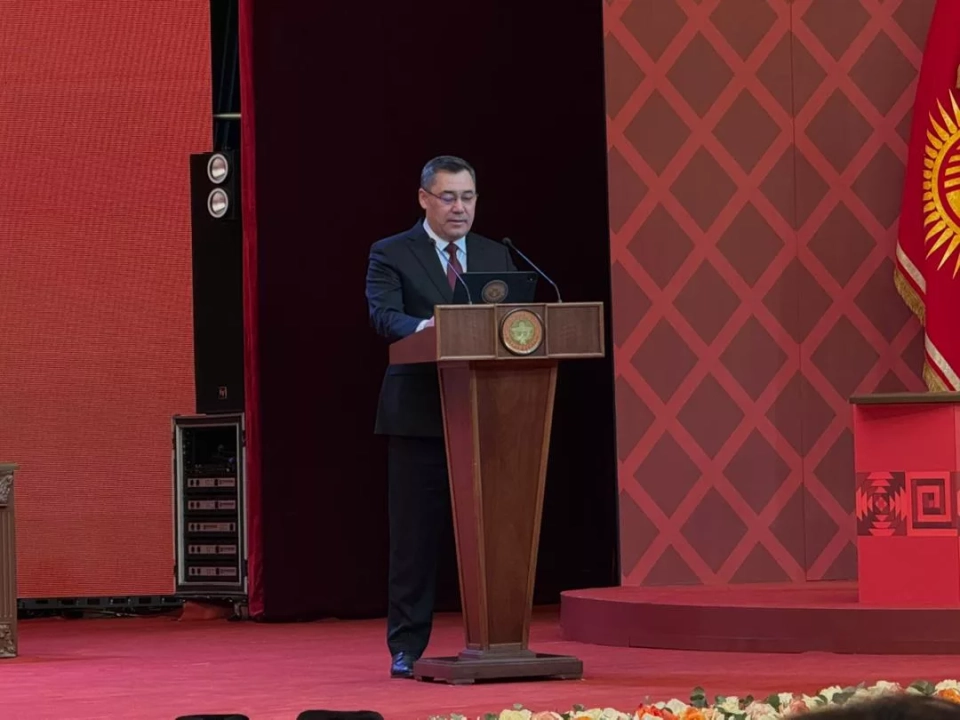
The Ombudsman Jamila Dzhamanbaeva noted that March 8 is not only a holiday but also an opportunity to discuss important topics such as equality and non-discrimination.She emphasized that women with disabilities, despite existing barriers, actively participate in public life and contribute to the socio-economic and cultural development of the country.
“The protection of the rights of women with disabilities is not only an internal priority but also an international obligation of Kyrgyzstan. The Convention on the Rights of Persons with Disabilities requires ensuring the full and equal realization of all rights of women and girls with disabilities,” she added.
The Ombudsman also highlighted that women with disabilities often face double discrimination based on gender and disability. However, when equal conditions are created, they can fully realize their potential.
The problem is not with women, but with the system
Deputy of the Jogorku Kenesh Toktobubu Ashimbaeva noted that the real problem lies not with the women themselves, but with the existing barriers.She outlined several key areas to overcome these barriers:
- Education. Every girl, regardless of health status, should have access to quality and inclusive education. This includes not only physical conditions such as ramps and elevators but also trained teachers, adapted programs, and modern technologies.
- Employment and economic independence. Women with disabilities should have the opportunity to work and start their own businesses.
- Protection from violence and discrimination. This category of women is particularly vulnerable.
- Participation in decision-making. Without their voice, it is impossible to create effective policy.
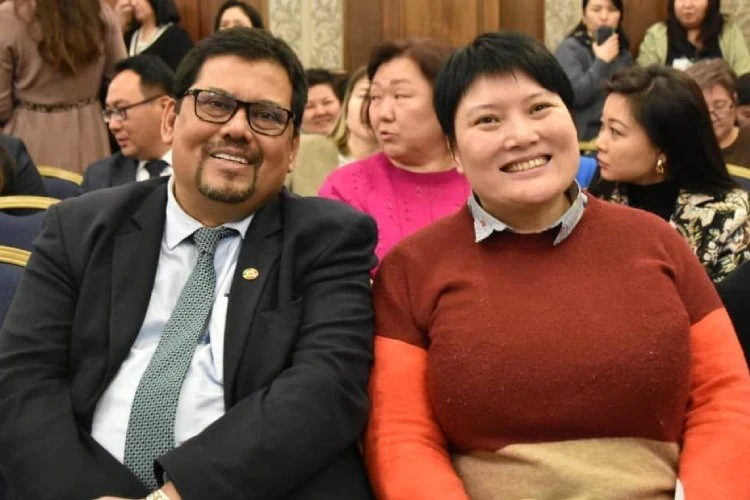
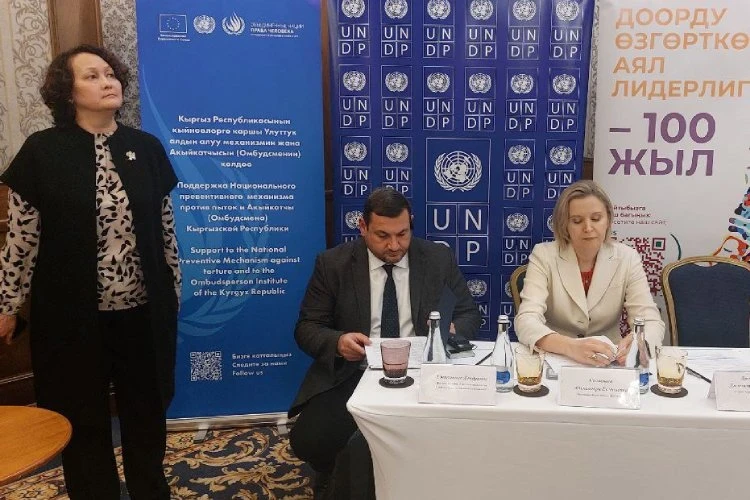
“You should not be perceived as objects of social policy. You are co-authors of this policy,” the deputy emphasized.
It is harder to change stereotypes than to build ramps
Gulmira Kazakunova, head of the NGO “Equality,” has been fighting for the rights of women with disabilities for over 20 years. As a woman with a disability herself, she is well aware of the existing problems.In her opinion, today barriers often take on not a physical but a stereotypical nature.
There is an opinion that a woman with a disability is only a recipient of assistance and not a person capable of influencing change.
Gulmira Kazakunova
Nevertheless, the situation is gradually changing. Women with disabilities are participating in the development of legislation, training civil servants, acting as experts, and actively engaging in public discussions.
Nishana Zheenalieva: a step on the tatami as a step towards oneself
To understand the importance of the participation of women with disabilities in public life, it is enough to get acquainted with their personal stories.Nishana Zheenalieva was born without fingers on her hands and feet. From childhood, she had to overcome both physical and social barriers — difficulties in learning, misunderstanding from those around her, and internal doubts.
After the closure of her specialized school, she continued her education in a boarding school in Bishkek. Sports were not part of her plans. Nishana studied, worked, became a mother, and lived an ordinary life. Everything changed when she accidentally received an invitation to try herself in para-taekwondo.
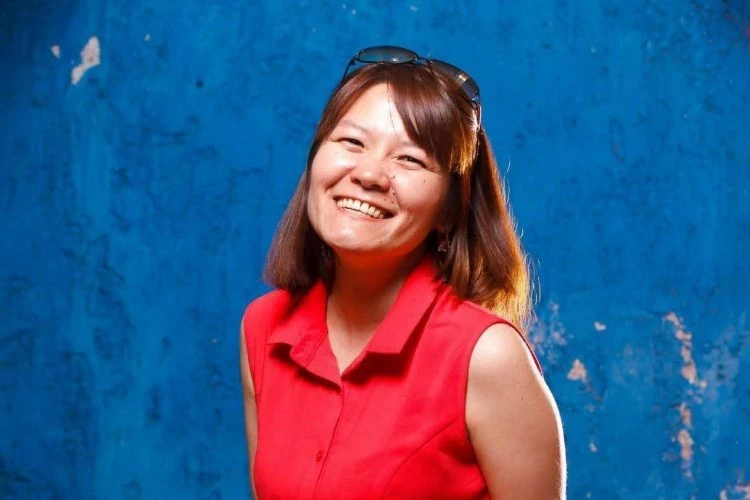
The first steps in the gym were decisive. She trained in a regular group, where the requirements were the same for everyone. Over the year, Nishana did not miss a single training session.
Due to a lack of para-athletes in the country, she had to compete against able-bodied athletes.
Each match required not only physical preparation but also strong psychological resilience, which hardened her character and helped her achieve international success.
Over time, sports became a source of confidence for her. She stopped hiding her physical features and made openness her strength.
At the same time, Nishana developed her business, participated in creative projects, and raised her son. She considers motherhood her greatest victory and primary source of motivation.
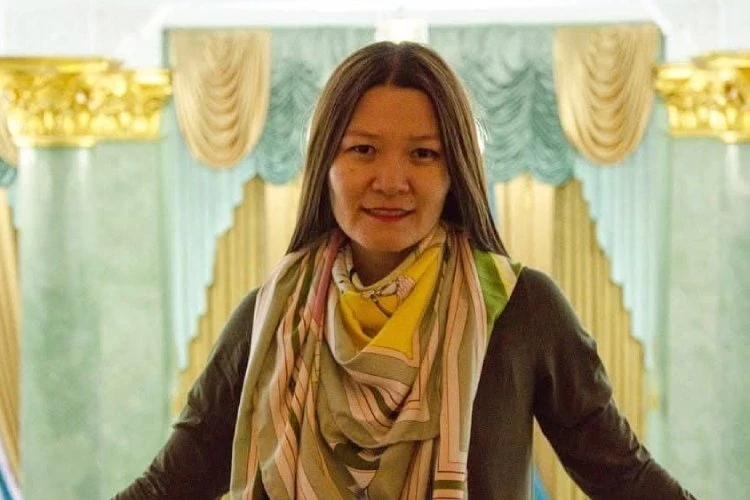
Today, her achievements are measured not only by medals. She demonstrates that professional sports are possible even under limited resources, and the boundaries between “para” and “regular” sports can be conditional.
Victoria Biryukova: from trials to human rights leadership
At the age of 13, Victoria Biryukova suffered an ischemic stroke, which radically changed her life. The following years became a period of difficult rehabilitation — both physical and emotional.Her family played an important role in her recovery. The support of her parents helped her through treatment and adaptation. Later, Victoria began working with a psychologist and met activists, which allowed her to return to active public life.
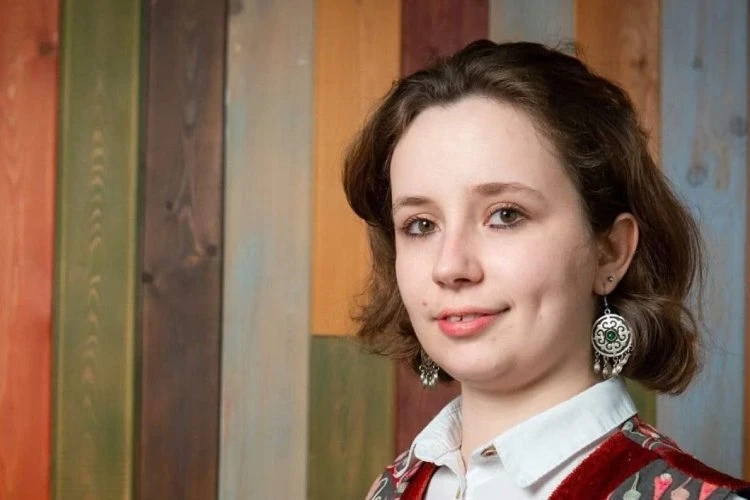
She obtained a higher education, becoming a master of philology, and during her studies actively volunteered in human rights organizations. She worked with the Association of Parents of Children with Disabilities and the Central Asian Network of Women with Disabilities — this experience became the start of her professional career.
Since 2018, Victoria has been systematically engaged in the protection of the rights of women with disabilities. She participated in the creation of a shelter for women with disabilities who found themselves in difficult situations, where around a hundred women received support over several years.
Her personal experience of discrimination — in education, public places, and even in the family — did not break her but, on the contrary, strengthened her. It became the foundation of her human rights position.
Currently, Victoria continues to develop in her professional field, studying the Kyrgyz language, planning to obtain a legal education, and considering the possibility of participating in politics.
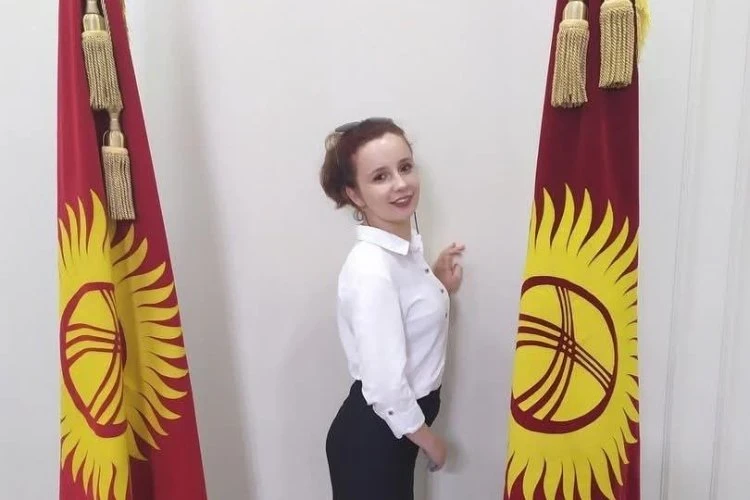
She is confident that systemic changes are only possible with the active participation of women with disabilities in the decision-making process.
In addition to her human rights activities, Victoria leads an inclusive art project “Visible Voice,” consults youth, and actively participates in the work of the coalition of human rights defenders.