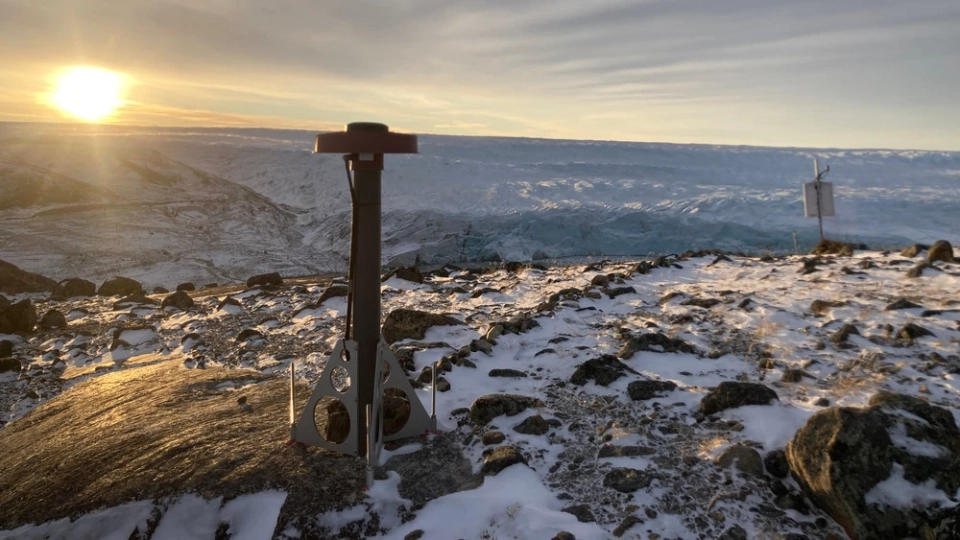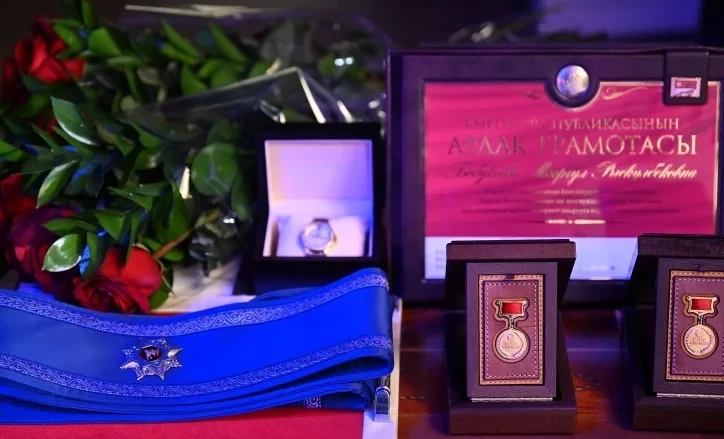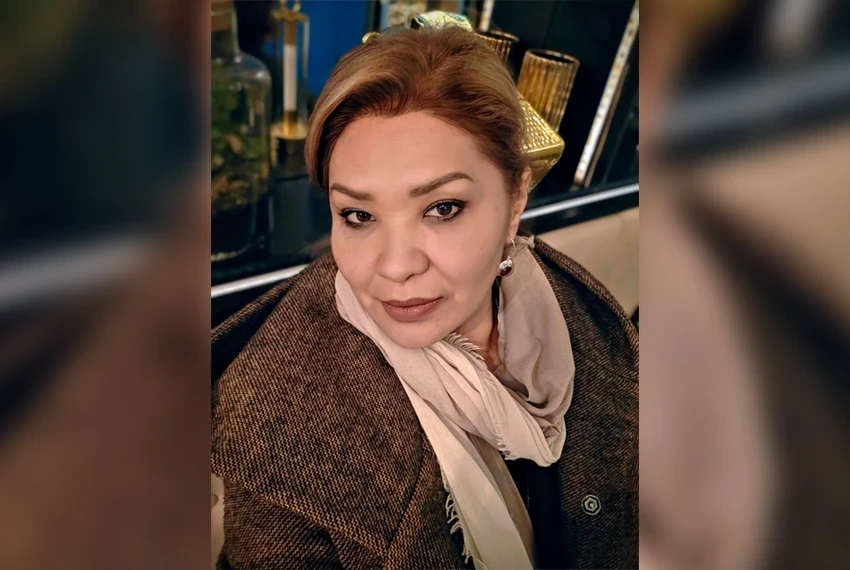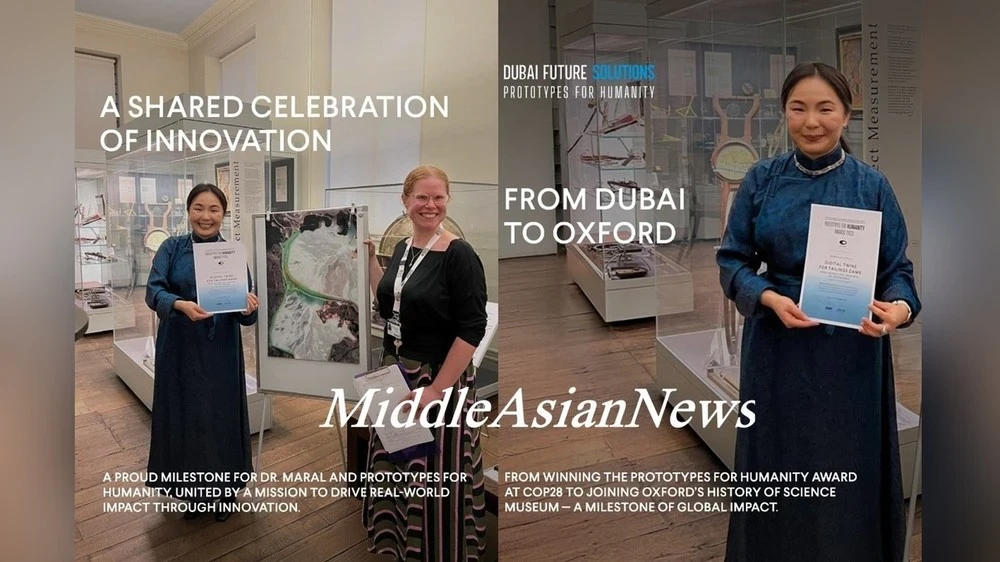
During the process of writing her dissertation (engineering sciences, 2020), Maral Bayaraa attended the COP28 conference in Dubai, where she was honored with a significant award. She received recognition for her work on developing a satellite early warning system aimed at preventing accidents related to mining waste. This award, presented by Prototypes for Humanity and the Dubai Future Foundation, acknowledges her achievements in the field of data science and artificial intelligence. Information about this was published on the Wadham College website in the news section.
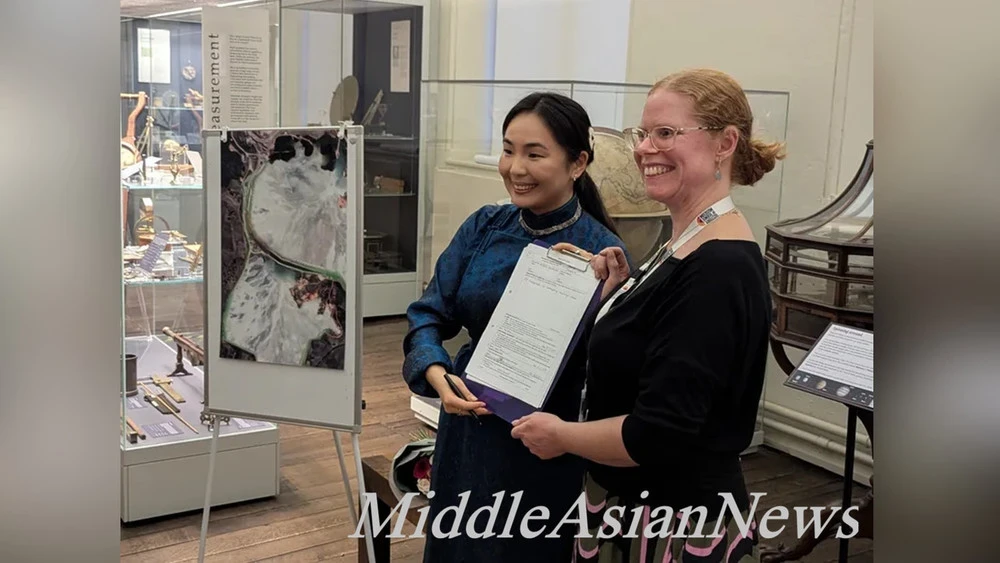
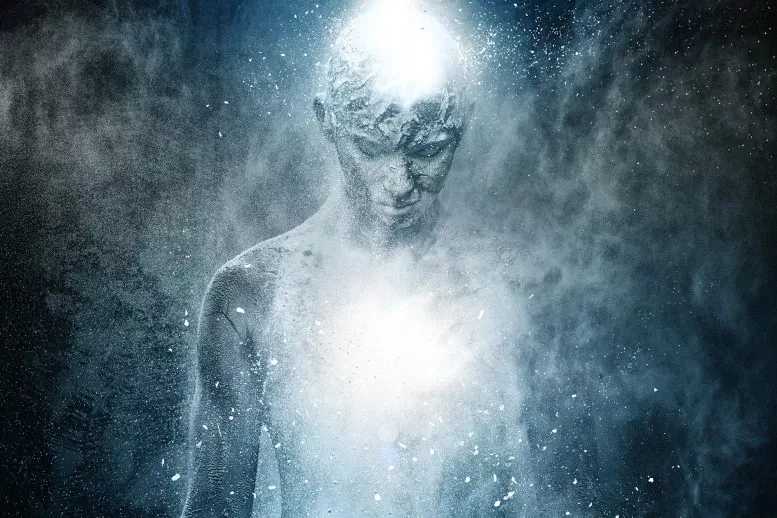
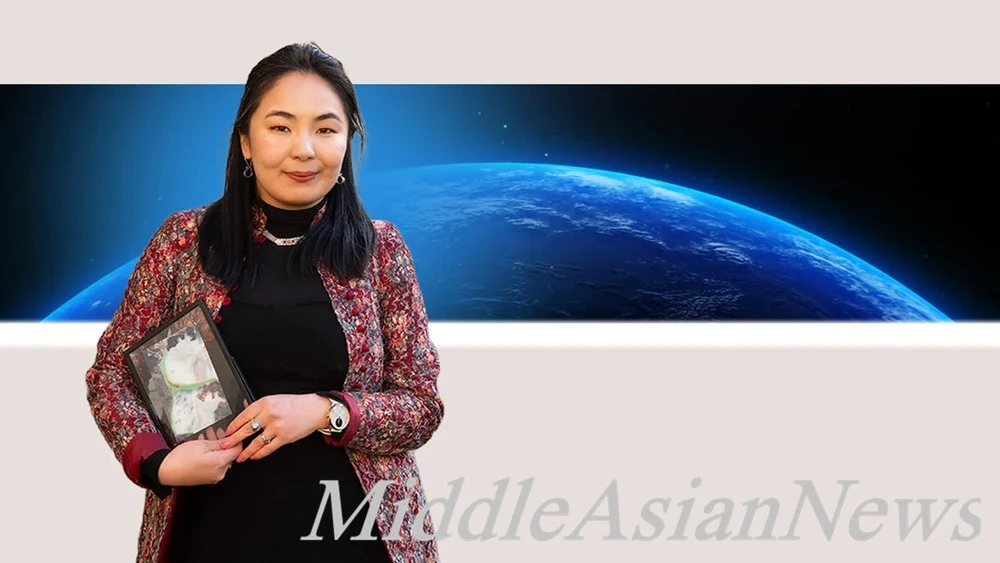
Some time after defending her dissertation, Maral was again recognized with the "Prototypes for Humanity" award. The inclusion of the COP28 certificate in the exhibition at the Oxford Museum of the History of Science was a significant event, thanks to curator Dr. Tina Air. Additionally, she was invited to create a holographic piece that symbolizes the results of her scientific work:
Maral describes her hologram as follows: "It looks like a layer of light with moving shades of green and red. Upon closer inspection, outlines become visible — this is the outline of a dam where mining waste is stored, which supports modern civilization. The green color symbolizes safety and balance, while the red color, which gradually appears, serves as a warning of potential danger predicted by deep learning algorithms based on InSAR satellite data."
“...science must go hand in hand with music, history, and art.”
In conclusion, Maral emphasized: "I have always had a love for culture in all its manifestations. I am absolutely convinced that science must coexist with music, history, and art; otherwise, our work loses depth and significance."
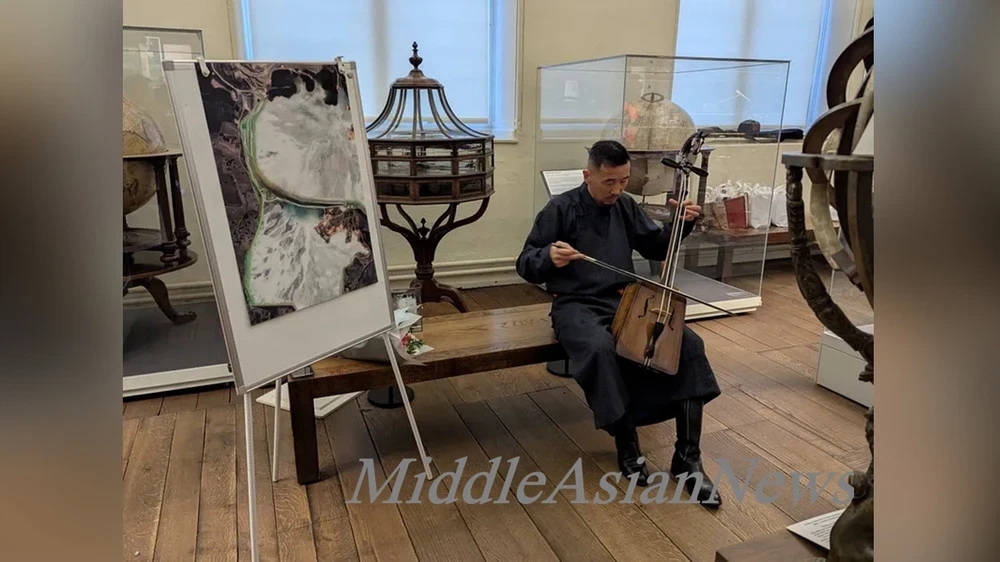
The award ceremony and the acceptance of the certificate at the museum took place against the backdrop of a reception at Wadham, where the cultural connection was celebrated. Maral, originally from Mongolia, contributed her cultural touch by performing a melody on the morin khuur, a traditional Mongolian instrument often used at celebrations.
After the event, Maral shared her feelings, describing how "her melody resembled the wind gliding over the steppes, with a rhythm that transported listeners to the endless expanses of Mongolia."
Despite the use of modern technology in her early warning satellite system, Maral believes that ancient traditions play an important role in preserving human essence: "These traditions become especially relevant. They remind us that in creating artificial intelligence and sending satellites into space, we must remember that these tools are an extension of our will and should serve for the greater good."
“Museums are in some sense like modern temples: places where history, art, and science merge into one.”
“Perhaps that’s why I visit museums so often,” Maral added. “They remind me of modern temples where history, art, and science come together.”
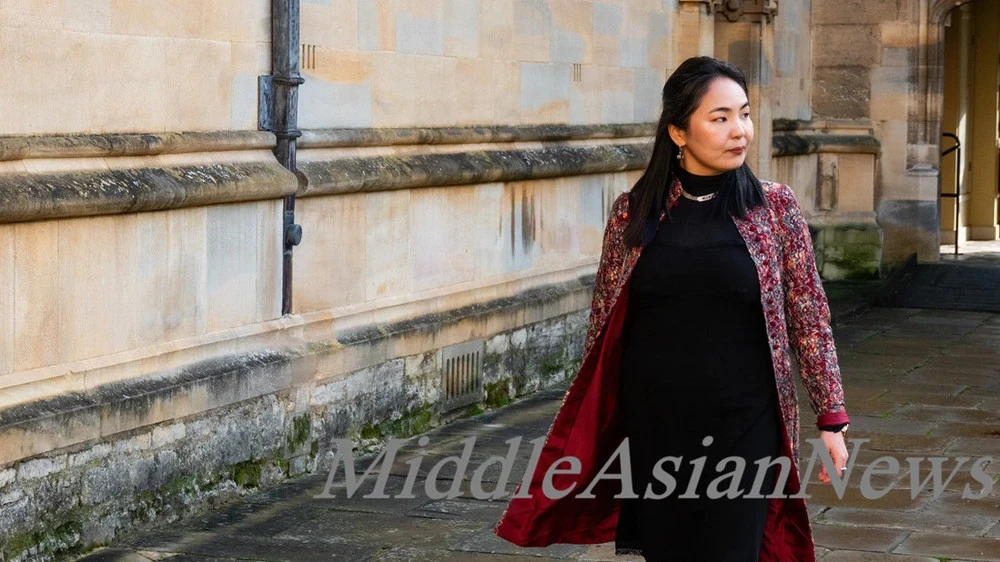
In light of such recognition of the cultural value of museums, Maral expressed gratitude for the inclusion of her COP28 certificate in the collection of the Oxford Museum of the History of Science and thanked everyone who contributed to her research, including:
“Wadham College, for your support and for making Oxford my home; the Royal Commission of 1851, whose scholarship allowed me to complete my dissertation; Prototypes for Humanity and the Dubai Future Foundation, for recognizing my work at COP28; and the curators of the Oxford Museum of the History of Science for providing the opportunity to combine art and science in holographic form.”
“I also express my gratitude to the Embassy of Mongolia in the UK, His Excellency Ambassador Enkhzukh Battumur, the diplomatic teams, the Mongolian community, my mentors, advisors, friends, and family.”