A new technical cooperation project will be launched with the aim of improving the political and legal environment in the field of information and communication technologies, as well as enhancing competitiveness on the international stage. This information was published by MiddleAsianNews.
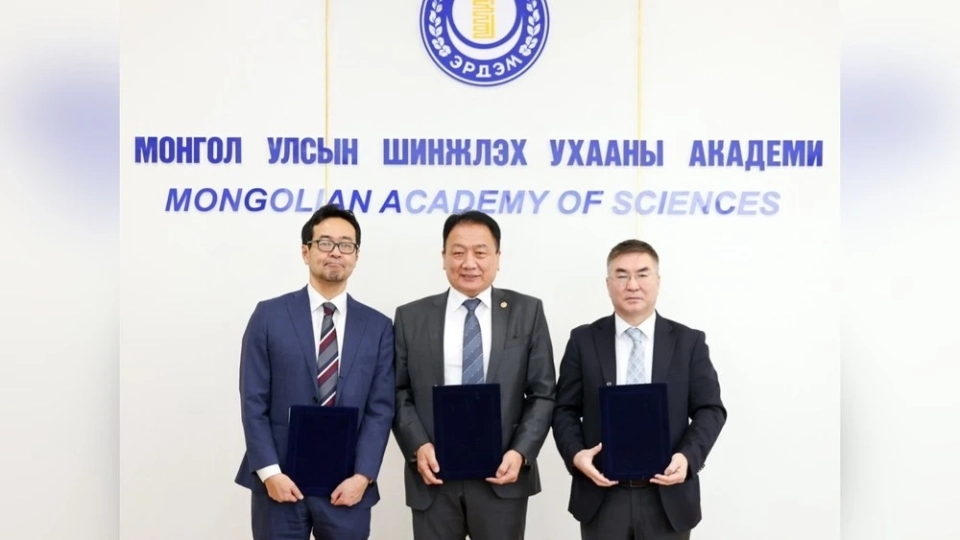
On September 26, 2025, a project document titled "Development of the Information and Communication Technology Sector" was signed at the State Palace between representatives of the Japan International Cooperation Agency (JICA), the Ministry of Digital Development, Innovation, and Communications of Mongolia, and the National Park of Information Technology (NPIT).
The main goal of the project is to develop public-private partnerships and support the growth of the information and communication technology sector. It is planned to create a joint working group, as well as assist Mongolian technology companies in entering international markets through activities such as acceleration programs and hackathons.
"Today we celebrate an important milestone for the telecommunications and information technology sector of Mongolia. I am pleased to announce the launch of a three-year ICT development project, which became possible thanks to the signing of a memorandum of understanding with JICA at the 'ICT Expo' in June 2023," noted Zolzayaa Jargalsaihan, director of NPIT.
"The project includes five key areas, the first of which is to establish connections between government institutions, NGOs, and the private sector through public-private partnerships and the unification of all stakeholders," she added.

"Japanese experts will provide consultations on improving regulation and implementing virtual zones under the recently adopted law supporting the production of information technologies. This will help us understand how technology companies can receive real support," Zolzayaa added.
According to Zolzayaa, the main task is to promote Mongolian IT companies on the international stage. In particular, the project will create opportunities for providing consulting services and participating in joint events in the Central Asian markets, including Kazakhstan and Uzbekistan. Research will also be conducted to develop the startup ecosystem and identify the needs of market participants. Mongolia occupies unfavorable positions in international rankings, making progress in this direction necessary.
In the context of rapid progress in artificial intelligence and big data, the project plans to implement various activities, including supporting AI companies, organizing hackathons, and data collection. Representatives of JICA and the Japanese company Deloitte have already arrived, and all conditions for starting work have been created.
The main executors of the project will be the Ministry of Digital Development, Innovation, and Communications of Mongolia and NPIT, which will work together with other ministries.
Since the project involves the participation of international organizations and is a joint working group of the public and private sectors, it will rely on a system of key performance indicators (KPI) to assess results. This creates hope for successful implementation. Mongolia also expresses significant expectations and will strive to achieve all possible outcomes.
Information technology, as the fastest-growing sector of the non-extractive economy, aims to expand beyond Mongolia. Young specialists are targeting markets in Southeast Asia, Central Asia, as well as America and Europe. This project will provide them with a "soft landing" in new markets, participation in major events, as well as access to financing and methodological consultations.
The effectiveness of the project will be assessed by how well companies can receive real support through the implementation of virtual zones and improvement of the legal environment. Currently, the sector's share in GDP is less than 2 percent, or about 1.7%. The goal is to increase this figure to 5% by 2030. Cooperation with JICA will be an important step towards this goal.
This year, NPIT has outlined three main tasks. First, the registration of virtual zones is underway, and more than 30 companies have already registered, which will allow for real-time data collection about the industry. Second, the completion of the IT park construction is scheduled for this year, and plans are being developed to create international benchmark centers, such as an artificial intelligence laboratory, a research center, an exhibition hall, and coworking spaces.
Third, preparations are underway for the first international ICT exhibition to be held in Mongolia in September. All these initiatives fully align with the goals of the joint project with the Japan International Cooperation Agency (JICA).
"The project aims to develop the information and communication technology sector in Mongolia. We hope that after its completion, this sector will be able to develop more independently. The IT park, as a key player, will continue to lead its development," noted project leader Yamamoto Shosei.
"So far, the information and communication technology sector in Mongolia has developed mainly independently and has received insufficient support from the government. Although private companies actively operate in foreign markets, previous studies have shown that this is not enough. Therefore, we need to combine efforts to enter international markets and broaden the development of the sector. We plan to provide this support within the framework of the project with the IT park and the Ministry of Electronics, Innovation, and Communications," he added.

"Japan is ready to contribute to the development of this sector in several ways, among which two key aspects can be highlighted. First, in the field of technology, we see potential for the implementation of advanced solutions based on big data and artificial intelligence, where Japan has significant experience.
Secondly, Japanese experience in organizing collaboration among companies and creating a brand for the Mongolian ICT sector will be an important step for entering international markets. We have a system that allows us to act collectively at a global level, which is a necessity for Mongolia," he added.
The project is scheduled for completion in 2028; however, its success will be assessed based on key performance indicators (KPI). Specific indicators for assessing results will be determined in collaboration with the Ministry of Electronics, Innovation, and Communications. For example, the effectiveness of the project will be measured by the number of companies that have successfully entered foreign markets," concluded Yamamoto Shosei.