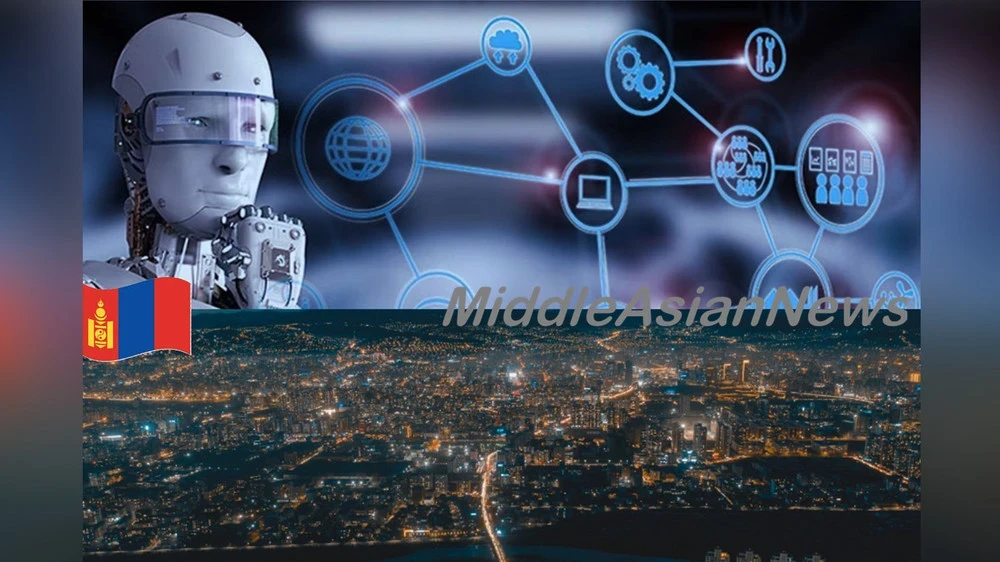
According to GovInsider, Mongolia is implementing digitalization as part of its "Vision 2050" strategy, aimed at improving the country's socio-economic development by combining regional leadership with the preservation of cultural heritage and ecology.
This country, with its impressive natural landscapes, including the Gobi Desert and diverse wildlife, is the largest landlocked state in the world, with an area four times larger than Germany. Mongolia shares borders with two of the world's strongest powers—Russia and China—and has a population of only 3.5 million people.
In May 2020, the Great State Khural of Mongolia adopted the strategic document "Vision 2050," which aims to elevate the country to a new level, making it a regional power with a high-income level by the specified deadline.
In an interview with GovInsider, Ariunbold Shagdar, Director of the Census and Data Analysis Department of the National Statistical Office of Mongolia (NSO), noted that one of Mongolia's main goals is to achieve the status of a regional leader in socio-economic development by 2050, while emphasizing the importance of preserving national identity and ecology.
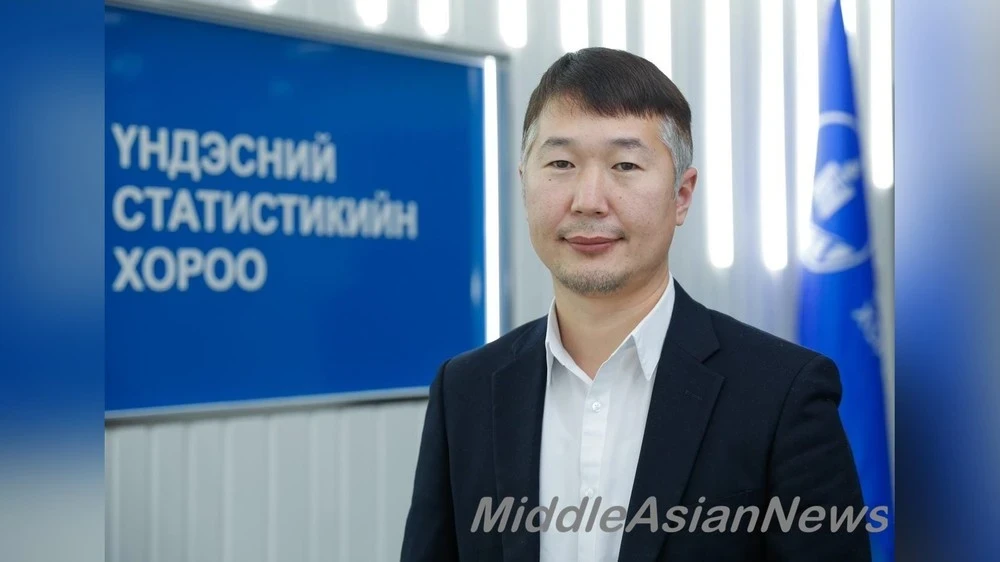
Ariunbold Shagdar also spoke at the 2026 Innovation Festival organized by GovInsider.
The main goal of "Vision 2050" is to use digitalization and data to diversify Mongolia's economy, reducing dependence on the mining sector.
Additionally, it aims to create more convenient living conditions for citizens by developing digital government services through the E-Mongolia platform, he adds.
According to Ariunbold, the NSO plays a key role in data-driven decision-making in Mongolia.
DIGITAL ROADMAP
Ariunbold describes the country's digital roadmap as consisting of three phases.
"By 2030, we will focus on creating a legal framework and security system for digital government," he says.
"The next phase, until 2040, will involve integration, where we will apply innovations in information and communication technology (ICT) across all sectors of the economy to enhance productivity."
"By 2050, we hope to create a fully human-centered digital government that ensures transparency and effective governance," adds Ariunbold.
He views this transition as the final stage of a century-long progress that began with the establishment of the NSO in 1924.
Ariunbold explains that the scientific foundation was laid in the 1960s, and the transition to a market system occurred in the 1990s.
DATA-DRIVEN MANAGEMENT
"Mongolia has made significant progress in data-driven management," asserts Ariunbold, emphasizing that the country now views data as a strategic asset, alongside leaders like Estonia, Canada, and the USA.
He mentions the NSO's collaboration with the Ministry of Digital Development and Communications since May 2024 to implement integrated government and metadata.
"This has created an ecosystem where the government, businesses, and citizens can access quality data for research and policy development," he reports.
Since 2020, the NSO has abandoned traditional data collection methods and transitioned to more efficient registry-based processes.
"For the 2025 mid-census, we combined 30 databases from 14 different government agencies, verifying data for 570,000 households using digital systems," shares Ariunbold.
Next year, the NSO plans to conduct the 2026 census using "mixed methods," where more than half of the data will be obtained from administrative records.
"Our goal is to create an e-government ecosystem where data is not only collected but actively used to improve the quality of life for citizens," he concludes.
INTEGRATION OF BIG DATA
Ariunbold also reports on the NSO's collaboration with the UN Global Platform to integrate big data into official statistics.
"We are moving from an 'analog' to a 'digital' future, relying on three main aspects: human potential, technical infrastructure, and data security," he adds.
He emphasizes the importance of integrating big data, as traditional agricultural data collection poses a complex challenge.
Currently, 17,700 businesses and households fill out paper questionnaires nine times a year, complicating data processing.
With the help of the UN, the NSO has become a pioneer in using remote sensing to automate data collection.
Ariunbold states that during the 2022 agricultural census, the NSO collected data to train machine learning (ML) models.
Now, the NSO uses the Spectral Angle Mapper (SAM) method to classify crops, applying satellite imagery and data obtained from drones.
After identifying the type of crop, the NSO uses a random forest algorithm to estimate yields. "This allows us to identify crops like wheat and potatoes from satellite images and drone data," he adds.
In 2024, the NSO, in collaboration with the "Partnership in Statistics for Development in the 21st Century" (PARIS21), launched a pilot project in the Arkhangai aimag, achieving an accuracy of 81.63% in identifying livestock and 98.11% in identifying traditional Mongolian dwellings, gers.
USING AI IN DATA COLLECTION
Last year, the NSO conducted pilot testing of an AI-based application for counting sheep and goats from video footage during grazing.
Ariunbold notes that despite promising results, "we realistically assess the complexities; obtaining high-resolution images and working with drones requires significant costs and skills."
According to him, Mongolia continues to invest in training specialists in image processing and AI to ensure sustainable management of these technologies.
Additionally, Ariunbold's agency is working with the ministries of food, agriculture, and light industry to create an open-source system for scaling remote sensing across the country.
Ariunbold emphasizes that international cooperation is key to Mongolia's digitization process. In 2025, Mongolia was elected to the board of the UN Statistical Institute for Asia and the Pacific (SIAP).
"Our chairman is also a member of the Executive Committee of PARIS21 and the Board of Directors of the Association of Directors of National Censuses and Statistics of the Americas, Asia, and the Pacific (ANCSDAAP)," he adds.
These positions allow Mongolia not only to follow global data standards but also to shape them.
"Our data is the main testimony of our progress," he concludes, noting that by adhering to national quality frameworks set by the UN, Mongolia has achieved high international ratings.
In the Open Data Inventory (ODIN) ranking, Mongolia ranks 11th in the world and second in East Asia in terms of data openness.
According to the World Bank, in 2024, Mongolia climbed five positions to 47th place in the Statistical Performance Index.
"These achievements confirm that the Mongolian National Statistical Office is a world-class institution providing high-quality and transparent data that meets international standards," notes Ariunbold Shagdar.
Author: Amit Roy Choudhury
Translation: MiddleAsianNews