The authoritative American publication The Diplomat discusses the possibility of Mongolia adopting Kazakhstan's experience in uranium mining. Find out why Kazakhstan's experience may be important for Mongolia.
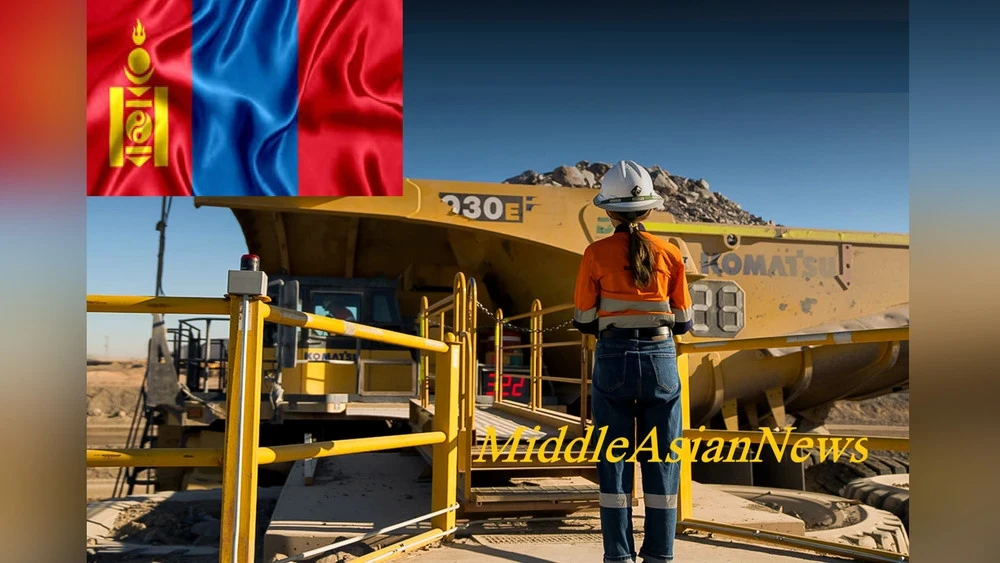
Mongolia is actively striving to develop its resources in critically important minerals to expand the horizons of its mining industry. However, the pace of this process remains quite slow.
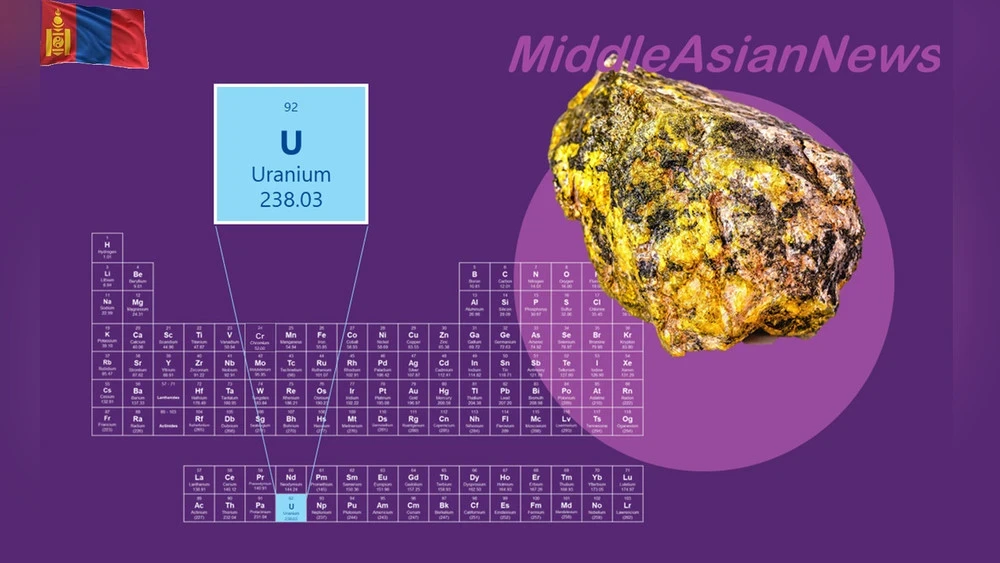
For a long time, Mongolia's economy has been heavily dependent on natural resources. Although the country produces various minerals, including copper, iron ore, and coal, recent attention has particularly focused on uranium and other important minerals. Against the backdrop of global competition for uranium and rare earth elements, which provide strategic advantages, Mongolia's mining sector finds itself in a challenging situation.
The Mongolian government intends to utilize its uranium reserves not only to expand production but also to attract foreign investment. In this context, Ulaanbaatar may look to the experience of its international partners, including Kazakhstan.
According to forecasts from the World Nuclear Association, global nuclear energy consumption, in which uranium plays a key role, is expected to increase by 30% by 2030 and may double by 2040. This growth is primarily linked to countries' efforts to combat climate change and investments in artificial intelligence and data centers. However, uranium supplies are not keeping pace with the growing demand, raising concerns about their long-term availability.
Australia, Kazakhstan, and Canada lead the global uranium market, while the largest consumers are the USA, Russia, China, and France. In the face of growing competition, new and reliable suppliers are actively sought, and Mongolia could carve out its niche.
According to the Mongolian Mineral Resources, Oil, and Gas Authority, the country's uranium reserves amount to about 190,000 tons, which is approximately 3% of global reserves. Mongolia has 13 uranium deposits, and several mining licenses are held by foreign companies.
Moreover, the government actively supports geological exploration both domestically and internationally, and estimates suggest that total uranium reserves could reach 1.5 million tons.
Despite the existing reserves, Mongolia faces difficulties in transitioning to stable mass uranium production. There are several reasons for this.
The legal framework for uranium mining was established in 2009 with the adoption of the State Policy on Nuclear Energy and the corresponding Law on Atomic Energy.
The 2009 law operates alongside the mining laws enacted in 2006. According to these laws, both local and foreign companies face numerous regulatory and licensing challenges.
From 2006 to 2025, frequent changes in legislation, including over a dozen amendments to the Law on Atomic Energy and numerous amendments to the Mining Law, have created an atmosphere of instability.
Meanwhile, Kazakhstan has chosen a different path, allowing it to achieve significant success. Mongolia could learn from this experience.
KAZAKHSTAN'S SUCCESSES IN URANIUM MINING
In the early 1990s, the French state company Orano began operations in both Mongolia and Kazakhstan, but their trajectories differed significantly. In Kazakhstan, the joint venture KATCO, established by Orano and the national company Kazatomprom, successfully transitioned from exploration to production and began uranium production in 2006. Since then, the plant has produced over 46,000 tons of uranium, with an annual capacity of about 4,000 tons, accounting for approximately 7% of global production.
Today, Kazakhstan holds a leading position in the global uranium market, providing over 40% of its production. Despite a slowdown in production rates in recent years, consistent government actions, technological leadership, particularly in in-situ leaching, and recent legal reforms have allowed the country to increase state ownership to 90% when extending contracts, strengthening its position as a reliable supplier.
In Mongolia, cooperation with Orano did not yield immediate results. The process of exploration, licensing, and feasibility studies took over 20 years. Significant progress was made after high-level diplomatic meetings in 2023 and 2024, when Mongolia and Orano signed a major investment agreement worth about $1.6 billion for the development of the Zöevch-Ovoo deposit. Production is expected to begin in 2028, and to date, Orano has already invested about $250 million in pilot projects and the development of the local sector.
Estimates suggest that the Zöevch-Ovoo deposit contains about 90,000 tons of uranium, making it one of the largest undeveloped deposits in the world. When fully operational, the plant is expected to produce about 2,750 tons of uranium per year, which would account for about 4% of global production. This project is seen as an important step toward restoring foreign investors' trust in Mongolia's mining sector, especially in uranium.
However, the local population in Mongolia expresses mixed feelings about uranium development. Public concern focuses on environmental and health risks, including the possibility of radioactive exposure, water pollution, and the generation of toxic waste. Reports of mutations in livestock and deteriorating environmental conditions intensify domestic resistance. Nevertheless, international experience shows that radiation exposure levels during uranium mining are generally lower than in many medical procedures when mandatory safety standards are followed.
The geological conditions in Mongolia are well-suited for in-situ leaching, and it is estimated that up to two-thirds of known resources can be extracted using this method. If implemented correctly, this method could help address issues concerning the population, such as protecting water bodies and land use for livestock grazing. The strategic partnership with Kazakhstan until 2024 provides Mongolia with the opportunity to adopt new approaches and practices.
THE IMPORTANCE OF MONGOLIA'S MINING SECTOR
The mining sector in Mongolia, particularly in uranium and critically important minerals, holds strategic significance for Ulaanbaatar's international partners seeking to ensure reliable resource supply chains. Mongolia could start by cooperating with its closest neighbors.
It is forecasted that by 2030, China will increase its demand for uranium, which will constitute a significant share of global consumption. Mongolia, already a major exporter of coal and copper to China, could add uranium to its export portfolio by leveraging its geographical proximity and existing trade infrastructure.
Russia, playing an important role in the global nuclear industry, has also shown interest in deepening cooperation with Mongolia. In 2023, the Russian corporation Rosatom signed a memorandum on the possibility of constructing a small nuclear power plant in Mongolia and opened an office in Ulaanbaatar. The new city of Kharkhorum could become the first in the country to host a nuclear power station.
In addition to its neighbors, other countries such as France, Canada, Japan, South Korea, the Czech Republic, the UK, and the USA have also shown interest in Mongolia's uranium sector.
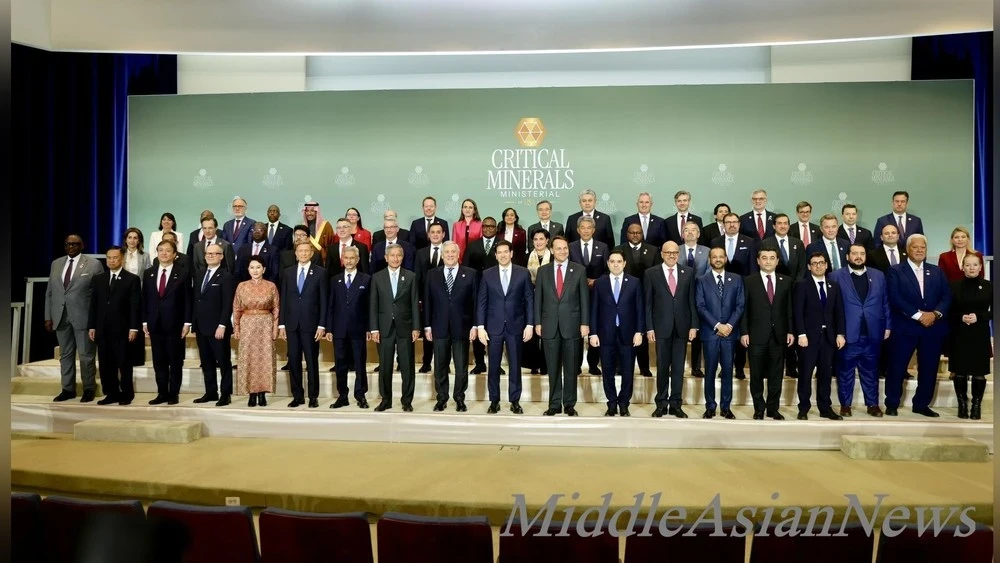
In January 2026, Mongolia joined the Critical Minerals Development Initiative initiated by the USA, along with 50 other countries, aiming to attract American investments in these sectors. In 2025, the US Geological Survey included uranium on its list of critical minerals. A survey conducted by the Center for Strategic and International Studies in January 2026 indicated that key minerals would become the core of economic competition between China and the USA, placing Mongolia at the center of these processes.
Mongolia has its reasons to emphasize critically important minerals. Given the global shift away from coal, the country needs to diversify its resource economy.
The government of Lkhagvasuren Zandanshatar has signed a new memorandum of understanding with four private mining companies, under which 60% of strategic revenues from mining will be transferred to the population through a new Sovereign Wealth Fund. These measures, along with effective governance and increased transparency, could create a solid foundation for a mature mining sector in Mongolia and help attract investments. Stable uranium supplies could also facilitate the development of the domestic nuclear sector.
Responsible development of uranium deposits and critically important minerals paves the way for sustainable growth, strengthens energy diplomacy, and allows Mongolia to restructure its resource supply chains, starting with neighboring countries in Northeast Asia.
Author: Bolor Lkhaajav — a researcher specializing in Mongolia, China, Russia, Japan, East Asia, and America. She holds a master's degree in Asian Pacific Studies from the University of San Francisco.
Co-author: Anar Gankhuuyag — a senior analyst in the mining sector specializing in project performance management. His research interests include sustainable development, integrating sustainability principles into project planning, and long-term resource management.
Translation by: MiddleAsianNews
Source: The Diplomat