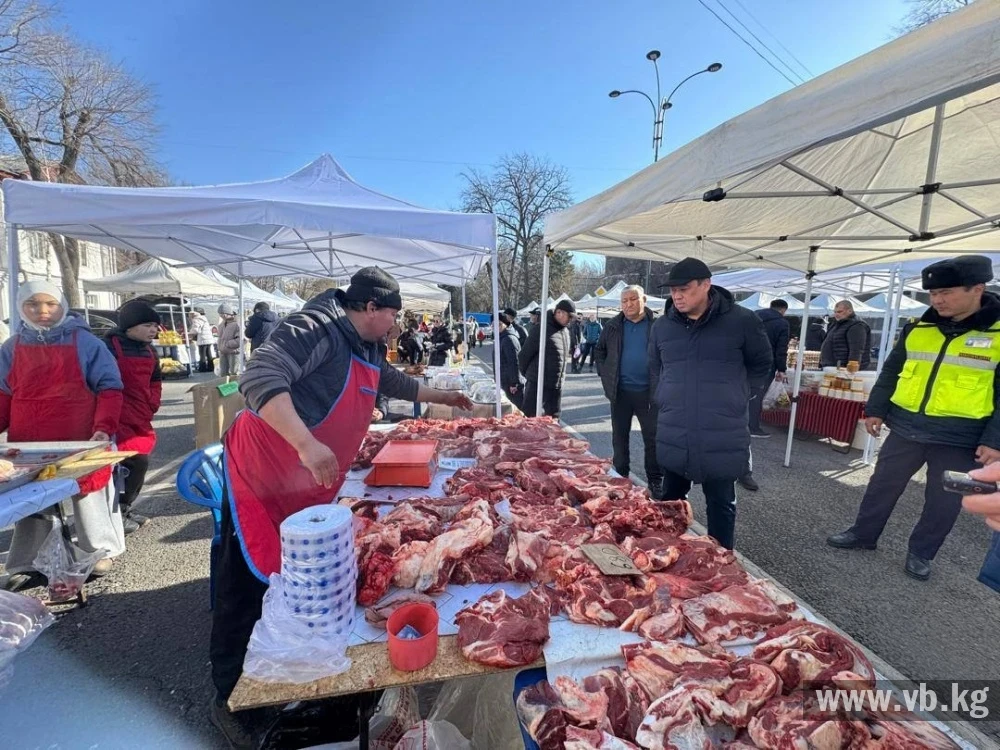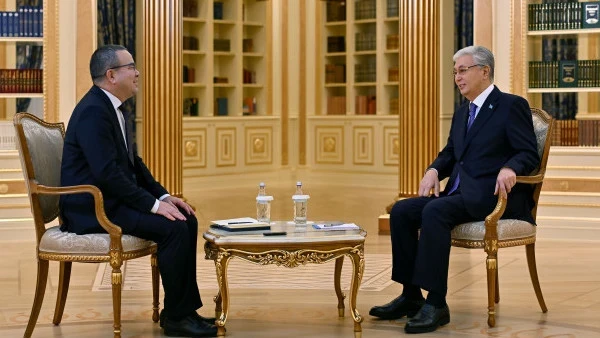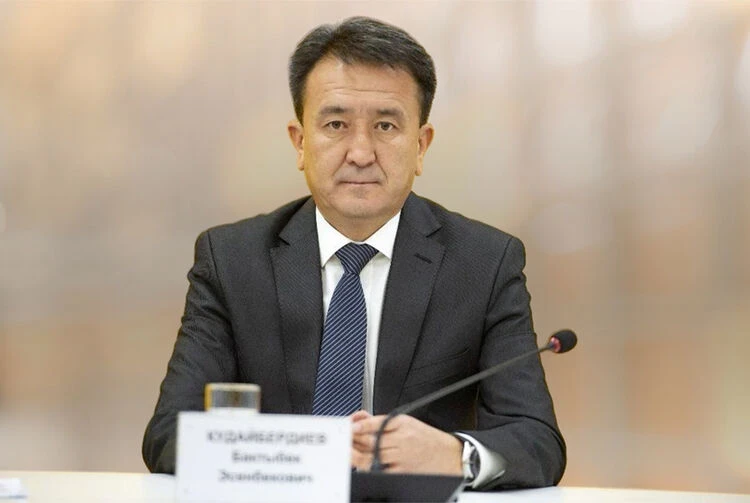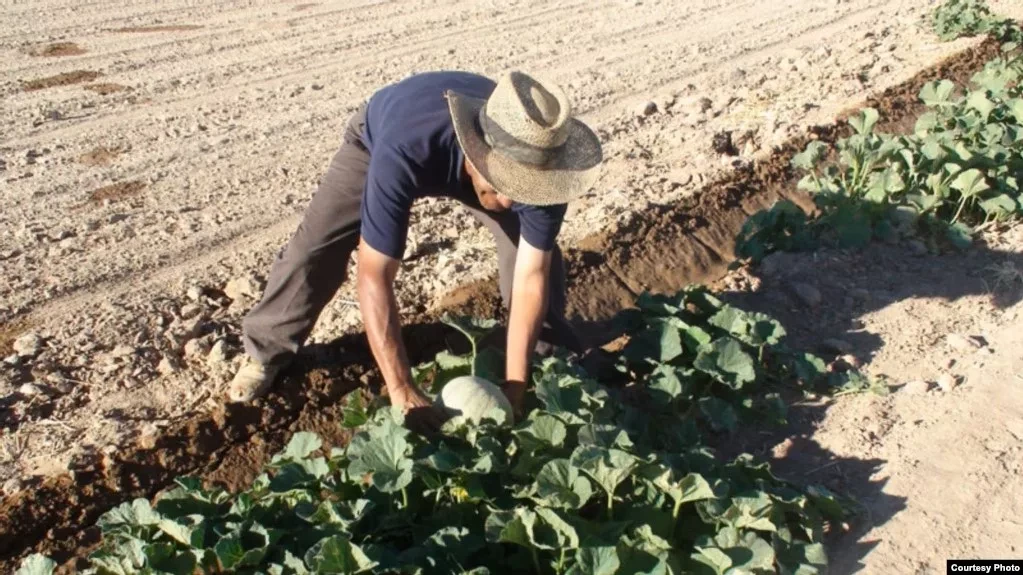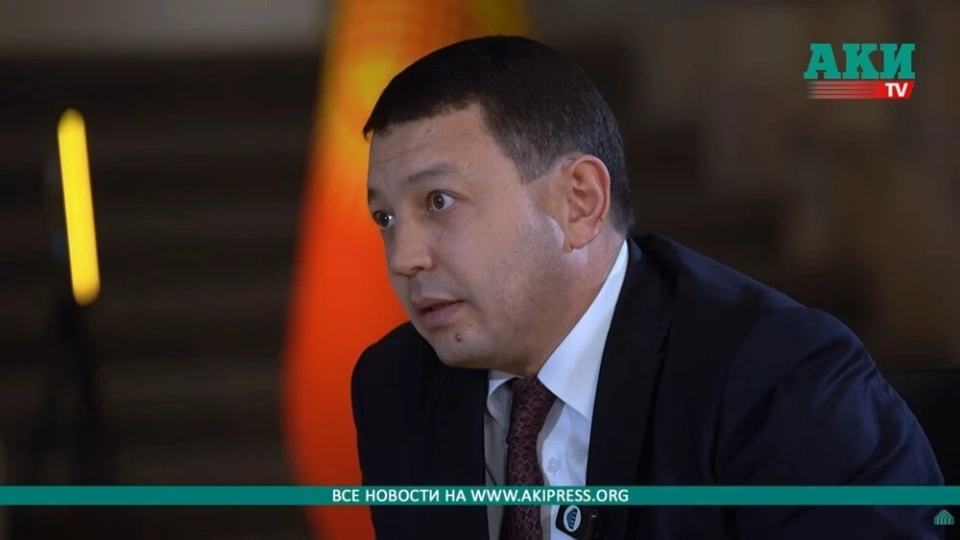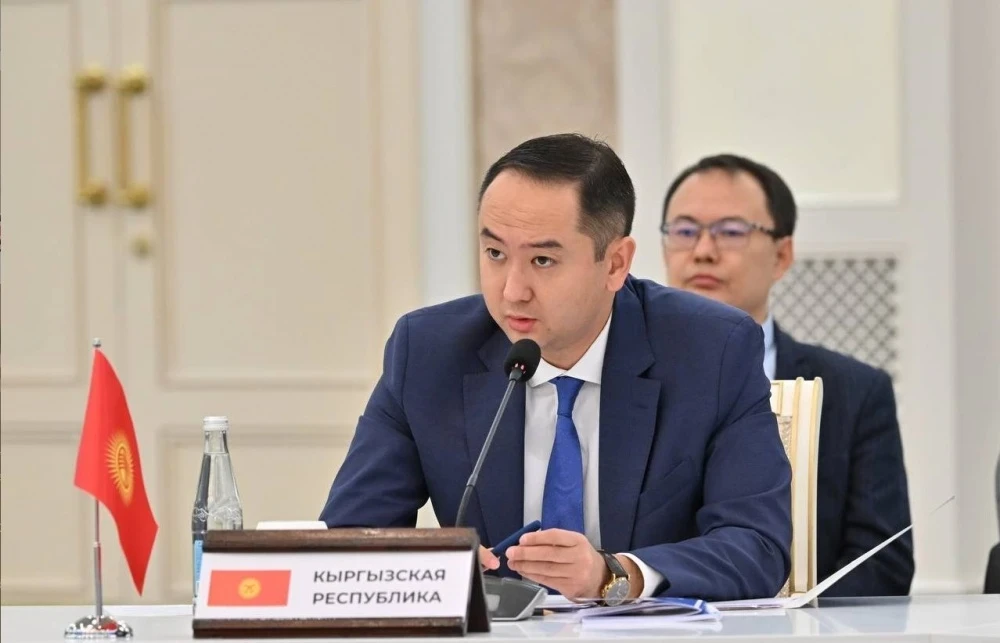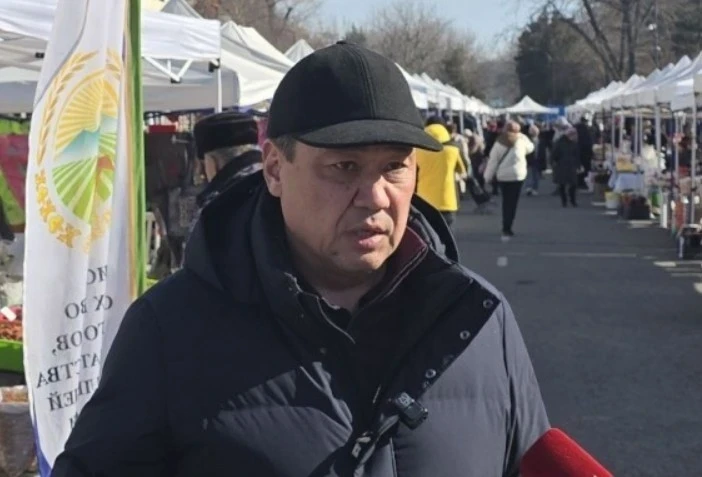
During the farmers' fair at the Turdakun Usubaliev Square in Bishkek, the Minister of Water Resources, Agriculture, and Processing Industry, Bakyt Torobaev, gave an interview to a correspondent from VB.KG. The main focus was on poultry production, which is considered a socially significant and in-demand product among the population.
- What is the current situation with poultry production in Kyrgyzstan? Are there plans to reduce dependence on imports?
- At the moment, we are facing a shortage of poultry, providing ourselves with only 30-35% through local production. However, if we look back three years ago, when this figure was only 10%, we can see positive dynamics. We have set ourselves the goal of achieving 80% domestic chicken supply for the internal market by 2030. As you can see, the trend towards growth is already evident.
As for eggs, we have completely closed the deficit and even reached an export level.
Currently, we are applying similar measures in poultry production: we are providing preferential loans and assisting with feed. We have also organized cooperation between farmers and processors. The process has already intensified: processors are placing advance orders for raw materials, sometimes even paying for them in advance, so that farmers can grow the necessary amount of products.
Import substitution is another important aspect. Previously, we imported about 60,000 tons of poultry from China. Today, thanks to the increase in domestic production, the volume of imports has decreased by 10,000 tons. We plan to reduce these purchases by 5-10 thousand tons annually, which will allow us to fully supply the domestic market with locally produced products.
- Poultry is considered a social product. Does this mean it should become more affordable?
- Yes, we aim for the price of poultry not to exceed 250 soms per kilogram. Nowadays, there is a growing interest in healthy eating and white meat. Increasing the supply in the market will play a key role in reducing and stabilizing prices.
- Will the support measures, loans, and assistance with feed be available only to large companies or also to small producers and cooperatives? For example, ordinary farmers participating in the fair?
- These measures are intended for everyone, including both large enterprises and small agricultural producers.