Reasons and Impact on Prices
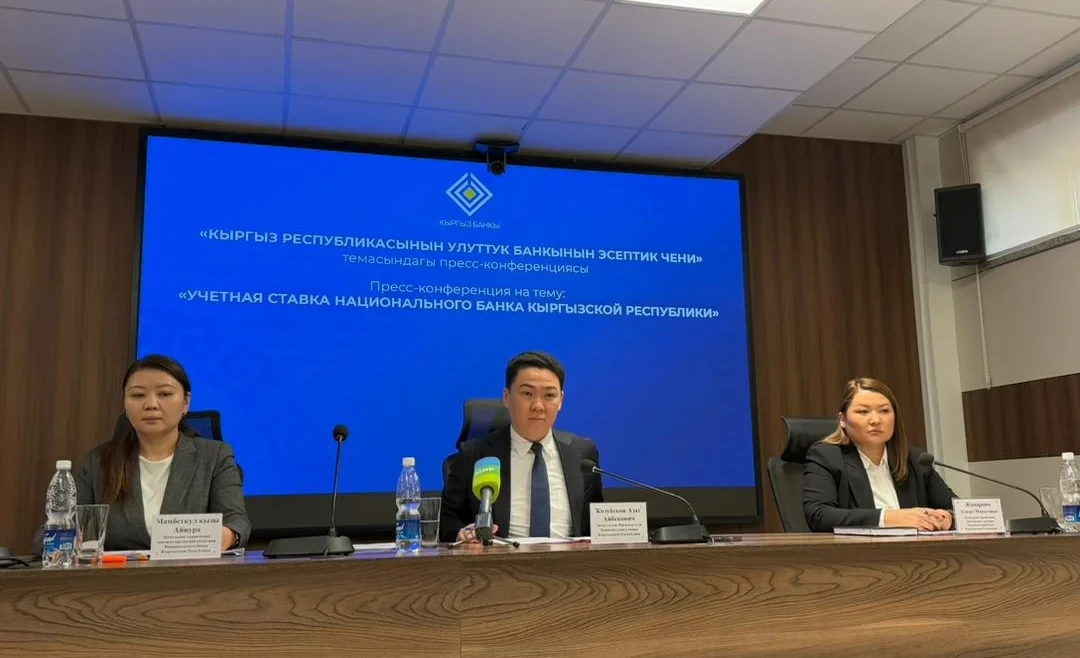
The National Bank noted that the current external economic situation is unstable and filled with uncertainty. There is a slowdown in the growth of food prices in global markets; however, inflation in Kyrgyzstan's partner countries remains at a high level.
Information from 24.kg
The key interest rate is the main tool of monetary policy that determines the cost of short-term borrowing for banks. It significantly affects the lending conditions for both businesses and individuals.
Given the high share of imports in the consumer basket, domestic prices remain susceptible to changes in the external environment. The prospects for price dynamics depend on the stability of global trade chains, which are exposed to risks due to geopolitical tensions and economic fragmentation. Therefore, careful monetary policy management is necessary to maintain price stability in the country, the National Bank explained.
As of February 13, 2026, inflation in Kyrgyzstan was 1.8 percent (year-on-year — 9.6 percent).
NB KR
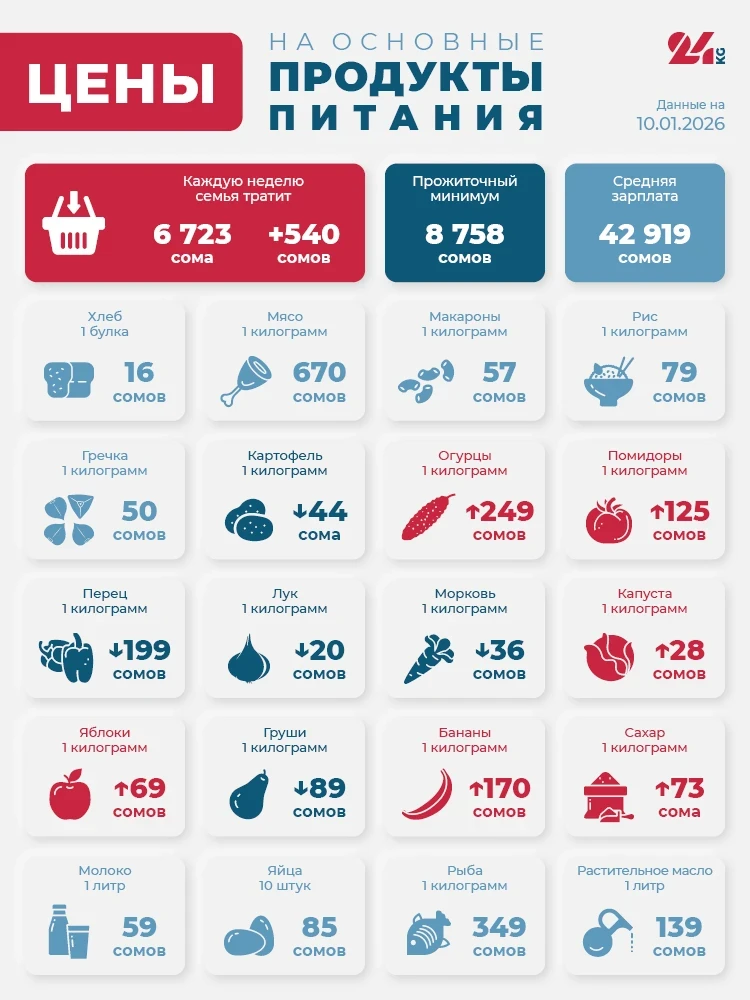
Food prices are rising moderately due to the stabilization of prices for certain goods; however, significant inflation is observed in the services and non-food sectors, which is related to both external factors and domestic demand, the NB KR reported.
State of the Economy and Population Income
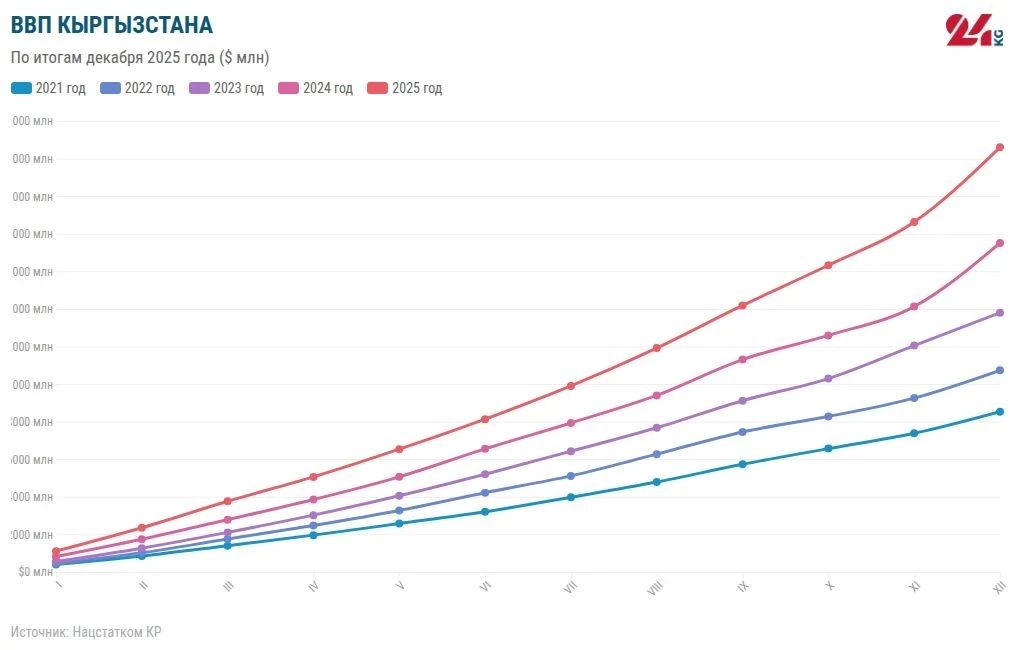
According to the National Bank, the country's economy is demonstrating high growth rates. In January 2026, real GDP increased by 9 percent, and activity in the services and construction sectors continues to grow. Investments in fixed capital remain at a high level, contributing to the development of infrastructure projects.
The growth of real incomes and the increase in consumer lending support domestic demand, creating an inflationary impulse.
NB KR
Monetary conditions support the purchasing power of the national currency and create conditions for achieving price stability within the target range of 5-7 percent in the medium term. The interbank market demonstrates stability, and the BIR rate is near the lower boundary of the NB's interest corridor, indicating a balance between supply and demand for short-term resources amid excess liquidity in the banking system, the NB KR added.
State of the Currency Market and Banking Sector
The domestic currency market demonstrates stability. The National Bank conducts currency interventions only to smooth out sharp fluctuations in the exchange rate.
The banking sector shows resilience. In 2025, the volume of the deposit base grew by 46.2 percent, reaching 865.9 billion soms, indicating trust in the banking system and the population's desire to save. The loan portfolio of commercial banks increased by 48.8 percent to 507 billion soms, reflecting activity in the real sector of the economy, noted the NB KR.
On Inflation Prospects
The future of inflation will depend on the balance of external and internal factors. In the context of inflationary processes in the economy, including due to the expansion of fiscal impulse and growth in consumer demand, a tightening of monetary policy is necessary to create stable conditions for slowing inflation. In this regard, the NB's interest rate was increased to 12 percent, emphasized the NB KR.
The National Bank adheres to a balanced approach in its monetary policy and continues to analyze external and internal factors affecting inflation. In the event of risks to price stability, the regulator does not rule out the possibility of adjusting its policy, the National Bank added.
- The next meeting of the NB KR Board regarding the interest rate is scheduled for April 27, 2026.