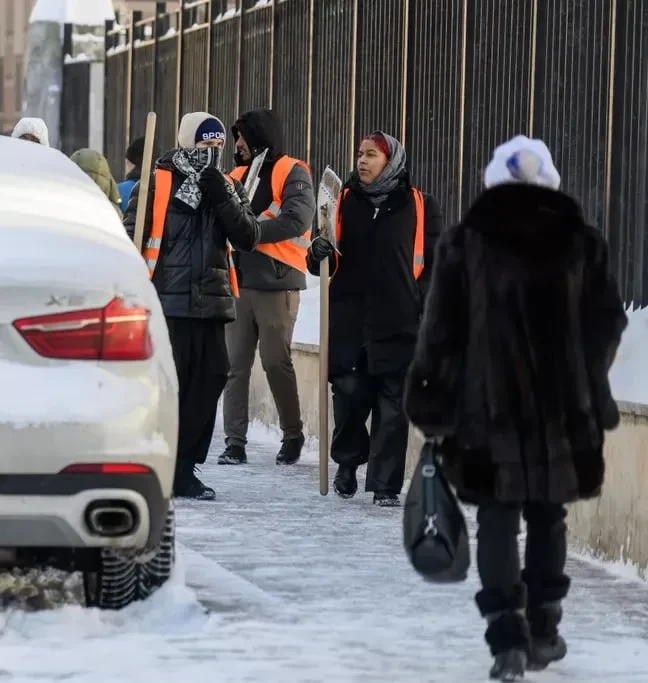
Dolores realizes that she attracts the attention of those around her. She prefers to hide her real name, as being an "illegal" she wants to avoid problems with the authorities. She and her compatriots arrived in Russia as tourists, and they are not allowed to work officially.
The 29-year-old woman shares her experiences: she has been threatened by police several times just for "not looking Russian." Racism is widespread in the country; for example, a taxi driver, upon seeing Cubans, jokes: "We already have blacks clearing snow." When asked who should do this work, he responds with silence.
According to official data, in 2024 Russia is facing a shortage of more than two million workers. Moscow Mayor Sergey Sobyanin recently stated that there is a deficit of up to 500,000 workers across all sectors.
The labor shortage has become a serious problem for the authorities. In the early years of the conflict in Ukraine, Russia could still boast of a historically low unemployment rate — just 2.2 percent. However, the country is becoming less attractive for labor migrants from the Muslim republics of Central Asia.
This trend is linked not only to the risk of conscription for war but also to the devaluation of the ruble. Compared to the dollar, migrant incomes have fallen by about a third.
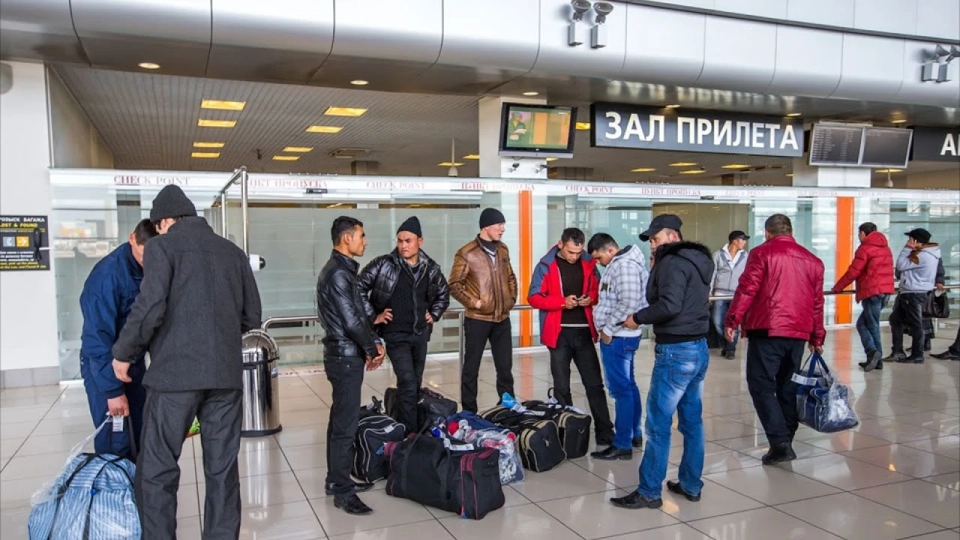
Detentions of Uzbeks, Tajiks, and Kyrgyz have become commonplace. These groups of migrants number over three million and are engaged in construction, restaurant work, and courier services.
Since 2024, the rules for registering migrants have tightened: the police can deport people without a court decision, and a register of "illegals" has been introduced, which restricts access to bank accounts. It is often unclear what criteria people are placed on this list, including foreigners with valid documents.
This winter, Moscow particularly needs workers like Dolores, as the city faced the heaviest snowfall in over 200 years at the end of January. With temperatures around minus 15 degrees, the streets must be cleared manually and with machinery.
Cubans in Russia seem to be received with a certain tolerance. They can visit the country without a visa as tourists. The ties between Moscow and Cuba, which has remained loyal to socialist ideals, have been strong since the Soviet era, when Russia regularly supported this ally financially and politically. Nevertheless, Cubans still face discrimination.
For their snow-clearing work, they earn 3,000 rubles a day (about 45 dollars), and in some cases even more. Work indoors or transporting goods is paid significantly less — about 2,000 rubles a day.
On this January day, Dolores hopes to earn 3,500 rubles for snow removal. For her, this is a significant amount, especially considering that in Cuba she sometimes earned only 40 dollars a month.
Four Cubans who managed to speak with confirm that in Moscow they can earn more in one day than at home in a month. In Cuba, they face constant power outages and internet disruptions.
Gabriel, a native of Havana, has been living in Moscow for a year. The 32-year-old man works every day but still hasn’t gotten used to the cold. In Havana, temperatures do not drop below 16 degrees, which is 30 degrees warmer than in Moscow. He covers his face with a raised scarf.
Gabriel has boots, while many other Cubans only have sneakers. He works up to 12 hours a day, including a one-hour lunch break, for his one-year-old son and sick mother in Cuba.
The exact number of Cubans in Russia is unknown; according to media reports, there are several thousand legally, with illegals like Gabriel and Dolores added to that. The Facebook group "Cubans in Moscow" has 14,000 members. Most of them know only a few words in Russian.
The prospects for Cubans to obtain work permits, unlike Indians, whom Russia plans to attract in the tens of thousands, are extremely slim. "We are at the very bottom," says Dolores.
A Cuban with legal documents helped her find work, receiving a task from an Uzbek hired by the city administration. This is confirmed by other Cubans who enter the local administration to warm up.
"Work, work, sleep, work, work" — this is how the Cubans interviewed by SPIEGEL describe their lives in Moscow. They try not to attract attention and go outside as little as possible.