This article is a translation of material from a BBC correspondent. The full text is available here.
For many years, the Chinese authorities have faced criticism for their repressive policies aimed at assimilating ethnic minorities into the dominant Han culture.
Soon, a new law, which is expected to be approved at the annual session of parliament, will enshrine and strengthen this process, raising concerns among human rights defenders about further deterioration of minority rights and their way of life.
The Chinese authorities justify these measures by claiming they are necessary for achieving "modernization through unity" and refer to the law as "on promoting national cohesion and progress."
According to the new law, the status of other languages is diminished in favor of Mandarin; marriages between Han individuals and ethnic minorities are encouraged, while any attempts to restrict such unions are prohibited; parents will be required to "raise minors with love for the Communist Party of China"; and actions that may threaten "ethnic unity" are generally prohibited.
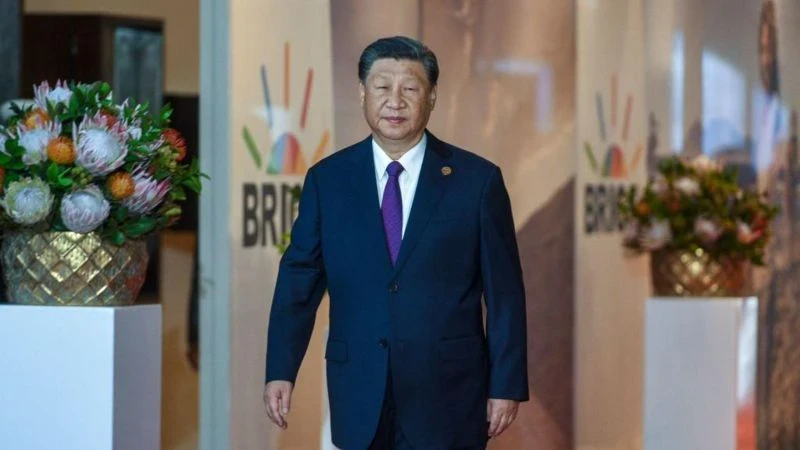
Xi Jinping, the Chairman of the People's Republic of China, has repeatedly emphasized the need for "Sinicization of religion," demanding that religious practices conform to Chinese cultural and social values. Experts view this law as a continuation of policies that have already become central to his administration.
“The regime asserts that everything done previously was correct, and now they are elevating their past political decisions to the level of fundamental law,” comments Aaron Glaser from the University of Pennsylvania.
In China, 55 ethnic minorities are officially registered, with populations ranging from tens of thousands to millions.
However, some groups, such as the Uyghurs and Tibetans, cause particular concern for Beijing: the highest number of human rights violations allegations are associated with the Xinjiang and Tibet regions.
The desire to punish any discussions of independence is perceived by the Communist Party as a more effective method than granting autonomy, which could motivate minorities to remain part of China.
In the months leading up to the 2008 Olympics, unrest erupted in Tibet, led by monks, resulting in authorities brutally suppressing the protests, with an official report of 22 dead, although Tibetan organizations in exile estimate the death toll at 200.
The following year, clashes occurred in Urumqi, the capital of Xinjiang, between Han and Uyghurs, resulting in nearly 200 deaths.
In 2013, Uyghur separatists were killed after attempting to attack Tiananmen Square, and in 2014, another group attacked passersby in Yunnan.
Beijing claims that strict measures against ethnic minorities are justified by these violent actions.
Meanwhile, the UN and human rights organizations report that over a million Uyghurs have been forcibly placed in camps, which Chinese authorities refer to as "re-education and vocational training centers." There are also reports of mosque closures and restrictions on Uyghur religious practices.
In Tibet, monasteries, once centers of power, are now under strict control. All children under 18 are required to be educated in Mandarin in state institutions and cannot read Buddhist texts. This has dealt a severe blow to the community, where traditionally children were educated in monasteries.
Recent unrest is also linked to restrictions on the teaching of the Mongolian language in Inner Mongolia and directives from authorities regarding the demolition of mosques for Hui Muslims in Ningxia.
Analysts suggest that in light of potential sources of instability, the authorities may have deemed it necessary to adopt a new law that will limit existing legal guarantees of minority rights.
Furthermore, this law provides the state with additional tools to control strategically important regions that play a key role in trade with neighboring countries.
In analyzing the upcoming law, the China Power project references Mao Zedong's words: "China has vast territory and rich resources, yet the main population consists of Han, while minorities own the natural resources."
Although Uyghurs and other minorities number in the millions, their population is significantly smaller compared to the Han, who make up over 90% of the country's population.
Nevertheless, the territories populated by Tibetans, Uyghurs, and Mongols are extensive, rich in minerals, and play an important role in agriculture, occupying a significant part of the country.
These peoples have had periods of independence from China, live in border regions, speak their languages, and use their own writing systems.
Throughout history, they have attempted to assert their cultural identity, resisting Beijing's control, albeit unsuccessfully, and their diasporas abroad are staunch critics of the Chinese regime.
While the Chinese party can enact any laws, the new law on "ethnic unity" simplifies the implementation of already existing policies, providing officials with clearer instructions.
For many years, the authorities have encouraged the migration of Han people to Tibet and Xinjiang, which critics view as an attempt to demographically displace local minorities. As a result, the capitals of these regions—Lhasa and Urumqi—have experienced a significant cultural influx of Han civilization.
Moreover, the government promotes interethnic marriages, especially between Uyghurs and Han, which is also seen as an attempt at assimilation. The new law now regulates this aspect as well.
“Although the law does not contain direct indications to encourage interethnic marriages, it states that no one has the right to interfere with the freedom of partner choice based on religious or ethnic affiliation,” explains Glaser.
He gives the example of a local official who faces religious resistance when organizing a marriage between a Han man and a woman from a minority.
“Imagine an official whose main task is to avoid problems to get a promotion. He might try to resolve the situation in such a way that pressure is applied to the parties and the marriage does not take place. The new law complicates such approaches and increases the likelihood that parents or religious leaders will not be able to prevent such unions,” adds Glaser.
In 2026, it will be nearly impossible to interview Uyghurs, Tibetans, or Mongols in China to learn their opinions on the new law. Any criticism of state policy could lead to imprisonment on charges of separatism.
Nevertheless, groups outside China advocating for the rights of these peoples are already expressing their concerns.
By limiting education in minority languages, the new law ensures that “Uyghurs, Tibetans, and Mongols will no longer be able to use their native languages to study subjects in educational institutions. They will be forced to learn in Mandarin—as part of the ongoing campaign by the Communist Party for assimilation,” reports the organization Campaign for Uyghurs.
According to Phayul, an English-language publication supported by Tibetans in exile, “critics see this law as another stage in the accelerated campaign for ‘Sinicization’ led by Xi Jinping.”
Thus, the Communist Party agrees with activists and critics that this law is aimed at assimilation, but the authorities view this process as positive.
The law “is aimed at ensuring comprehensive party guidance on ethnic policy, strengthening the sense of community of the Chinese nation, and supporting ethnic minorities in integrating into the overall development of the country,” stated a representative of the National People's Congress, Lou Qingjiang.
The Party has long claimed that the Han majority is at a higher stage of modernization compared to other ethnic groups, implying that minorities are more backward.
According to Glaser, this also creates difficulties for the central government when working with local officials who sometimes think: “We made the revolution, and now everyone should speak Mandarin. There’s no need to respect their ‘backward’ traditions; we are all modern now.”
In the past, such attitudes have led local officials to force Muslims to eat pork or fail to provide halal food for Muslim workers.
Beijing seeks to avoid conflicts of this nature. However, in some regions, it has been difficult to convey this position to local party cadres, and the new law may standardize the actions of the authorities.
Human rights organizations believe that the new law is more of a political declaration than a tool for prosecuting violators.
“It formalizes the ideological framework related to the ‘common consciousness of the Chinese nation’ in the spheres of education, religion, culture, and media, prescribing the integration of this ideology into planning and economic development,” says Yalkun Uluyol, a researcher at the human rights organization Human Rights Watch.
Experts believe that Beijing does not need a new law to demonstrate its power, but it signals the direction Xi Jinping intends to lead the country in the future.
The record "The New Law on 'Ethnic Unity' in China: What Does It Mean for Minority Control?" first appeared on K-News.