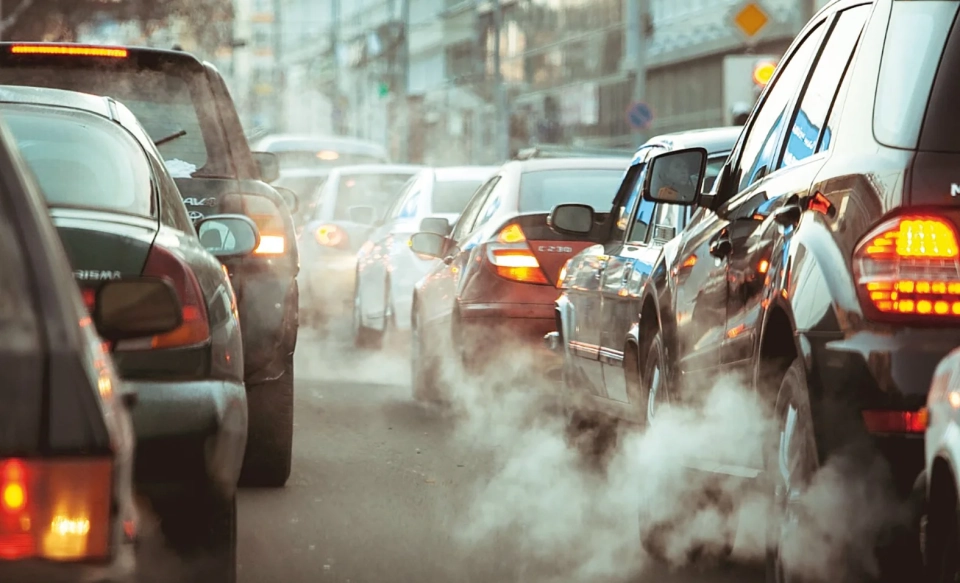
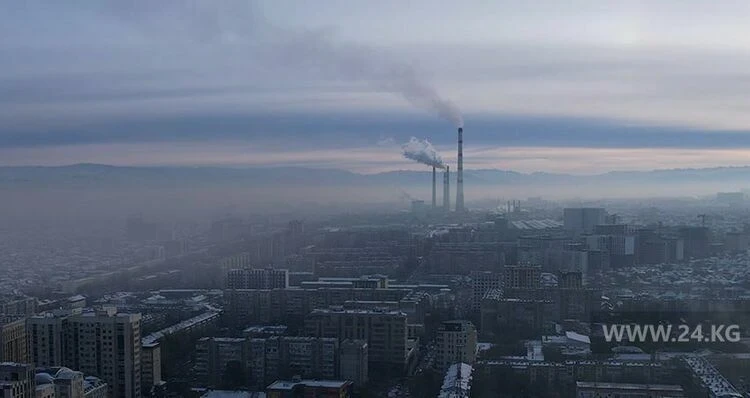
In the justification report, it is stated that currently, there is no regulatory act in the Kyrgyz Republic that regulates the procedure for state control over the protection of the atmospheric air from pollutant emissions related to motor vehicles and other mobile means, which corresponds to the specifics of the country.
The development of this project is aimed at fulfilling the requirements of the technical regulation of the Customs Union TR TS 018/2011 "On the Safety of Wheeled Vehicles," concerning the establishment and compliance with mandatory requirements for vehicles that are in operation.
The procedure will apply to all motor vehicles and other mobile means with internal combustion engines, including hybrid systems, that are used in the territory of the Kyrgyz Republic.
According to the new regulation, control over emissions will be carried out by the authorized body responsible for environmental protection within its competence.
Drivers will be required to stop their vehicles at the request of employees of the bodies responsible for road safety.
During raid inspections on the roads and at checkpoints, selective control will be conducted to identify vehicles with excessive emissions of smoke or toxic substances. After stopping, compliance with emission standards and toxicity levels will be checked.
Vehicles belonging to national security bodies, the Ministry of Internal Affairs, emergency services, the Ministry of Emergency Situations, military and diplomatic representatives, as well as taxis, passenger buses, and vehicles moving in convoys, are not subject to inspection.
Rules for State Control over Emissions of Pollutants from Mobile Sources in the Kyrgyz Republic
Draft
Chapter 1. General Provisions
1. This Procedure is developed based on the Code of the Kyrgyz Republic "On Offenses" No. 128 dated October 28, 2021, the Law on "Protection of Atmospheric Air" No. 51 dated June 12, 1999, the Law "On Environmental Protection" No. 53 dated June 16, 1999, and the resolution of the Cabinet of Ministers "On Approval of the Procedure for Conducting Technical Inspections of Vehicles" No. 350 dated July 12, 2023. It defines the mechanism for controlling and monitoring emissions of pollutants from motor vehicles in the country.
This Procedure covers all motor vehicles and mobile means with internal combustion engines, including hybrid systems, that are used in the Kyrgyz Republic.
2. The Procedure defines key terms and their meanings:
Gas analyzer - a device for continuous analysis of the chemical composition of exhaust gases.
Exhaust gases - a mixture of gases with suspended particles emitted from the engine cylinders.
Smoke density - an indicator characterizing the degree of light absorption by exhaust gases.
Toxicity of emissions - the ability of emissions to have a harmful effect on human health and the environment.
Free acceleration - the engine's acceleration from minimum to maximum revolutions at idle.
Maximum revolutions - the engine shaft rotation frequency at idle with the accelerator pedal fully pressed.
Effective base of the smoke meter - the thickness of the optically homogeneous layer of exhaust gases, equivalent in light flow attenuation.
Natural attenuation indicator - the value that is inversely proportional to the thickness of the layer of exhaust gases, through which light is attenuated by e times.
Light flow attenuation coefficient - the degree of light attenuation by exhaust gases as it passes through the smoke meter.
Chapter 2. Organization and Conduct of Raid Inspections of Motor Vehicles
3. State control over compliance with atmospheric air protection standards from emissions of motor vehicles and other mobile means is carried out by the authorized body within its competence.
4. According to the Traffic Rules, the driver of a mechanical vehicle is obliged to stop it at the request of law enforcement officers.
5. Raid inspections are selective checks of vehicles on the streets and at checkpoints aimed at identifying vehicles with high levels of emissions.
6. After stopping the vehicle, compliance with pollutant emission standards will be checked.
7. Vehicles belonging to national security, the Ministry of Internal Affairs, emergency services, as well as taxis and passenger buses are not subject to inspection.
Chapter 3. General Requirements for Emission Measurements
8. Measuring instruments used for control must be calibrated in accordance with established procedures and have a valid certificate.
The frequency of calibration is established according to technical documentation, taking into account legislative requirements.
9. Before starting control work, the inspector checks the seals and markings of the instruments. The use of uncalibrated devices is prohibited.
Chapter 3. General Requirements for Emission Measurements
10. Measurements are conducted under conditions that ensure the reliability of the results. Instrumental control is carried out outdoors or in rooms with effective ventilation.
The ambient temperature must be between +5 °C and +40 °C.
Before the first measurement, the equipment must be warmed up and calibrated.
11. When using gas analyzers, it is necessary to ensure that there are no leaks and that the probe is securely fixed in the exhaust pipe. Smoke meters must ensure the passage of the entire flow through the measuring chamber.
12. The mileage of the vehicle before measurement must be at least 3,000 kilometers. If the mileage is less, the inspection is not carried out.
13. People should not be in the exhaust gas discharge zone to prevent poisoning. During multiple measurements in enclosed spaces, respiratory protection equipment is required.
14. During measurements, the vehicle must be secured with the parking brake and put in neutral, and the driver must strictly follow the inspector's instructions.
15. At night, the measurement site must be illuminated according to the requirements.
16. After completing the work, the equipment must be turned off and transported in protective cases.
17. After documentary verification, the inspector begins instrumental control of exhaust gas emissions, including measuring the content of pollutants.
18. The inspector is not allowed to start the engine or operate the vehicle during the inspection. All control activities are carried out in accordance with established procedures.
19. The content of carbon monoxide and hydrocarbons in exhaust gases must not exceed established values.
20. The smoke density of emissions for vehicles running on diesel fuel must also comply with established standards.
21. The mileage of the vehicle before inspection must be at least 3,000 kilometers.
22. The exhaust system must be airtight and intact.
23. The ecological class of the vehicle is determined based on the country of manufacture and the year of production.
Chapter 4. Documentation of Inspection Results
24. During raid inspections, the measurement protocol may be combined with the protocol on administrative offenses.
25. When printing a receipt with results, it is attached to the protocol with the inspector's signature.
26. If during the inspection an exceedance of pollutant standards is detected, a protocol on the offense is drawn up.
27. In accordance with the Technical Regulation of the Customs Union, standards for the content of carbon monoxide and hydrocarbons are established for each vehicle.
Also, according to the Code of Offenses, each vehicle is considered a separate object of control, and the presence of a common owner is not a basis for combining facts of offenses.
Furthermore, a legal entity may be found guilty of an offense if an employee deliberately violates the law.
Appendix 1
To the Procedure for State Control over Emissions of Pollutants from Mobile Sources in the Kyrgyz Republic
Standards for the Content of Carbon Monoxide (CO) and Hydrocarbons (HC) in Exhaust Gases of Engines with Forced Ignition for Motor Vehicles Running on Gasoline and/or Gas Fuel
| Categories and Equipment of Vehicles | Engine Crankshaft Speed | CO, Volume Fraction, % | HC, Volume Fraction, million-1/ppm |
| M and N, not equipped with exhaust gas neutralization systems | minimum | 3.5 | 1200 |
| increased | 2.0 | 600 | |
| M and N, ecological class 2 and below, equipped with exhaust gas neutralization systems | minimum | 0.5 | 200 |
| increased | 0.3 | 200 | |
| M and N, ecological class 3 and above, equipped with exhaust gas neutralization systems | minimum | 0.3 | - |
| increased | 0.2 | - | |
| L, not equipped with exhaust gas neutralization systems | minimum | 4.5 | - |
Appendix 2
To the Procedure for State Control over Emissions of Pollutants from Mobile Sources in the Kyrgyz Republic
Standards for Smoke Density of Exhaust Gases for Motor Vehicles Equipped with Forced Ignition Engines
| Vehicle Category, Ecological Class | Engine Type | Smoke Density, Light Flow Absorption Coefficient (k), m-1 |
| M, N, ecological classes 3 and below: | Without turbocharging | 2.5 |
| With turbocharging | 3.0 | |
| M, N, ecological classes 4 and above | - | 1.5 |
Appendix 3
To the Procedure for State Control over Emissions of Pollutants from Mobile Sources in the Kyrgyz Republic
Conversion of values k to N (for smoke meter with L, equal to 0.43 m)
| k, m-1 N, % | 0.0 0.0 | 0.1 4 | 0.2 8 | 0.3 11 | 0.4 15 | 0.5 20 | 0.55 21 | 0.6 23 | 0.65 24 | |
| k, m-1 N, % | 0.7 26 | 0.75 28 | 0.8 29 | 0.85 31 | 0.9 32 | 0.95 34 | 1.0 35 | 1.05 36 | 1.1 38 | |
| k, m-1 N, % | 1.15 39 | 1.2 40 | 1.25 42 | 1.3 43 | 1.35 44 | 1.4 45 | 1.45 46 | 1.5 47 | 1.55 49 | |
| k, m-1 N, % | 1.6 50 | 1.65 51 | 1.7 52 | 1.75 53 | 1.8 54 | 1.85 55 | 1.9 56 | 1.95 57 | 2.0 58 | |
| k, m-1 N, % | 2.05 59 | 2.1 59.5 | 2.15 60 | 2.2 61 | 2.25 62 | 2.3 63 | 2.35 64 | 2.4 64.4 | 2.45 65 | |
| k, m-1 N, % | 2.5 66 | 2.55 67 | 2.6 67.3 | 2.65 68 | 2.7 69 | 2.75 69.3 | 2.8 70 | 2.85 71 | 2.9 71.3 | |
| k, m-1 N, % | 3.0 72.5 | 3.05 73 | 3.1 73.6 | 3.15 72 | 3.2 75 | 3.25 75.3 | 3.3 76 | 3.35 76.3 | 3.4 77 | |
| k, m-1 N, % | 3.45 77.3 | 3.5 78 | 3.55 78.3 | 3.6 79 | 3.65 79.2 | 3.7 80 | 3.75 80.1 | 3.8 80.5 | 3.85 81 | |
| k, m-1 N, % | 3.9 81.3 | 3.95 81.7 | 4.0 82 | 4.05 82.5 | 4.1 83 | 4.15 83.3 | 4.2 83.7 | 4.25 84 | ∞ 100 | |
| Appendix 4 To the Procedure for State Control over Emissions of Pollutants from Mobile Sources in the Kyrgyz Republic | ||||||||||
Ecological Classes of Motor Vehicles Depending on the Country of Manufacture and Year of Production
| Country of Manufacture of the Vehicle | Engine Type | Ecological Class | ||
| 3 | 4 | 5 and 6 | ||
| Year of Production | ||||
| CIS, Russia, Kyrgyzstan, Uzbekistan | With Forced Ignition | 2008 – 2012 | 2013 – 2015 | from 2016 |
| Diesel | 2008 – 2012 | 2013 – 2015 | from 2016 | |
| European Union (EU) Countries | With Forced Ignition | 2000 – 2004 | 2005 – 2009 | from 2010 |
| Diesel | 2000 – 2004 | 2005 – 2009 | from 2010 | |
| Japan | With Forced Ignition | 2005-2010 | from 2011 | |
| Diesel | 2005-2010 | from 2011 | ||
| Korea | With Forced Ignition | 2003-2005 | from 2006 | from 2010 |
| Diesel | 2003-2005 | from 2006 | from 2010 | |
| USA | With Forced Ignition | 2001-2003 | from 2004 | from 2010 |
| Diesel | 2001-2003 | from 2004 | from 2010 | |
| China | With Forced Ignition | 2008- 2010 | from 2011 | from 2013 |
| Diesel | from 2008 | from 2011 | from 2011 | |