The document has already been registered and is awaiting consideration by the relevant committees.
Kaktus.media has delved into the essence of the proposals and potential consequences.
Initiators and Content of the Changes
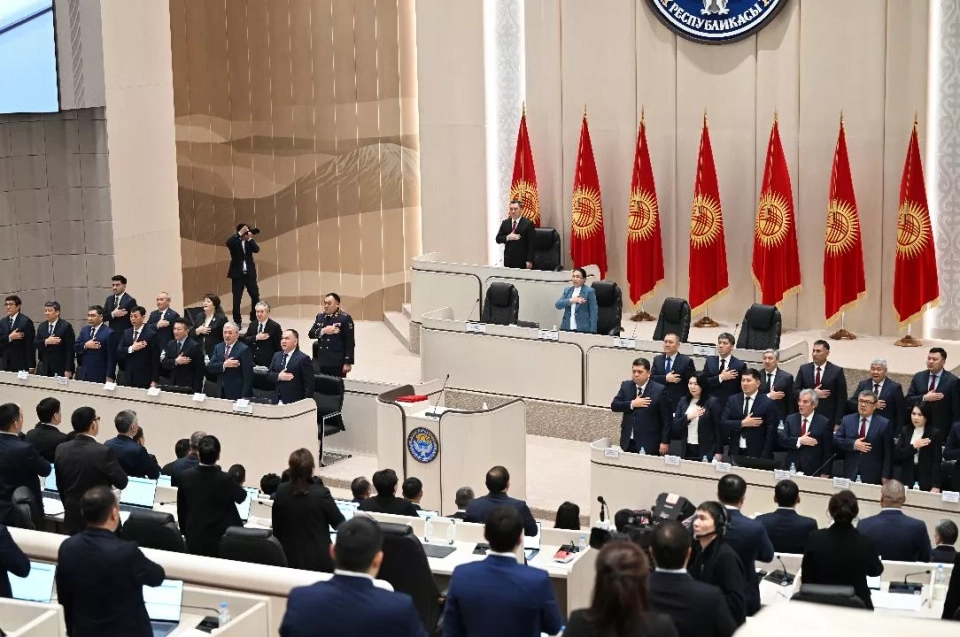
The amendments were proposed by the speaker of the Jogorku Kenesh, Marlen Mamataliyev, as well as deputies Talant Mamytov, Akylbek Tumonbaev, Dastan Jumabekov, Nurbek Sydygaliev, and Talaybek Masabirov.The changes to the Constitutional Law "On the CEC" are minor but significant.
What Specifically is Changing
The amendments concern Article No. 2, which regulates the formation and status of the Central Election Commission.Article 2. New Edition
- The CEC will consist of seven members, for a term of 5 years.
- The Jogorku Kenesh elects three members upon the president's proposal and four on its own initiative, ensuring that no more than 70% of the members are of one gender; it also has the right to dismiss them in cases provided for by law.
Goals of the Amendments: The Initiators' Perspective
The initiators claim that the changes are aimed at increasing the efficiency of the commission's work. They refer to international experience, where the composition of electoral bodies depends on the powers, size of the territory, and population. The indicator of operational efficiency does not always depend on the number of members of a collegial body. It is also emphasized that "asymmetrical representation" is applied in a number of post-Soviet countries and Europe to avoid institutional deadlocks in decision-making."Reducing from 12 to seven members will optimize management, reduce financial costs on salaries, material support, and social guarantees, as well as increase the personal responsibility of commission members for their decisions," the authors note.It is justified that reducing the number of commission members will help find a balance between the need for collegiality and the efficiency of management, especially in the context of an electoral campaign where time is critical.
"Electoral disputes require an immediate response, and practice shows that the more members there are, the harder it is to reach a consensus. Reducing to seven will allow for quicker meetings and decision-making, which directly affects the legitimacy of elections," the authors of the amendments explain.
Moreover, the distribution of 3+4 will create a stable balance of power within the commission. The parliament will have a one-vote advantage, which corresponds to the principle of popular sovereignty, while the president will retain significant influence with three votes.
"This ratio will avoid a situation of 'tie votes' in key votes, which can occur with an even number of members, and will ensure predictability in the commission's work. It is also important that no more than 70% of members can be of one gender," the report emphasizes.
Different Opinions on the Initiative
Chairman of the CEC of the Kyrgyz Republic Tynchtykbek Shainazarov
In an interview with Kaktus.media, Tynchtykbek Shainazarov noted that such changes fall under the jurisdiction of the parliament."They have the right to introduce legislative initiatives. We will definitely express our opinion if a public discussion is held," he added.
CEC Member Kairat Mamatov
Kairat Mamatov, who previously headed the territorial election commission and is now a member of the CEC, considers the issue of the CEC's composition to be relevant."The current composition of 12 members ensures parity between the president and the Jogorku Kenesh (6+6), which allows for the interests of both branches of power to be taken into account," Mamatov noted.
Reducing to eight or ten members could harm representation and balance within the commission, he believes.Mamatov also added that the formation of the CEC is related to public trust in the electoral process, and therefore changes should take into account not only efficiency but also the independence of the body.
Human Rights and Elections Expert Atyr Abdrakhmatova
Atyr Abdrakhmatova reminded that the CEC was formed in Kyrgyzstan in 1989 and still remains a constitutional body responsible for the legality of power transfer."Has the CEC's work corresponded to these principles? I think everyone can answer that question. I remember events from the early 2000s when two out of three revolutions occurred after elections," she noted.
Public trust in elections decreases each time, she believes.The expert emphasized that transparency in elections has not been achieved even with the introduction of automatic systems.
"Problems with the functioning of electoral systems create doubts among citizens. People think their votes may be substituted," she added.
Abdrakhmatova also noted that CEC members often replace the court in making decisions regarding voter bribery and other issues.
"It is important not only to consider the number of members but also their responsibility, independence, and efforts to raise voter awareness," she concluded.
Former CEC Member Kanatbek Aziz
Kanatbek Aziz expressed to Kaktus.media that the idea of reducing the number of CEC members is misguided."The CEC is a key constitutional institution responsible for organizing elections. Its role increases during electoral campaigns, and it is necessary to ensure the legitimacy of decisions," he emphasizes.
With seven members, control will be concentrated in the hands of four, which will reduce trust in elections, he believes.In his opinion, personal responsibility should be demanded from CEC members rather than reducing their number.
***
It is specified that this bill will be considered in the Committee on Constitutional Legislation and then submitted for discussion to the entire chamber in three readings.