Air pollution in Bishkek continues to be one of the most serious problems in Kyrgyzstan, sparking ongoing debates at the state policy level. The country's authorities are attempting to tackle this environmental issue by relying on significant foreign loans. However, experts and the public are increasingly expressing doubts about how effectively these funds will be used, as reported in a publication by the Economic Initiatives Center "Oy Ordo".
The situation with the multi-million dollar loan from the World Bank vividly illustrates how reality differs from the promises made by officials. The project, which was supposed to facilitate the transition of the private sector to more environmentally friendly heating methods, is actually focused on bureaucratic processes and monitoring that merely records the problem without offering solutions. Amid growing distrust of the safety of Western "green technologies" and their economic viability, the question arises: where exactly are these loan millions going, and will the fight for clean air lead to new debt obligations and "green waste" for the country?
Background
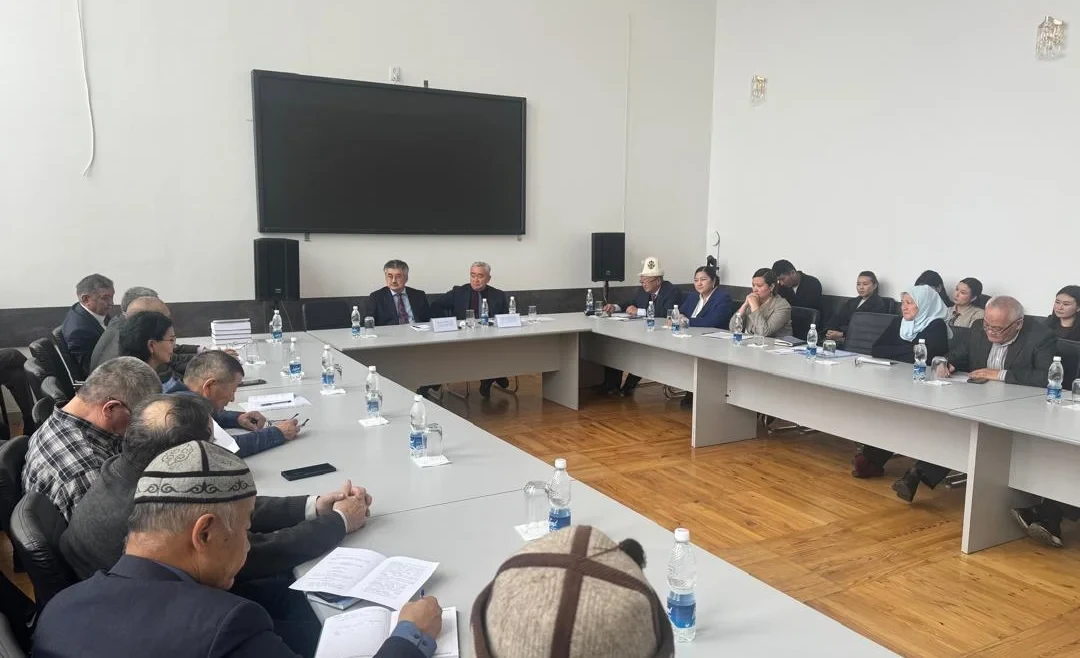
In 2023, Kyrgyzstan signed an agreement with the World Bank for $50 million to implement a project aimed at improving air quality, primarily in Bishkek. This topic has been discussed not only at the official level: in January 2024, the Economic Initiatives Center "Oy Ordo" organized a round table emphasizing the importance of the issue, as the country's capital ranks among the highest in the world for air pollution levels.
During the round table dedicated to the topic "Choking Capital: How to Break Out of the Environmental Deadlock," government representatives reported that $32 million of the total loan amount would be directed towards transitioning from coal to clean technologies. This will allow approximately 25,000 households to switch to heating using heat pumps through a revolving loan system. Loans will be provided by commercial banks, and the repaid funds will again be available to the population, which should contribute to economic growth and job creation related to the maintenance of new equipment. The remaining $18 million will be spent on various projects: $6 million for a laboratory for the Ministry of Natural Resources and Ecology, $6 million for creating new air quality monitoring points in "Kyrgyzhydromet," and about $4 million for creating a "green" belt in Bishkek. Additionally, $1.5-2 million is allocated for operational expenses.
What is really happening?
According to information presented on March 9 in the Jogorku Kenesh, Deputy Minister of Natural Resources of the Kyrgyz Republic Asel Rayymkulova reported that loan funds have already been used to purchase equipment for "Kyrgyzhydromet." A tender is currently underway for the development of project documentation for a new laboratory and information center that will analyze air pollution. Simultaneously, the installation of 11 automatic air monitoring stations is planned in Bishkek and four other cities (Osh, Kara-Balta, Tokmok, and Cholpon-Ata).
However, it is unclear how these measures will help improve the ecological situation in Bishkek, as there is no information on the implementation of the heat pump system in the project. Overall, experts do not feel optimistic about the introduction of these Western technologies.
Expert Opinions
During the discussion at the round table, specialists from the Economic Initiatives Center "Oy Ordo" noted that green technologies have their own risks. The main ones are related to the disposal of used parts and mechanisms employed for generating energy from renewable sources. As a result, countries that choose a path towards renewable energy will soon face the problem of "green waste." For instance, it is expected that by 2050, the amount of discarded solar panels could reach 78 million tons, and wind turbines could exceed 720 tons just in the U.S. by 2040, as one expert mentioned.
If Kyrgyzstan decides to focus on green energy, the country will need to create special landfills for the storage or disposal of these non-biodegradable wastes.
Experts also expressed doubts about the feasibility of this loan, suggesting instead to consider the gasification of the capital with the involvement of "Gazprom," rather than relying on loans from the World Bank, which may lead to the use of green technologies requiring commercial markets.
"The paradox is that we are taking loans for green technologies in the hope that Western donors will forgive us other debts," the experts from the Economic Initiatives Center "Oy Ordo" ironically noted.
They also mentioned that despite strict anti-Russian sanctions, EU countries continue to purchase Russian gas for the needs of the population and industry.