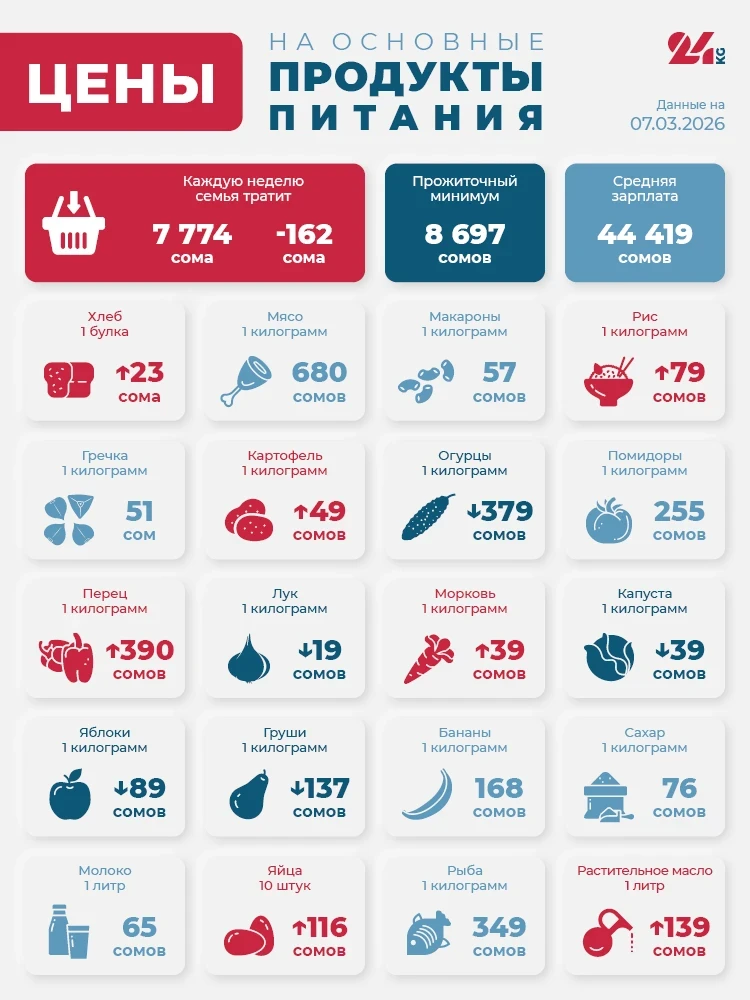
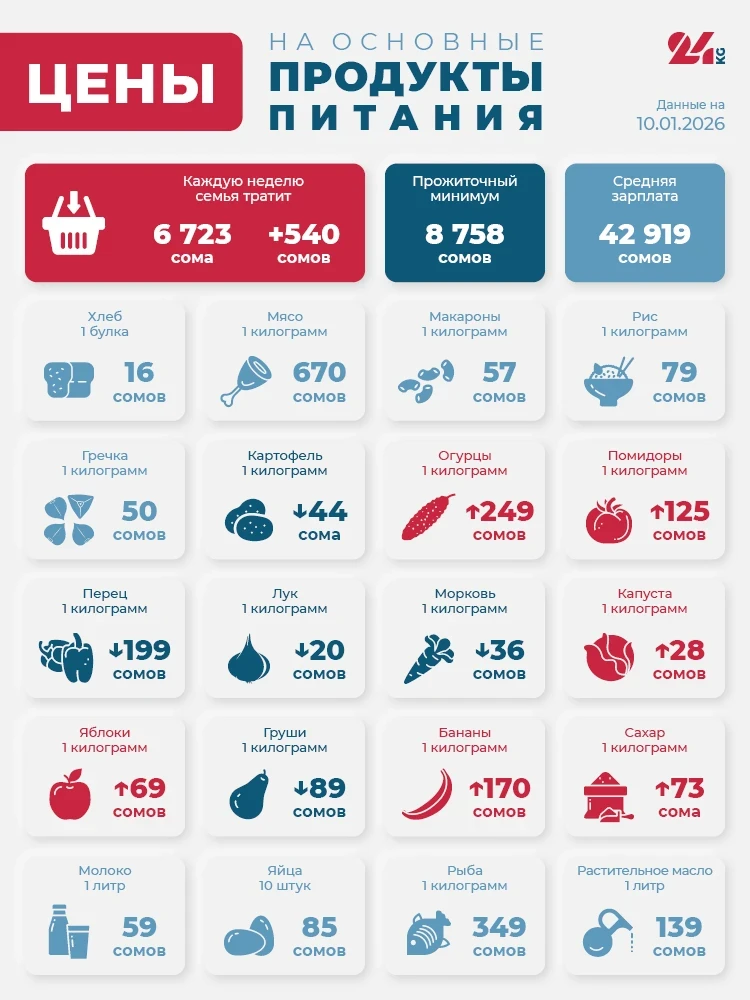
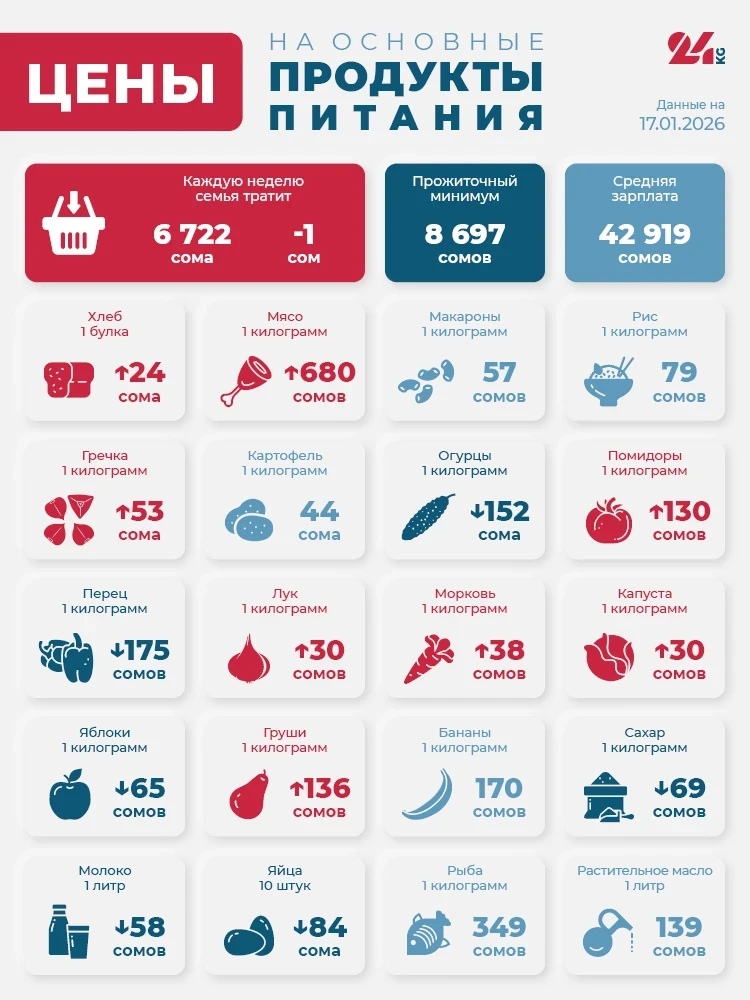
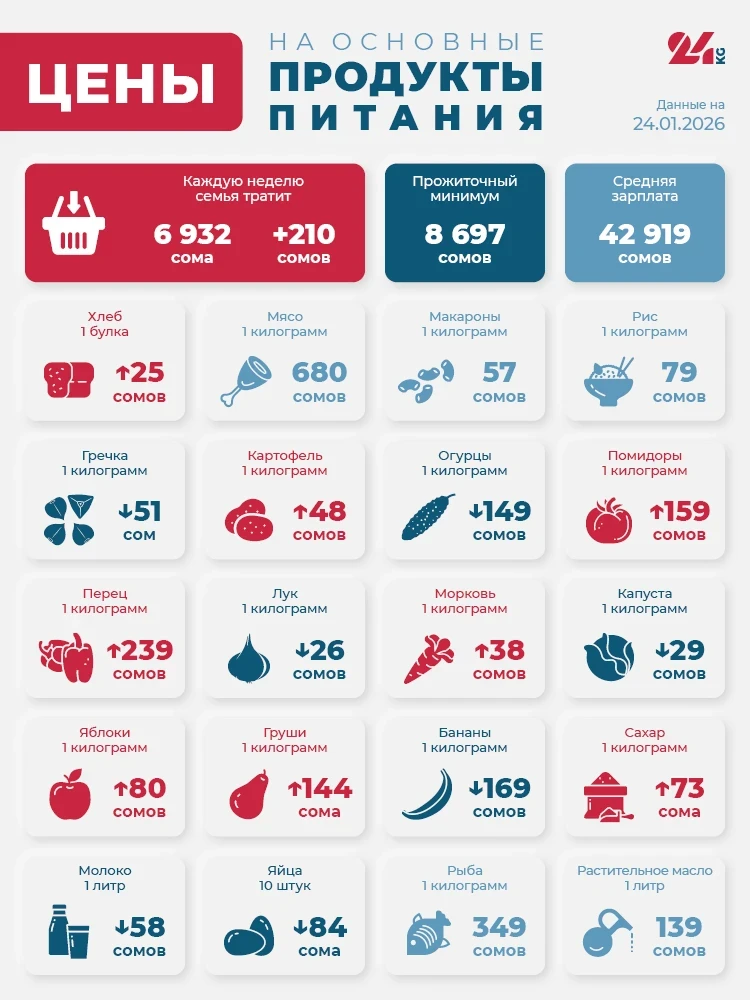
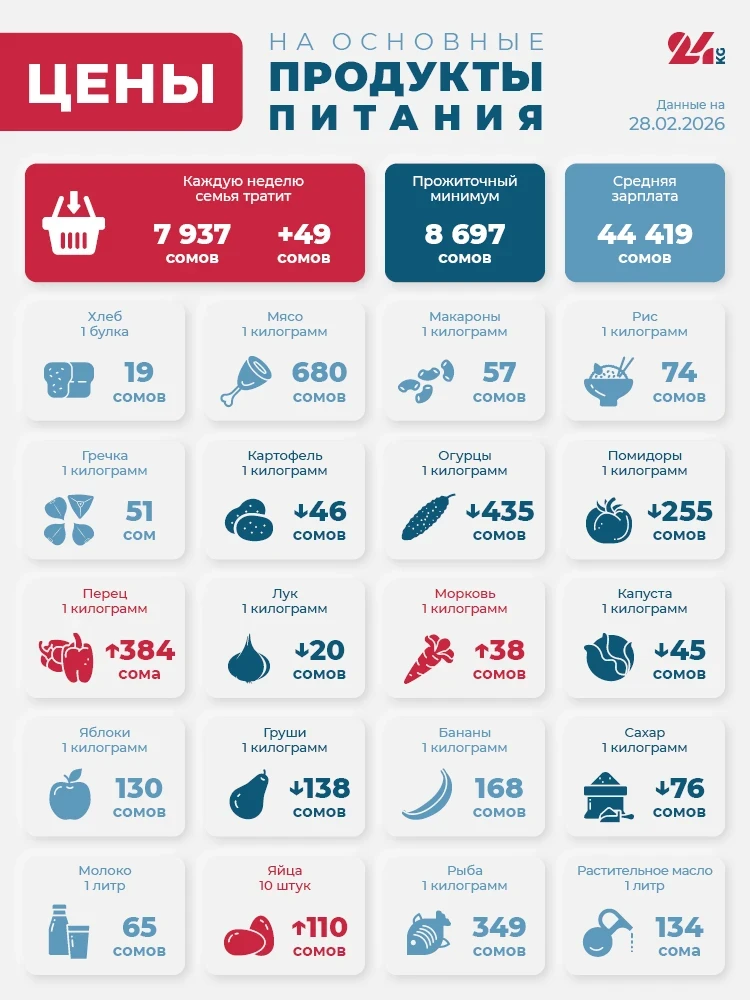
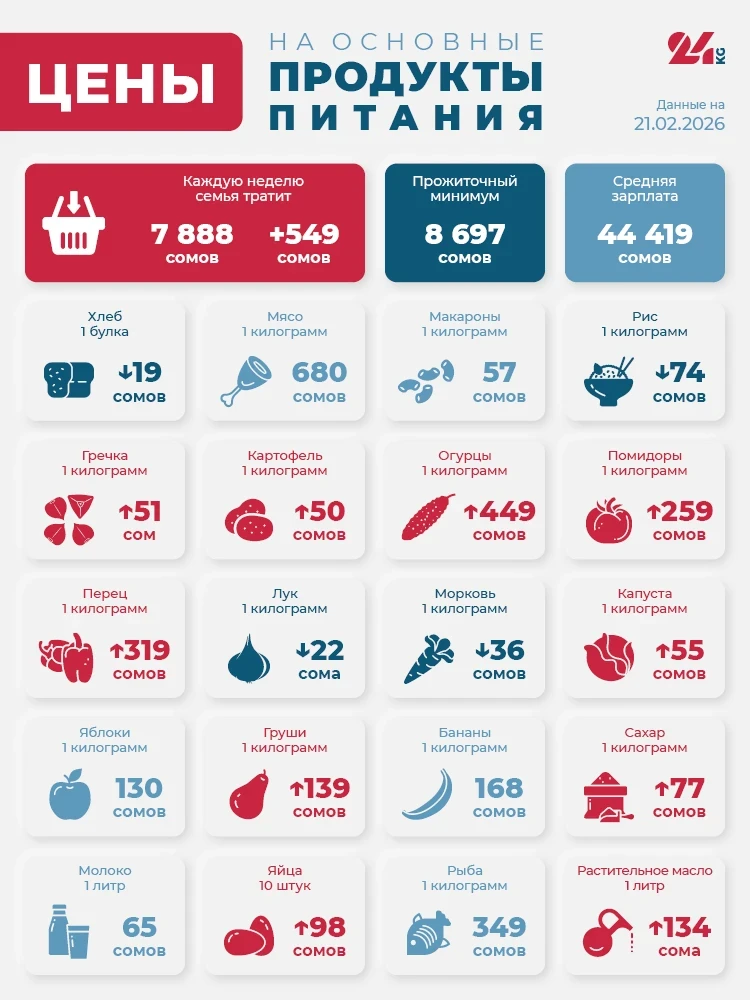
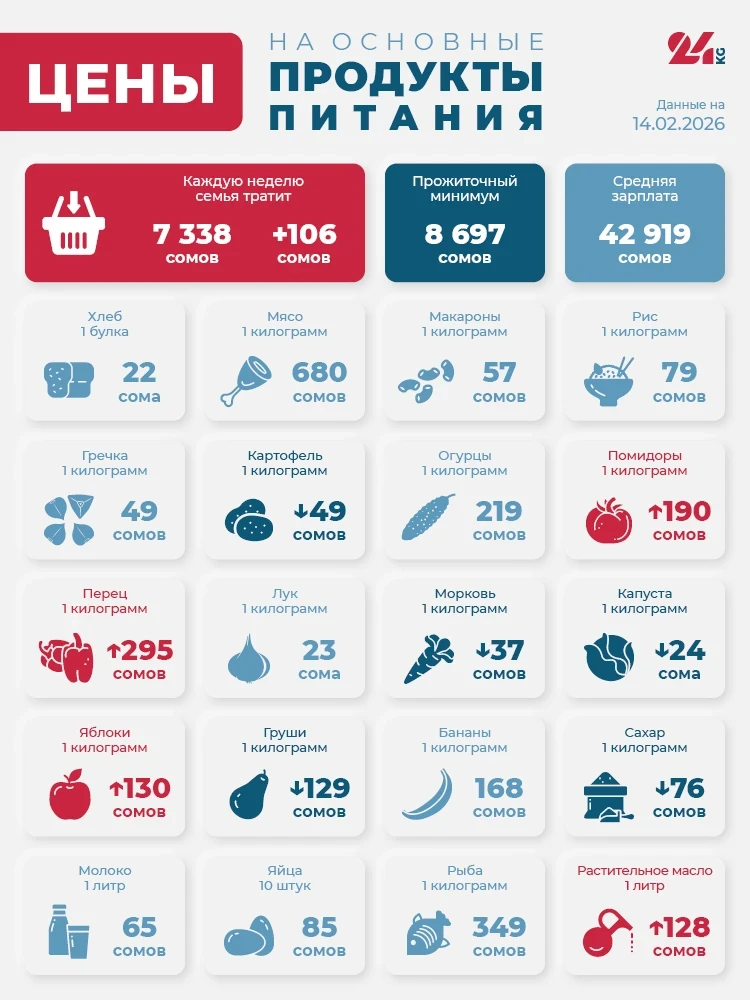
Vendors at the Osh market explained the high prices in winter by the absence of local cucumbers, with the market relying on imports from neighboring countries. According to one of the sellers, "prices started to decrease in the second week of March, and they will likely continue to drop," adding that cucumbers are currently coming from Uzbekistan.
Price Comparison with December
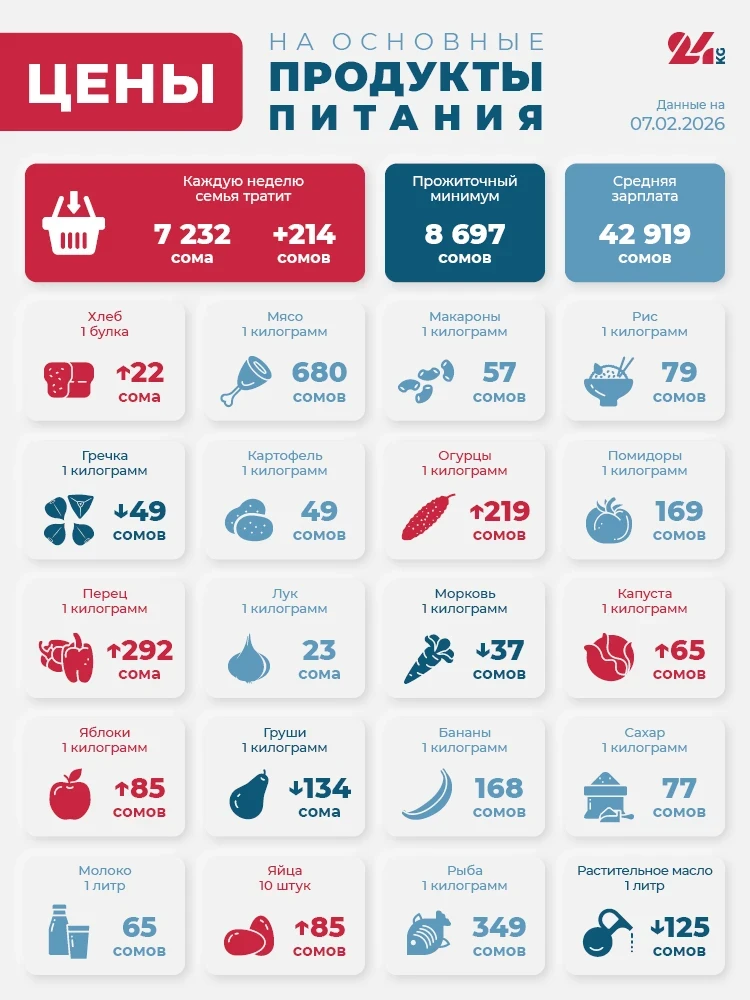
When comparing prices at the Osh market to December of last year, only carrots have become cheaper – from 50 to 45 soms. The price of cabbage remained at 50 soms, while other vegetables have become more expensive.The largest price increase affected sweet peppers: if in December they could be bought for 280 soms, now they cost 350 soms at the market and 430 soms in one of the hypermarkets. Tomatoes have also risen in price by 50 soms, reaching a price of 200 soms at the market, while in supermarkets they range from 255 to 395 soms depending on the variety.
Onions, potatoes, and broccoli have become more expensive by 10–20 soms, with broccoli in the capital's stores available for 255 soms. Vegetable prices vary depending on the location.
Future Forecasts
Despite the rise in prices for tomatoes and peppers, the question arises as to why other vegetables have also become more expensive and whether there will be a shortage of any products.The Ministry of Water Management and Agriculture reported that Kyrgyzstan is fully self-sufficient in vegetables (the self-sufficiency level is 177%) and even exports some products. At the same time, the country also imports certain vegetables from neighboring states.
"There is no reason for concern. We are observing a slight increase in prices, but this occurs every year at this time due to a decrease in stocks. Overall, there are no problems expected by the end of 2025, and for 2026, we anticipate a good harvest. In particular, there may be an oversupply of potatoes this year. There are risks of seasonal shortages of certain products, but we have imports," the agency clarified.
It is worth noting that in 2025, there was a difficult situation when farmers held local potatoes in warehouses and sold them to Uzbekistan at a more favorable price, leading to a rise in prices within the country. To stabilize the situation, Kyrgyzstan had to import potatoes from China.