About how GIK operates, the availability of housing for citizens, apartment prices, and processes related to obtaining housing, 24.kg spoke with Gulzat Totubaeva, head of the Public Relations Department.
— How many citizens are in line for housing? Is there data on those who need housing but have not yet applied to GIK? How long will it take to provide for all those in need?
— Currently, our database lists 91,159 citizens, of which more than 48,000 are in Bishkek. The list also includes participants in the program who have applied for shared construction and received preliminary approval.
I cannot say exactly how many Kyrgyz citizens need housing, but there is undoubtedly a shortage.
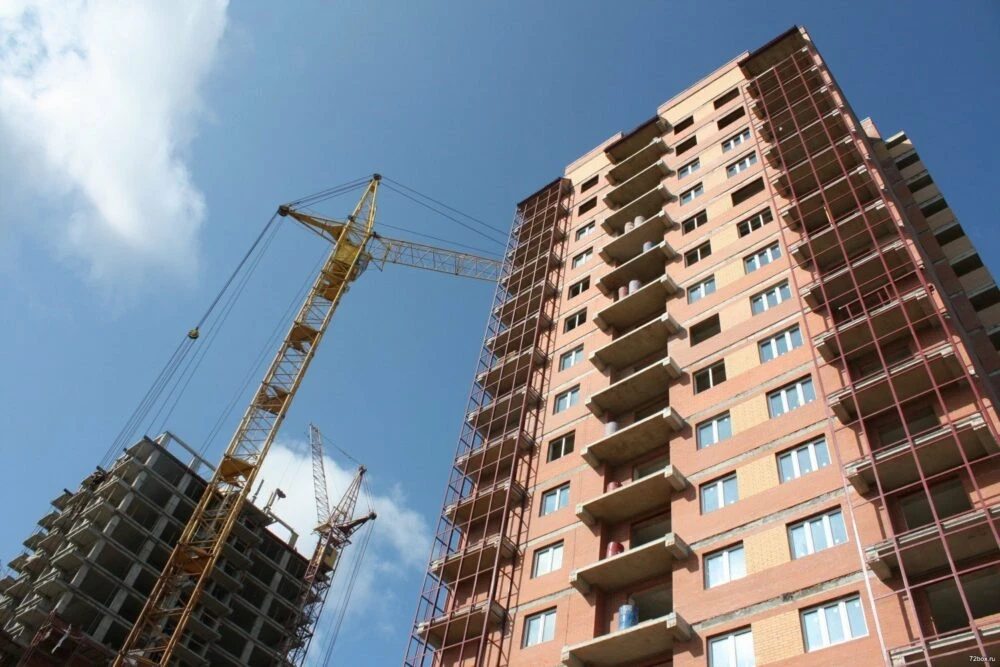
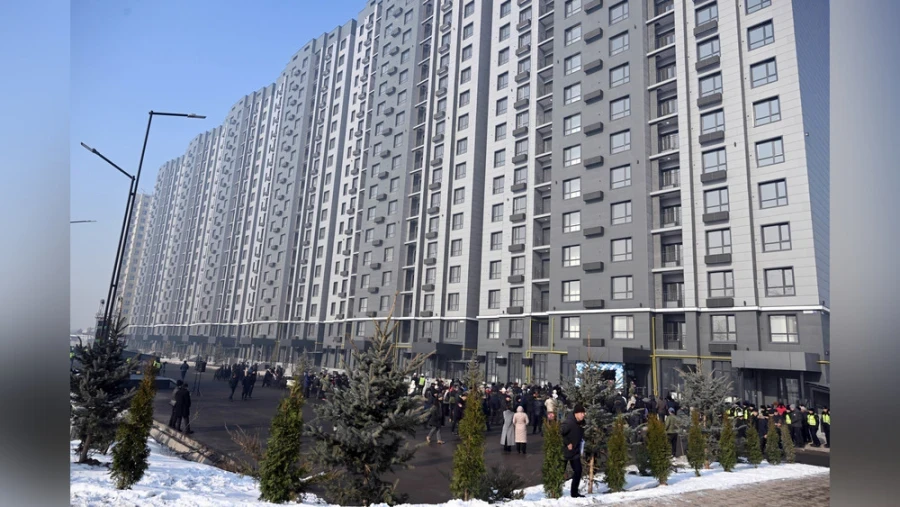
At the moment, GIK is constructing 5.5 million square meters of housing across the country, which amounts to over 80,500 apartments.
From 2024 to 2026, we plan to build and hand over 463,000 square meters, which corresponds to 6,882 apartments.
— That is significantly less than now, right?
— Yes, that’s correct. It is important to note that GIK has not always been engaged in construction. In 2015, when the company first started its operations, the mortgage policy was different. We only checked citizens' compliance with criteria and directed them to partner banks for financing. They decided whether to grant loans or refuse.
Thus, until 2023, we managed to issue about 9,495 apartments, which is completely insufficient given the current housing shortage. We faced a large number of refusals, which led to dissatisfaction with GIK.
After that, the country's leadership decided that GIK would independently engage in construction, ceasing to work with partner banks. Since 2023, we have started building housing ourselves, and the results are already visible. I believe this is a strategically correct decision.
If we had continued to work through banks, refusals would also have continued, as they strictly check income levels. GIK does not have such strict requirements for creditworthiness; the main thing is that citizens' income is not lower than the monthly payment. So far, we have not had any refusals due to insolvency.
— What is the current authorized capital of GIK? Is the company funded from the budget? What will happen to the program if budget funding is reduced or stopped?
— Currently, our authorized capital is 87.5 billion soms. When GIK was established in 2015, the capital was only 10 million soms. Over time, this amount has increased. From 2017 to 2020, the capital reached 480 million soms, including profits from participation in the program. In 2021, there was a sharp increase in capital to 5.6 billion soms from various sources, including budget loans and our profits. In 2022, we were transferred real estate, and in 2023, large-scale construction began. We have also started attracting funds from international financial organizations, such as the Saudi Development Fund and the Asian Development Bank.
In the future, we plan to increase the authorized capital to 200 billion soms and move to self-financing. That is, budget funds will no longer be received, and we will build housing with our own funds. For this purpose, a shared construction mechanism was implemented in 2024, which will allow us to generate profits. We are also actively working on attracting financing through foreign institutions.
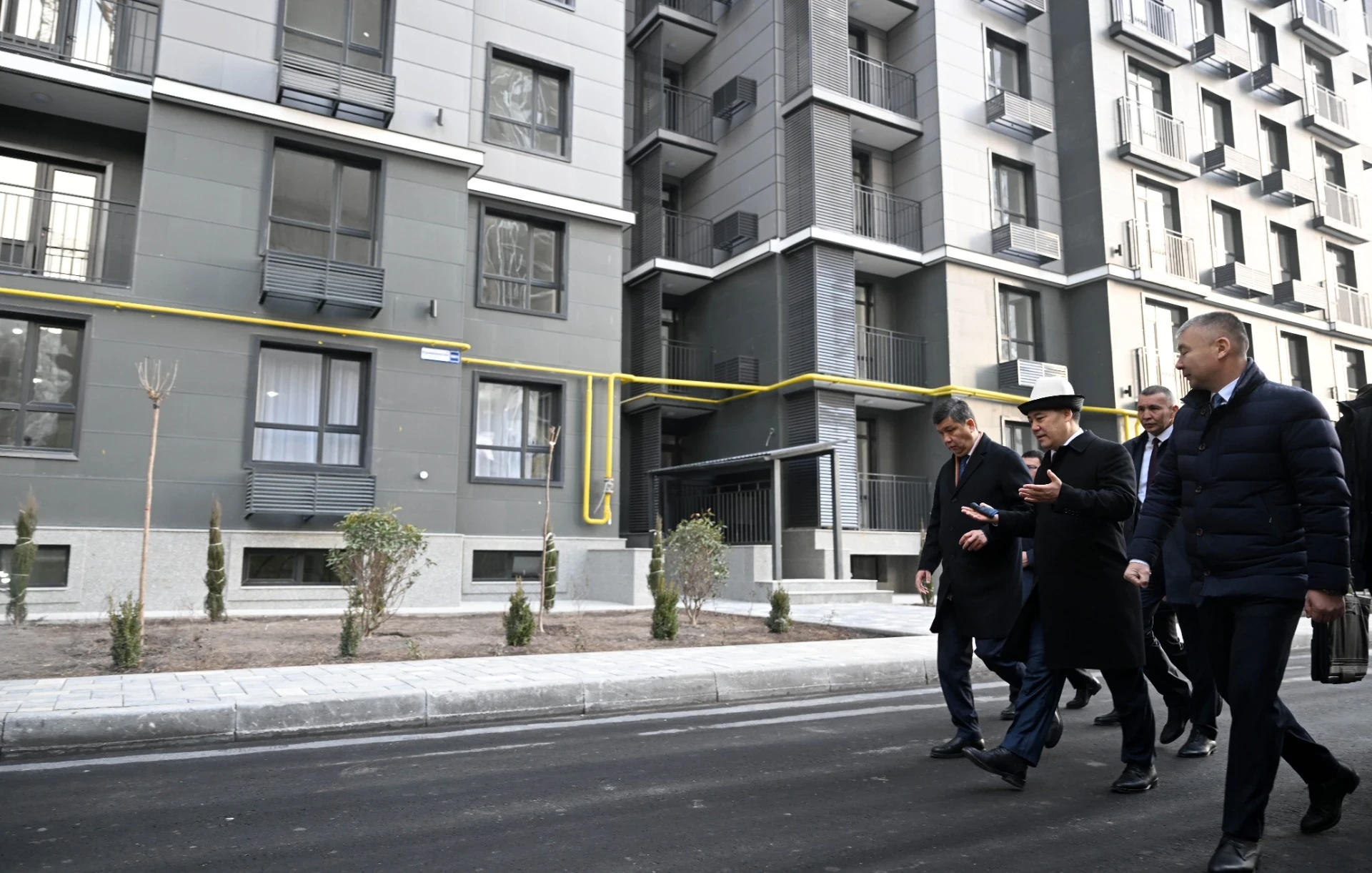
— Many say that GIK receives land plots for free, but housing prices are almost the same as those of private developers. Do you not have a category for housing, such as economy or premium? Can people choose which building they want to receive an apartment in?
— Land plots are allocated to GIK according to a presidential decree; we do not purchase them from private individuals. We do not have the option to choose locations; we build on the plots provided by the state.
Apartment prices are set by the decision of the board of directors. They are formed based on the cost of construction, including materials, labor, and inflation. All facilities are handed over with interior finishing. We cover the construction costs, and participants only pay for the living area. This difference can be significant, and we provide ready-to-move-in housing with repairs.
Read on the topic
The President explained what makes up the prices of mortgage housing from GIK
We do not divide into economy class and premium. For example, in Bishkek, houses with more than 23,000 apartments are being built; these are several large projects. All of them are the same. However, one of the complexes, "Yntymak," indeed differs in a higher class, and accordingly, the cost for participants will be higher. For example, in the area of Malikova Street, we provide apartments at 78,705 soms per square meter, while in "Yntymak," the price will be 87,450 soms, which is $100 more. But all apartments in this building will be available only to shared construction participants.
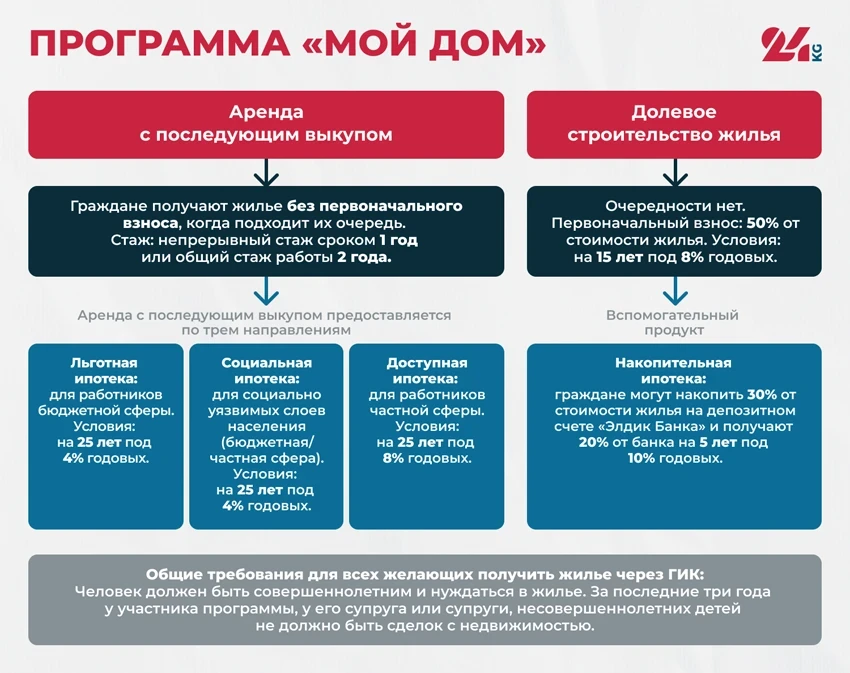
We strive to distribute the housing stock as fairly as possible. According to the housing distribution regulation, up to half of the apartments are provided to shared construction participants, while the rest go to those in line. Those in line can receive apartments for 25 years at 4 or 8 percent without a down payment, paying 78,705 soms per square meter, which is about $900. At the same time, shared construction participants will pay 96,195 soms, which is equivalent to 1,100 dollars.
Although the cost is higher for shared construction participants, they have the option to choose the region. For example, residents of Bishkek can purchase apartments in Cholpon-Ata or Manas depending on their financial capabilities. Those in line do not have such a choice, but we try to distribute housing as fairly as possible, taking into account the number of family members.
Read on the topic
Instead of a colony - a residential complex: the second phase of "Muras" was completed in Bishkek
It is worth noting that we do not build departmental houses, that is, for specific categories, such as doctors or military personnel. Everyone who is in line can receive apartments in the same buildings. Our program stipulates that the agencies that provided the plots receive apartments within 20 percent of the housing stock.
— You mentioned that 5.5 million square meters of housing are being built in the country. How does GIK control the quality of the constructed facilities? Complaints from citizens often appear on social media.
— The quality control of the houses is carried out not only by our company. We actively check the quality of construction through our construction department, which works on each project. In addition, there is control from the contractors and the State Construction Agency. Our inspections are multi-tiered.
We use monolithic formwork, which is considered the most earthquake-resistant. We have a laboratory where material tests are conducted.
Read on the topic
GIK builds "human warehouses." Kanybek Tumanbaev responded to criticism
After the construction is completed and the apartments are handed over to citizens, contractors are obliged to eliminate any identified deficiencies within the warranty period. We issue apartments for 15 and 25 years, and during this period, they remain on GIK's balance, which is monitored. Our houses are built under a state program approved by a presidential decree, emphasizing the importance of quality.
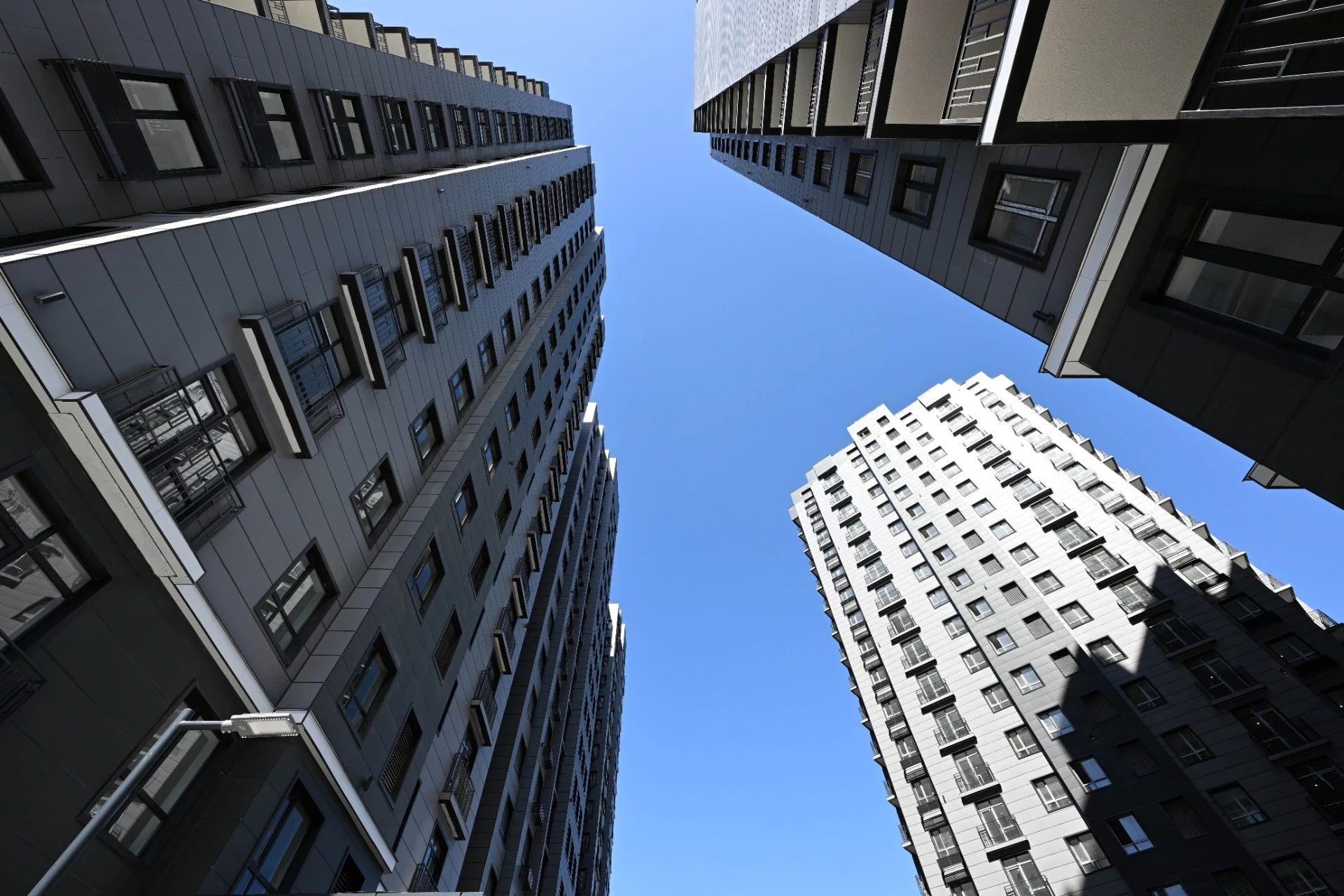
— How is the design of the complexes carried out? Is it taken into account that with an increasing number of residents, more social facilities, such as schools and hospitals, are required?
— Certainly, we work with local self-government bodies in the areas where housing is being built. For example, near the facility on Malikova Street, there is a city school, but with the increase in the number of apartments, there are not enough places in the school. Therefore, the first floors of the buildings were provided to this school, allowing children to study without going far from home.
However, we do not build entire districts; we construct individual facilities. If we were building entire districts, then, of course, polyclinics, schools, and kindergartens would also be built.
— Most of GIK's construction is concentrated in Bishkek and Osh. What can residents of At-Bashy or Leilek expect, for example?
— Currently, we are building housing in all seven regions of Kyrgyzstan to provide apartments to as many citizens as possible. Housing facilities are provided in those regions where program participants are engaged in labor activities. For example, if a person works in Kara-Balta, housing is provided in that city if they are in line. Shared construction participants can choose the region.
Although we cannot yet claim that we are building houses in all areas of the country, housing is being constructed in regional centers and small towns. We have a unified queue by regions, and a resident of one area can receive an apartment in the nearest completed facility, even if construction has not yet started in their locality.
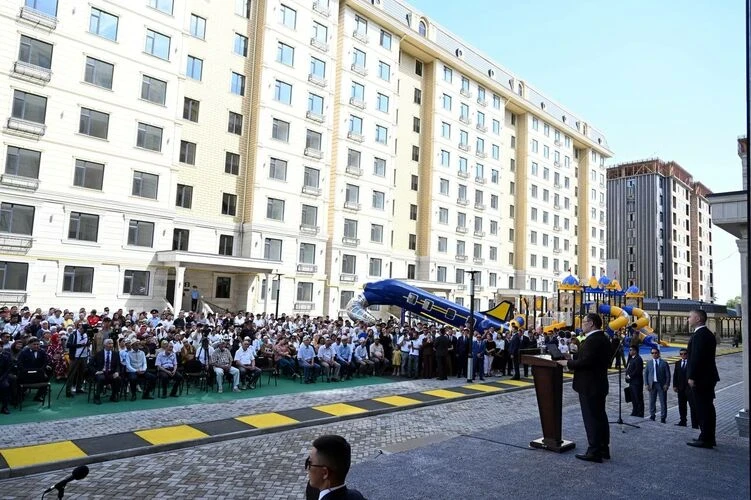
— Is there a plan to revise the conditions for recipients of state mortgages, particularly interest rates, and is there a possibility of returning to the practice where citizens could choose apartments in any buildings, not just those being built by GIK?
— Since the establishment of the State Mortgage Company, the conditions of the housing program have been revised exclusively towards improvement and increasing accessibility. Interest rates have been reduced from 6-14 percent to 4-8 percent depending on the category of program participants. These conditions are among the most accessible in the mortgage lending market in the CIS.