To ensure the stability of constitutional norms, a more complex process for making amendments is recommended than for ordinary laws. On this basis, constitutions are divided into soft, rigid, and super-rigid according to constitutional law theory, as mentioned by Eduard Mukhamedzhanov.
Soft constitutions allow for easy changes and additions.
Such constitutions are often amended depending on current circumstances.
An example of a soft constitution is the Constitution of the Kazakh SSR from April 20, 1978, which underwent changes during the period from 1989 to 1993, adapting to the changing realities of the country.
Rigid constitutions require complex procedures for making amendments.
A constitution is considered rigid if it prescribes complex procedures for making amendments:
- qualified majority of votes from parliament deputies (2/3, 3/5, 3/4);
- ratification of amendments by legislative bodies of the federation subjects;
- approval of amendments in a referendum;
- re-election of parliament to adopt a new Constitution.
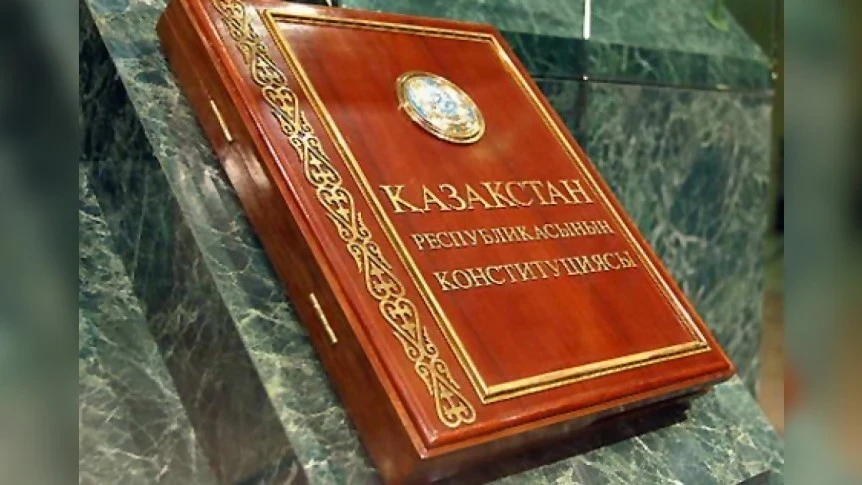
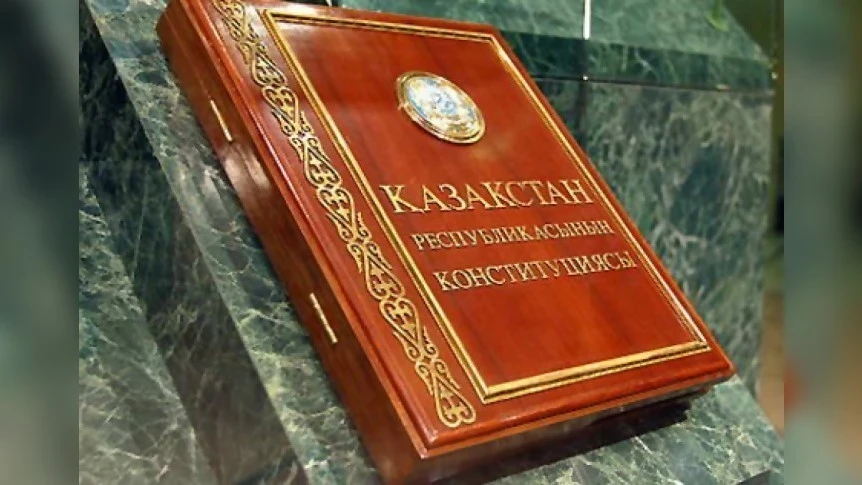
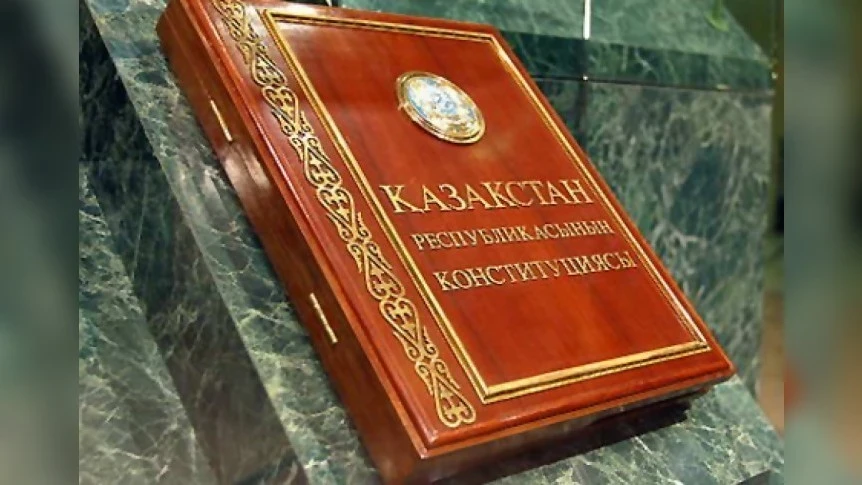
An example of a rigid constitution is the Constitution of the Republic of Kazakhstan from August 30, 1995. Despite the amendments made, it should be remembered that it was adopted in a republican referendum. Amendments can be made through a referendum or Parliament (Article 91 of the Constitution).
Amendments through a referendum are initiated by the President of the Republic of Kazakhstan, and for their adoption, it is necessary that more than half of the citizens support them, as well as that they are approved in 2/3 of the regions and cities of republican significance. A referendum is considered valid if more than half of the citizens participate.
If Parliament rejects the President's proposal for a referendum, it can pass a law to make amendments with the support of at least 4/5 of the deputies' votes. If amendments are made by the President, support from ¾ of the total number of deputies is required.
Super-rigid constitutions are very difficult to change, such as the U.S. Constitution of 1787.
To amend it, a vote of at least 2/3 of the members of both houses of Congress and approval from ¾ of the state legislatures is required.
In our opinion, the draft of the new Constitution of the Republic of Kazakhstan should be classified as super-rigid. This is because changes to the new Constitution cannot be made by the legislative body (Kurultai), but only through a nationwide referendum.
This procedure for making amendments ensures stability and high resilience of the Constitution's norms. However, this can also become a disadvantage.
- Firstly, practice shows that any law, including the Fundamental Law, may contain editorial errors and incorrect application of legal terminology, which sooner or later will require amendments.
Unfortunately, the draft Constitution of the Republic of Kazakhstan put to a referendum already has such shortcomings.
For example, in Article 65 of the draft Constitution, the phrase "republican budget" is repeated, while in subparagraph 8) of the same article, "state budget" is used. Such oversights require corrections and are considered unacceptable from the standpoint of legislative technique.
Another example is the point stating that "Amendments and additions to the Constitution of the Republic of Kazakhstan are made through a nationwide referendum," which excludes the people of Kazakhstan as initiators, although according to paragraph 1 of Article 4, they are the "Only source of state power and bearer of Sovereignty."
However, this does not mean that the people will not be able to initiate a referendum. Paragraph 2 of Article 4 of the draft new Constitution states that "The people exercise power directly through a nationwide referendum and free elections, and also delegate the exercise of their power to state bodies."
However, it is important to note that such legal nuances may not be accessible to the general public.
Even considering the arguments presented, one cannot confidently assert that the people will be able to initiate a referendum, as the formulations "exercise power" and "initiate a referendum" require more detailed legal justification.
These examples illustrate the possibility that such facts may lead to the need for amendments to an already adopted Constitution, which makes it impractical to hold a new referendum for minor amendments.
- Secondly, the draft Constitution complicates the process of conducting a nationwide referendum, which is related to both organizational difficulties and financial costs.
For example, preparation for the republican referendum scheduled for March 15, 2026, requires about 20.8 billion tenge.
Thus, in the future, conducting similar referendums will require even greater financial resources, which, in our opinion, will also become an obstacle to making amendments to the Constitution.