Every year, subsoil users in Kazakhstan spend about $10 billion on the purchase of goods, works, and services. However, about 50% of these funds go to foreign suppliers, as foreign companies often prefer to purchase from their own contractors. Customers find ways to circumvent local requirements through shell companies. Shortcomings in Kazakh legislation create conditions for such actions, leading to a significant discrepancy between actual and official data on local content, notes Exclusive.kz.
As part of hydrocarbon raw material extraction, annual procurement expenses from subsoil users amount to about $10 billion. However, a large portion, about 50%, goes abroad, as foreign companies prefer to procure from foreign contractors. Moreover, customers use various schemes to bypass local requirements, including shell companies, which occurs against the backdrop of shortcomings in Kazakhstan's legislation, resulting in actual local content being lower than the officially declared figures.
On February 12, a hearing was held at the Committee on Ecology and Natural Resources, where reports from oil companies "SNPs-Aktobemunaigas," "Buzachi Operating," "Maten Petroleum," and "KoZhaN" were presented regarding the increase in the share of Kazakh content in their procurements. All these companies are controlled by Chinese shareholders.
Chinese companies account for about 15% of the total oil production in Kazakhstan, among them "SNPs-Aktobemunaigas," which develops the Zhanazhol field and produces 5-6 million tons of oil annually, not counting gas volumes.
According to Deputy Minister of Energy Erlan Akbarov, in 2025, oil companies in Kazakhstan spent 4.6 trillion tenge (approximately $9.3 billion) on the procurement of goods, works, and services, of which more than 3 trillion tenge ($6.1 billion) or 65% were purchases from Kazakh producers. Four of these companies together spent 231 billion tenge, of which 173 billion tenge or 74.8% were local purchases.
Procurement through intermediaries
According to Akbarov, "Maten Petroleum" invested about 9 billion tenge in Kazakh content. In particular, 99.6% of the purchased gasoline and diesel fuel was produced in Kazakhstan, 73% of well pumps, 56.1% of personal protective equipment, 52% of casing pipes, and 50.1% of chemical products also came from local producers.
At the same time, the Ministry of Energy estimates that the potential for import substitution and localization amounts to 1.2 billion tenge.
The company "SNPs-Aktobemunaigas" directed 113.6 billion tenge to the procurement of Kazakh goods, which accounts for almost 73% of all its expenses. The share of local content in the procurement of goods ranged from 20% to 25%, in services from 43% to 51%, and in works from 88% to 93%.
The Ministry believes that the localization of goods could increase the total procurement amount by 29.5 billion tenge. The greatest opportunities for localization exist in the procurement of electrical equipment, valves, filters, drilling and compressor equipment, as well as measuring instruments. However, Kazakh producers remain insufficiently involved in the procurement of "SNPs-Aktobemunaigas."
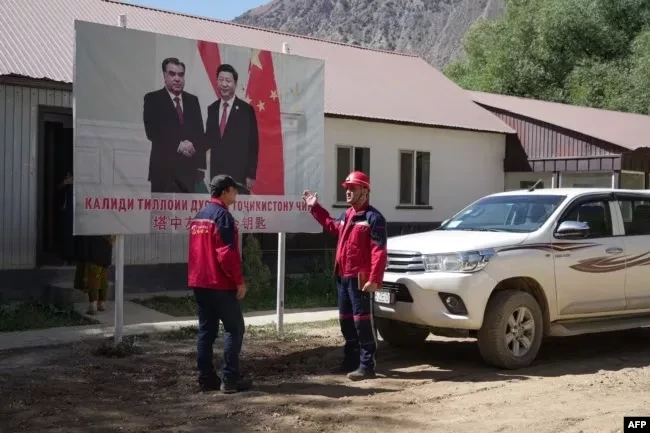
Thus, Chinese companies mainly use Kazakh suppliers for services and works, while they prefer to purchase goods abroad. Nevertheless, even this data may be distorted. Often, Chinese companies resort to the services of shell structures registered in Kazakhstan but actually controlled by Chinese owners, as noted by deputy Edil Zhanbyrshin, referring to information from market participants.
It is worth noting that such schemes to bypass local procurement are characteristic not only of Chinese but also of other foreign companies working on the Tengiz, Kashagan, and Karachaganak projects.
Oil and gas expert Nurlan Zhumagulov raises the issue of the need to amend existing rules through legislative changes, noting the lack of clear definitions in the Code "On Subsoil and Subsoil Use."
In particular, there is no clear definition of the status of a Kazakh producer. Any foreign company can register a limited liability partnership (LLP) staffed 95% by citizens of Kazakhstan, which already gives it the right to be recognized as Kazakh. However, the fact that the shareholders are foreigners and all profits go abroad is not legally taken into account.
Data exists, trust does not
Experts emphasize that foreign firms should create joint ventures with Kazakh partners (50/50) and share experience and technology with local companies, but in practice, such initiatives are either absent or extremely limited. Real localization projects often appear as formal statements without practical value.
This phenomenon is observed not only in projects involving Chinese investors. However, unlike other participants, Chinese companies demonstrate a higher level of opacity.
The chairman of the Oil and Gas Council of Kazakhstan, Asylbek Dzhakiev, noted that "SNPs-Aktobemunaigas" is the most closed of the companies: it does not respond to requests to organize meetings with Kazakh suppliers so that the latter can familiarize themselves with the needs of the subsoil user.
"Today they provided information, but whether it corresponds to reality – no one knows," emphasized the expert representing the interests of 160 oil service supplier companies.
He added that unlike TCO, NCOC, and KPO, the operator of the Zhanazhol field does not publish procurement plans in the public domain. This creates uncertainty in procurement procedures and the list of goods and services. The last meeting of the company with the business took place back in 2018, that is, eight years ago.
Moreover, it became known that some Chinese oil companies do not even have their own websites. An interesting dialogue occurred on this topic between deputy Zhanbyrshin and representatives of Chinese companies.
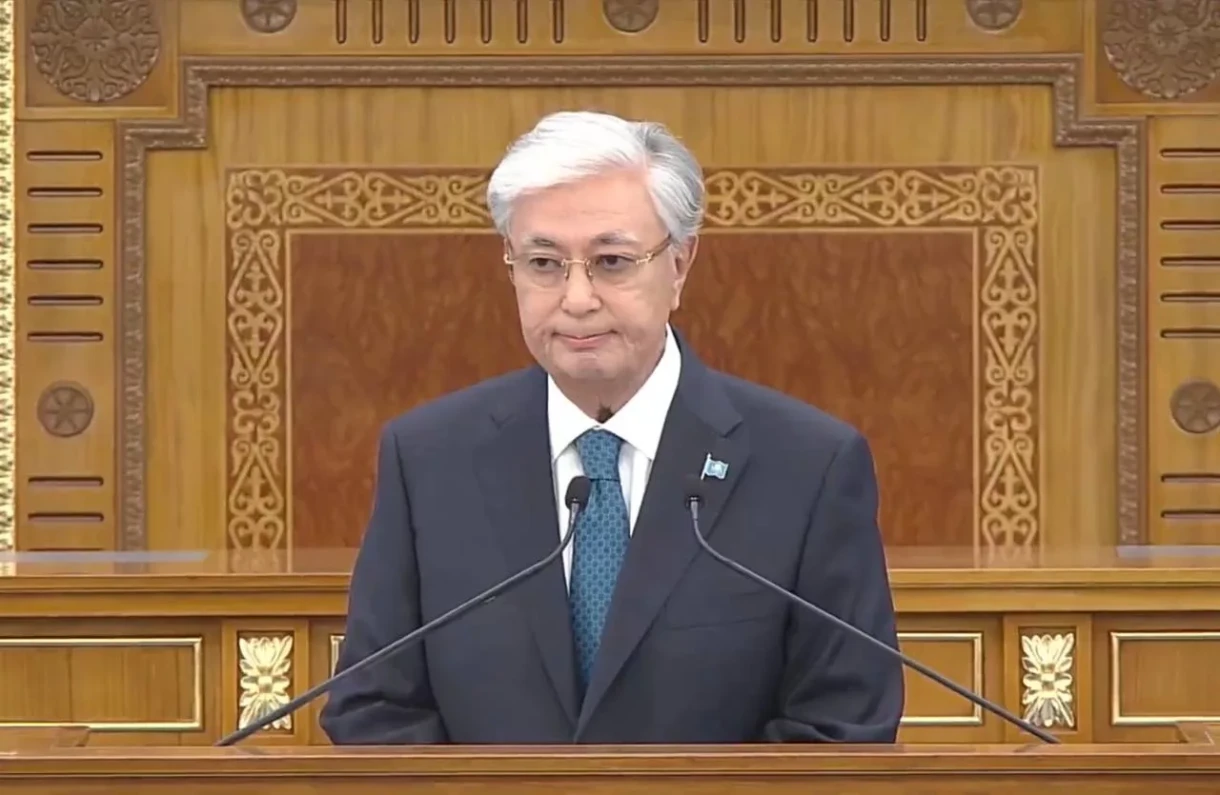
"China leads in the field of information technology, but Chinese companies' websites do not work – this is absurd. President Kassym-Jomart Tokayev calls China a model in the field of artificial intelligence and digitalization. But our Chinese companies' websites do not function. Is this done intentionally? Let's send a letter to the Chinese embassy stating that our Chinese partners and investors do not have functioning websites. Let the Communist Party of China draw conclusions about the leaders of these companies," said the deputy.
He also asked Liu Jincheng, the general director of "Maten Petroleum," why the company does not have a working website. In response, it was said that "Maten Petroleum" is a small company with an annual production of about 300,000 tons of oil.
"That doesn't matter. Even a small individual entrepreneur has a page on Instagram or Facebook. You are an oil company; you should have a website and transparent procurement procedures. You have billion-dollar procurements. You are obliged to publish procurement plans on your website; otherwise, how will we know what you are doing?" concluded the member of parliament, urging oil companies to create websites and post procurement plans within two weeks, promising to check compliance with this requirement.